


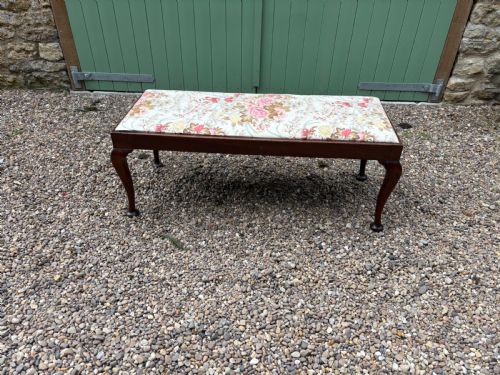
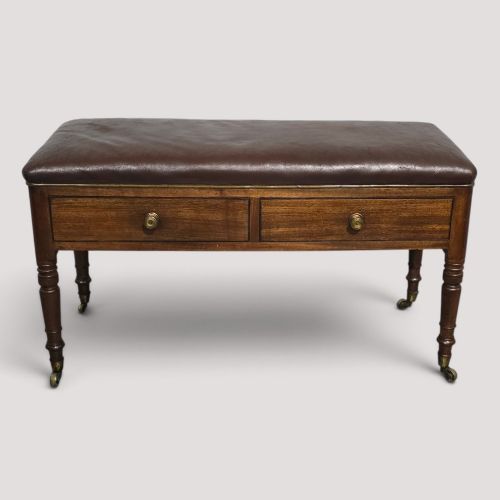
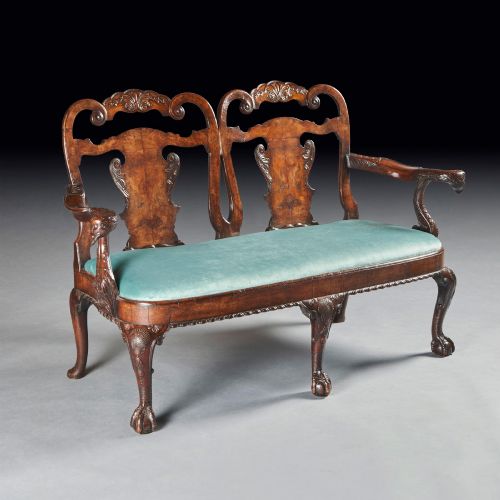
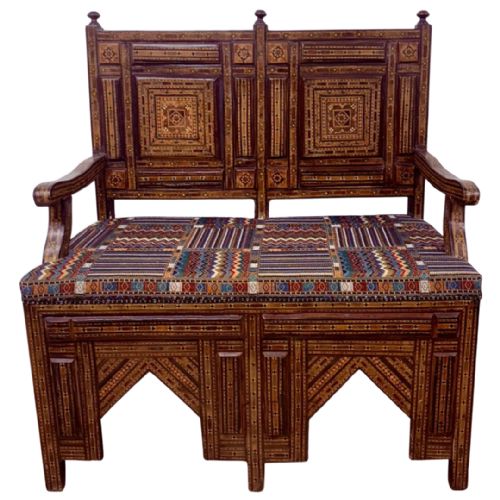
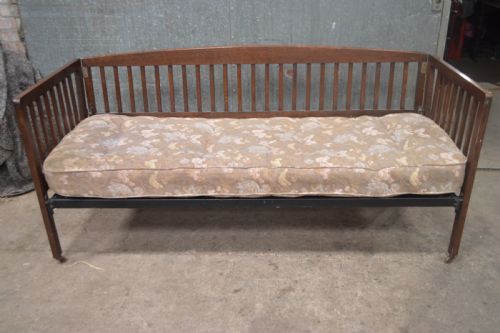
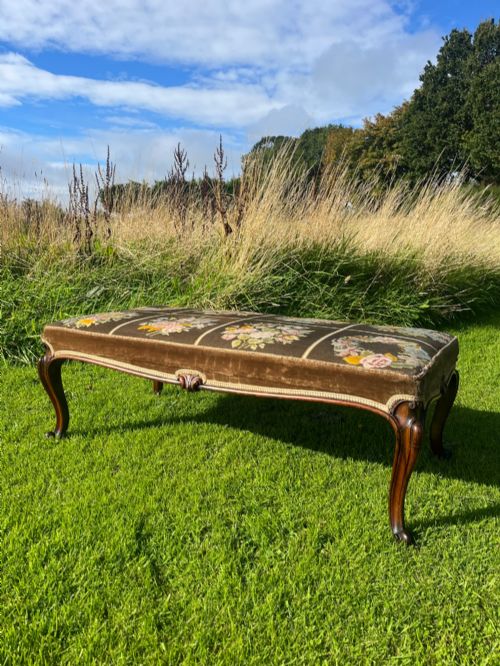
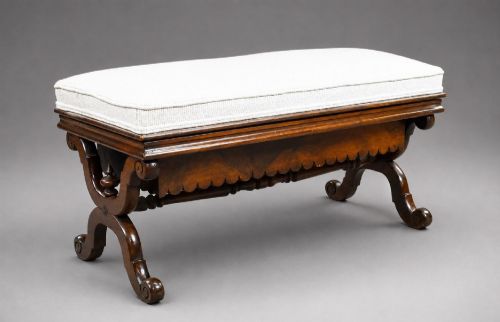
Brown Upholstered Bench
A brown upholstered bench brings practical seating and period character into a hallway, bedroom or dressing room.
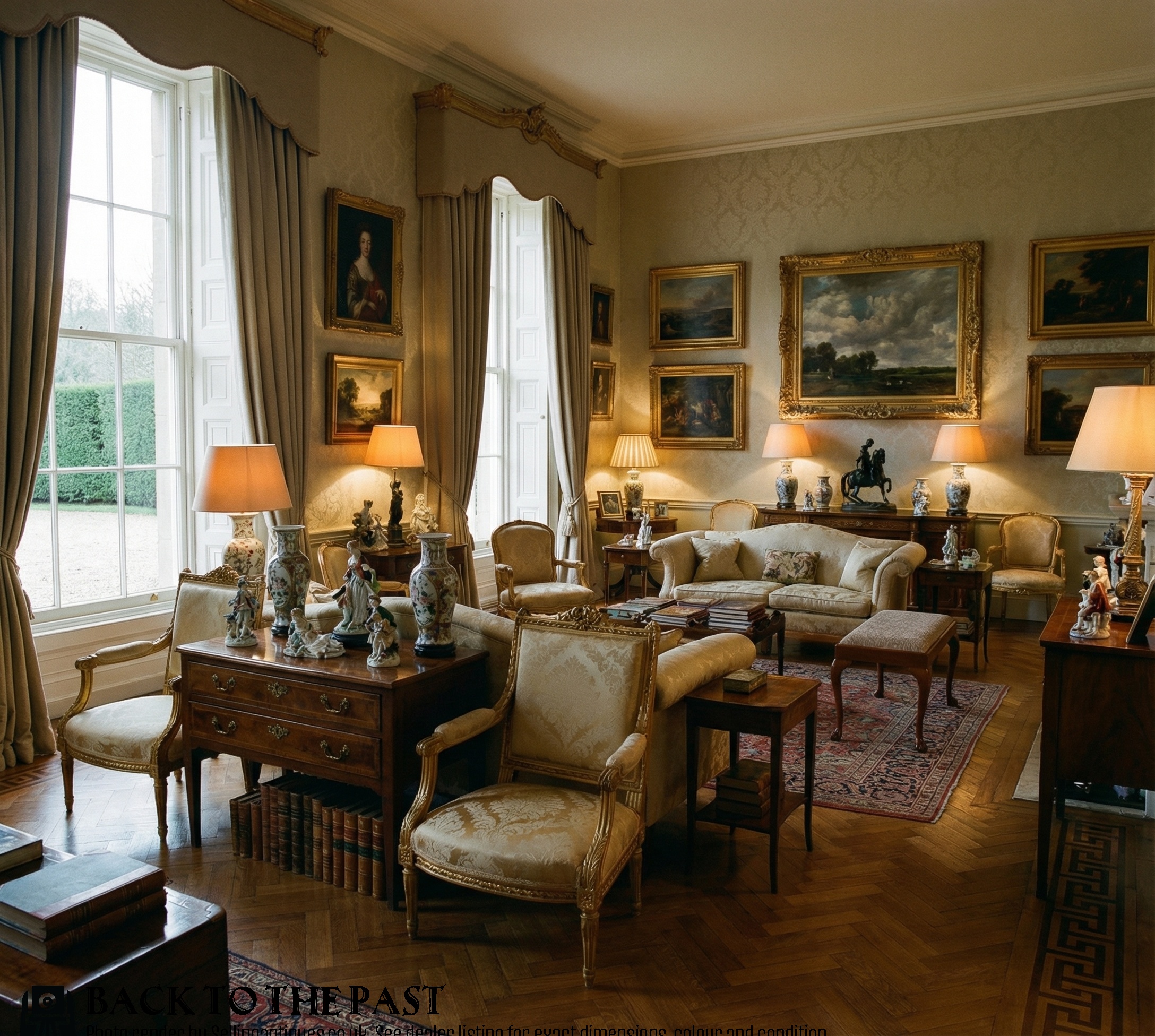
Brown Upholstered Bench
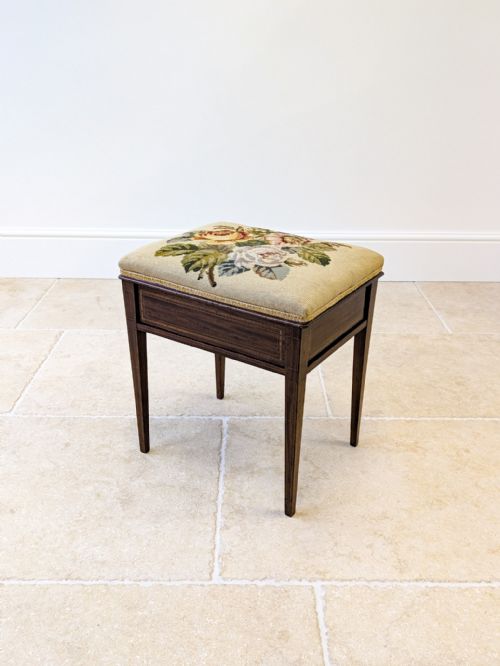
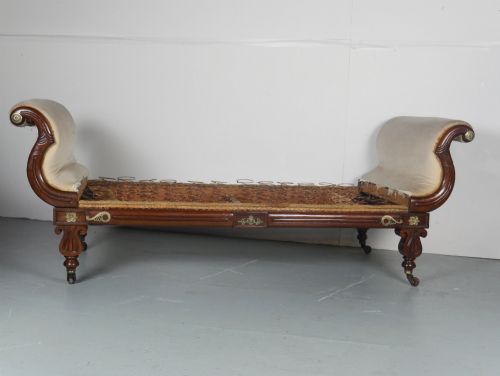
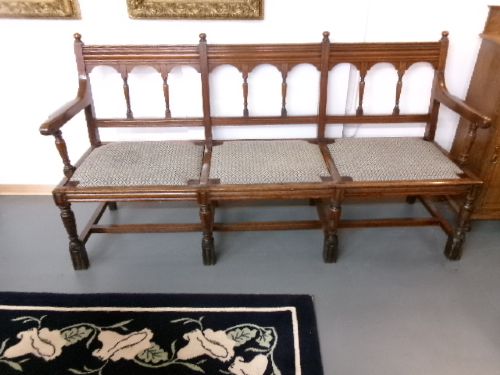
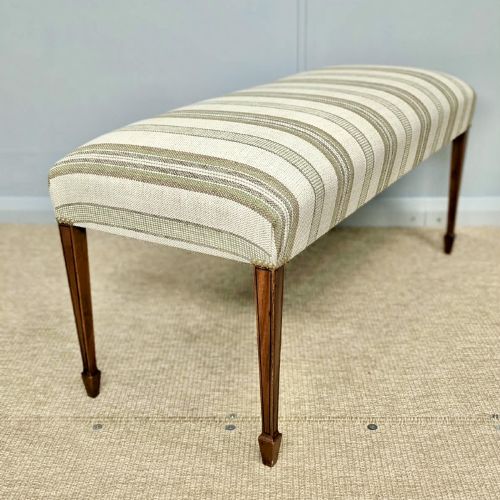
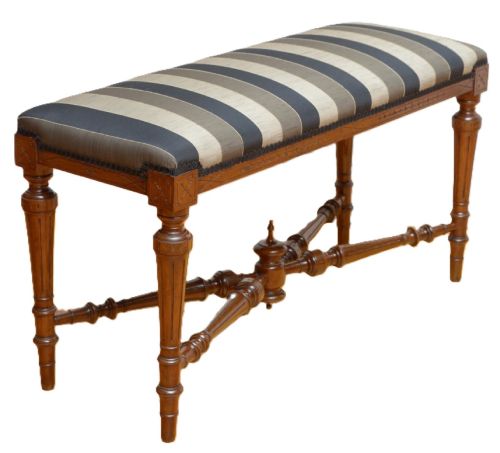
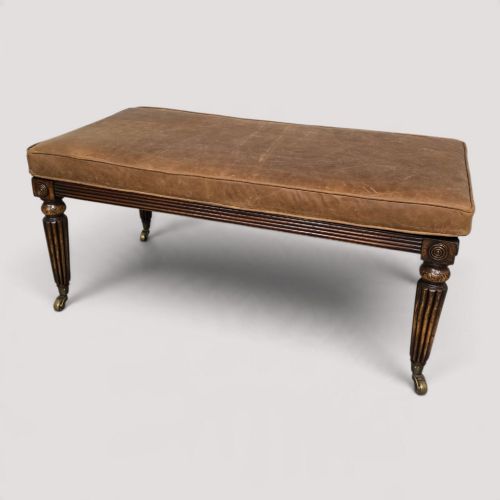
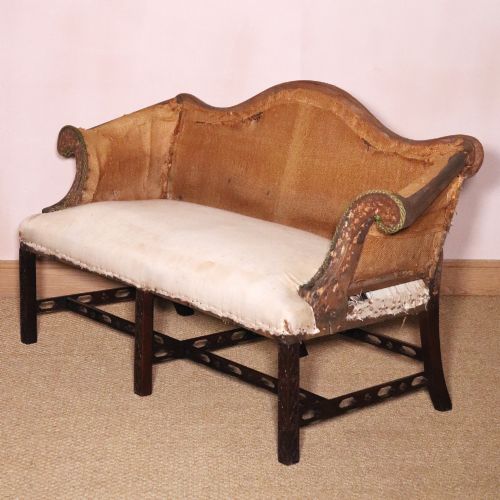
The versions most commonly met on this page include Edwardian inlaid mahogany window seats, nineteenth-century walnut stools, and compact oak or mahogany day beds and settees. Many adopt historical revival styles such as Queen Anne, Georgian and Regency, grounding traditional silhouettes in sturdy timber frames.
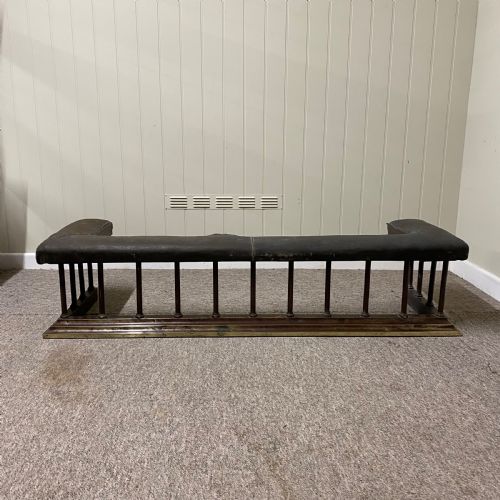
The functional roles of these items range from end-of-bed seating and dressing table perches to hallway boot stores and club fenders. Their shared characteristic is the combination of a wooden frame - typically mahogany, walnut or oak - with upholstered surfaces in fabric, leather, velvet or textile.
How they were made
The construction of these pieces relies on traditional cabinet-making timbers, notably mahogany, walnut and oak, shaped into frames through joinery and carving. Many incorporate decorative elements such as cross stretchers, inlay, bobbin turning and spindle backs to articulate the chosen style.
Upholstery techniques applied to these seats involve textiles, velvet, leather and general fabric coverings secured over padded foundations. Some variants integrate functional components like hinged storage lids, fold-down mechanisms or iron frames as seen in club fenders.
Brown Upholstered Bench Retail Price Guide 2026
Typical asking prices for brown upholstered bench among the pieces listed under this phrase on Sellingantiques today, from the lower quarter to the upper quarter. They describe what is for sale here now, not the wider market.
Listings span multiple historical periods including the Victorian, Edwardian and Regency eras, alongside specific twentieth-century decades like the nineteen-twenties and thirties.
What varies in quality
The standard of a piece rests upon the crispness of its timber carving, the integrity of its frame joinery, and the selection of woods such as figured walnut or dense mahogany. Finer examples display harmonious proportions and thoughtful details like marquetry inlay or well-executed revival styling.
Upholstery execution and the choice of covering materials also differentiate the range. High-grade items feature durable, sympathetic textiles or leathers that complement the underlying period woodwork without compromising the structural silhouette.
C. Hindley & Sons
The Brown Upholstered Bench Glossary
- Window seat
- A long, narrow bench designed to fit within the recess of a window, typically featuring upholstered top seating and wooden framing.
- Settee
- A small or medium-sized sofa with a back and arms, offering seating for two or more people.
- Club fender
- A low, U-shaped hearth seat constructed with a metal frame and leather or fabric upholstered top pads.
- Cross stretcher
- Wooden bracing bars that intersect diagonally between the legs of a stool or table to provide structural rigidity.
- Duet stool
- An extended piano stool or seat built to accommodate two players side by side.
Brown Upholstered Bench: Frequently Asked Questions
Where should I place a brown upholstered bench?
These benches suit various rooms depending on their specific form. Window seats and day beds function well in bedrooms or living spaces.
Hall benches and club fenders fit naturally into entranceways, providing convenient seating near doorways or fireplaces.
What is the difference between a settee and a window seat?
A settee functions as a standalone sofa with a defined backrest and arms, designed for general seating in a salon or bedroom.
A window seat is typically shallower and longer, built specifically to sit low within architectural window recesses.
How do I identify an Edwardian bench?
Edwardian pieces often feature lighter mahogany frames ornamented with subtle stringing or marquetry inlay. They frequently take the form of window seats or end-of-bed chairs dating from around nineteen hundred.
These designs tend to reference earlier Georgian or Sheraton aesthetics while maintaining the lighter proportions favoured at the turn of the twentieth century.
What materials are used for the upholstery?
The listings show a variety of covering materials including traditional leather, velvet, woven textiles and general fabrics. These are paired with dark wood frames.
Selection depends on the period and function, ranging from heavy club fender leather to refined window seat fabrics.