


Duet Piano Stool
A duet piano stool gives two players room to sit side by side at the keyboard in nineteenth or early twentieth century style.
What duet piano stool pieces are
A duet piano stool is an extended seating form built specifically for two musicians to share at a keyboard instrument. The pieces on this page span the nineteenth century and the early twentieth century, taking the form of long benches or wide stools.
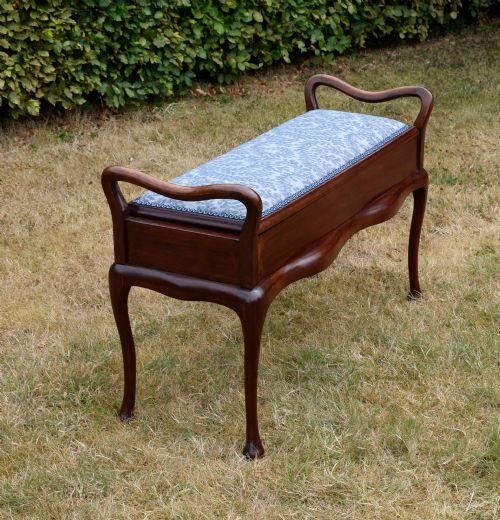
Most examples you encounter fall into the Victorian or Edwardian periods, constructed from timbers such as mahogany and rosewood. These wider frames often double as storage boxes for sheet music, accessed by lifting the upholstered seat.
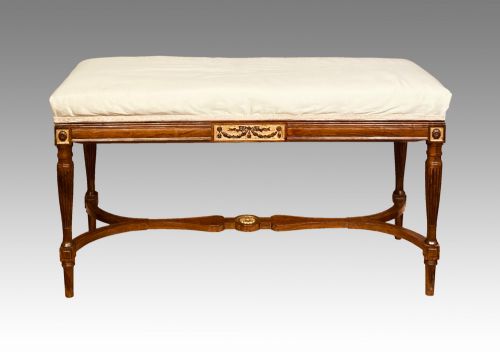
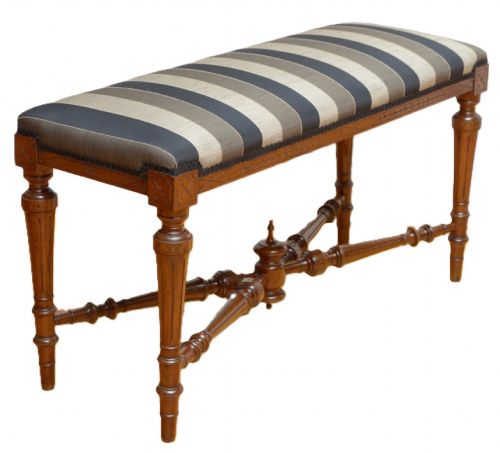
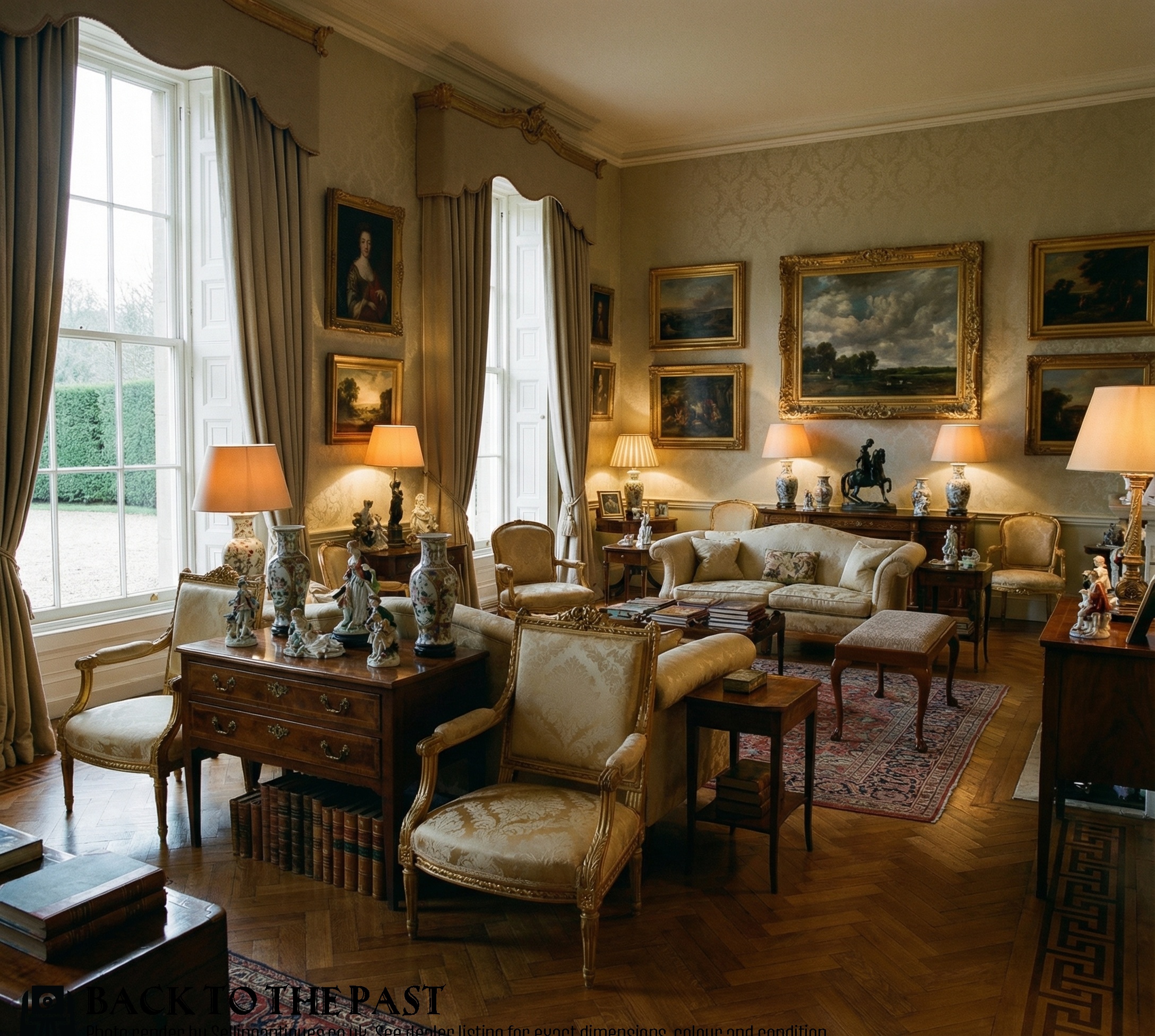
Styles range from straightforward neoclassical revival frameworks to ornate rococo and inlaid Edwardian interpretations. They sit comfortably in a drawing room or study, whether put to their original musical purpose or simply used as window seats.
Materials and construction
Cabinetmakers built these frames using solid hardwoods, predominantly mahogany and rosewood, alongside oak, walnut, satinwood and ebony. Some pieces feature marquetry inlay, giltwood detailing or black lacquered finishes.
Upholstery forms a central part of the construction, employing modern or traditional textile coverings over the long seat frames. The woodwork frequently incorporates hinged lids that open to reveal internal music compartments.
Some nineteenth century players kept their thumb exercises hidden inside the bench lid, just out of sight of strict tutors.
Quality and craftsmanship
Quality rests in the selection of figured timbers and the precision of the cabinetwork, particularly in the joinery of the long seat frames. Finer pieces display crisp mahogany or rosewood grain and well-executed decorative inlays.
The sophistication of the turning on the legs and the structural integrity of the internal music box compartment distinguish better workshops. Maker attribution, such as the work of Charles Nosotti, elevates a piece through documented provenance.
Charles Nosotti
The Duet Piano Stool Glossary
- Marquetry
- Decorative patterns formed by fitting small pieces of veneer into a wood foundation. This technique appears on many Edwardian iterations.
- Rococo
- A decorative style characterised by asymmetrical curves and scrollwork. Victorian examples often adopt this aesthetic for carved mahogany frames.
Frequently Asked Questions
Can I use a duet piano stool as a window seat?
Their long proportions and upholstered tops make these benches suitable for placing beneath low windows. Many historical examples served this dual function in period homes.
Positioning one in a hallway or bedroom provides both a practical place to sit and concealed storage for everyday items.
How do I tell a Victorian duet stool from an Edwardian one?
Victorian models frequently utilise heavy rosewood or mahogany with deep carvings and rococo influences. They lean towards darker, richer tones and substantial upholstery.
Edwardian pieces often showcase lighter satinwood or mahogany with delicate stringing and inlay work. The overall silhouette tends to be straighter and more restrained.
Do these stools have storage inside?
A large proportion of these long seats feature a hinged top that lifts to reveal a shallow compartment. Musicians originally used this space to keep sheet music organised near the keyboard.
This hidden cavity now provides a convenient place to tidy away small household items while keeping the room neat.
What is the difference between a music stool and a duet stool?
Standard music stools are built for a single person and often feature a revolving seat mechanism on a central column. Duet stools are elongated benches designed specifically to seat two players side by side.
The wider rectangular frame of a duet version requires four legs rather than a central pedestal base.