
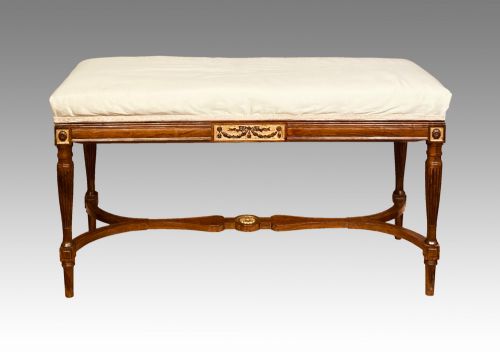
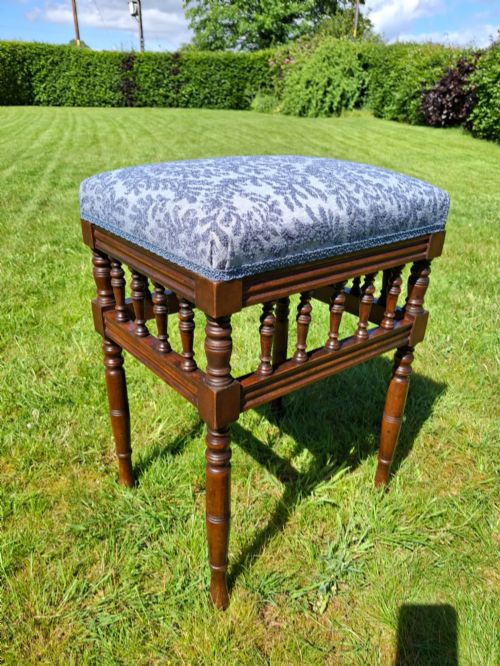


Upholstered Music Bench
An upholstered music bench brings character to a room while offering a practical seat for the piano.

Upholstered Music Bench
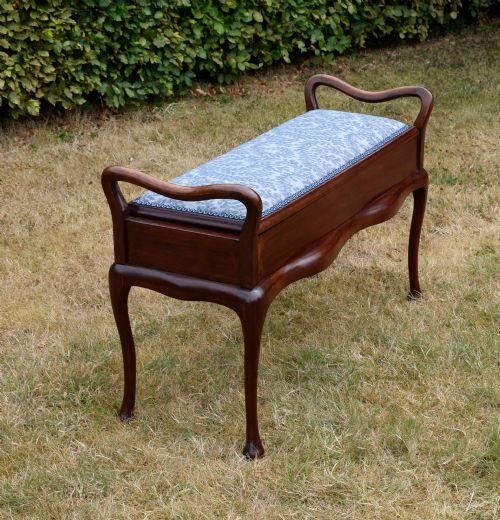
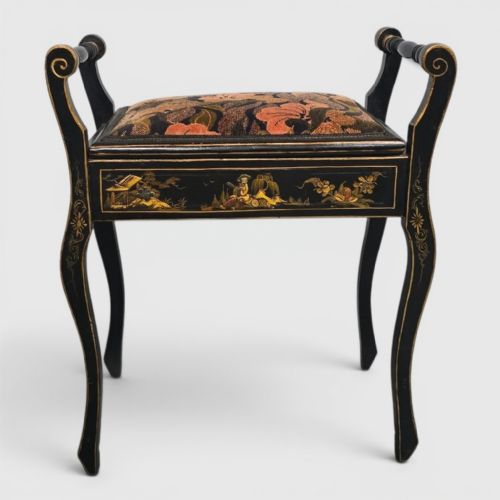
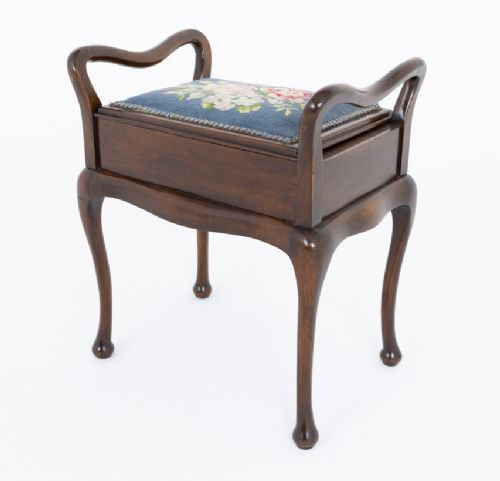
An upholstered music bench serves players at the keyboard by combining a sturdy wooden frame with a cushioned top for comfort during long practice sessions. These pieces take the form of piano stools, duet stools, and music benches designed for single players or two people sharing an instrument.
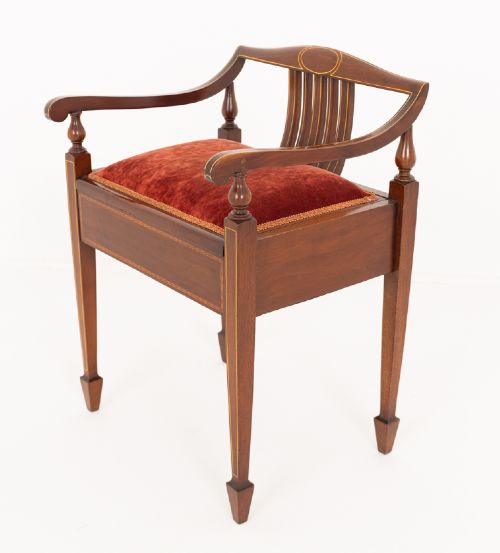
The selection ranges from Victorian and Edwardian examples to later Art Deco and Arts and Crafts designs. Buyers most frequently encounter Edwardian mahogany versions featuring inlaid details or lift-up seats alongside Victorian walnut and nineteenth-century rosewood pieces.
Makers produced both solo seats and wider duet formats, some incorporating hinged lids, fall fronts, or revolving mechanisms for sheet music storage. Oak, walnut, and mahogany dominate the structural timber, paired with fabrics ranging from velvet and tapestry to tan leather.
How they were made
Cabinetmakers constructed the frames primarily from solid mahogany, walnut, or oak, often applying satinwood inlay to accentuate the woodwork on Edwardian and revival pieces. Turning, carving, and X-frame bracing provided structural support while following popular period styles such as Sheraton Revival and Queen Anne Revival.
Upholsterers padded the seats using traditional stuffing techniques before securing top covers of fabric, velvet, tapestry, or leather. Metal hardware, including brass hinges and revolving screws, enabled functional elements like lift-up lids, fall fronts, and adjustable heights.
Some nineteenth-century pianists clearly preferred a spin, relying on a central screw to adjust their height before tackling a demanding sonata.
What varies in quality
The choice of primary timber and secondary woods dictates the foundational build, with dense mahogany and walnut offering superior durability compared to simpler utilitarian woods. Finer examples display precise satinwood inlay and well-executed stylistic flourishes from periods like the Sheraton Revival.
The sophistication of the mechanical parts separates standard seating from finer production. Smooth operation in revolving screws, tight joints in hinged lift-up seats, and robust brass fittings demonstrate higher standards of original craftsmanship.
Charles Nosotti
The Upholstered Music Bench Glossary
- Duet stool
- A wider music bench designed to accommodate two pianists side by side. These pieces often incorporate hinged seats giving access to internal storage for music books.
- Fall front
- A hinged front panel that drops forward to reveal interior compartments or shelves for sheet music. This mechanism appears on select Victorian and Edwardian music furniture.
- Revolving piano stool
- A seat mounted on a central threaded metal spindle allowing the player to adjust height by spinning the top. This type gained popularity during the nineteenth century.
- Satinwood inlay
- Contrasting decorative wood veneer inserted into recesses within a mahogany or walnut ground. Makers utilised this technique extensively on Edwardian pieces.
- X-framed
- A structural base formed by intersecting diagonal timbers resembling the letter X. This design provides both stability and decorative architectural interest to the stool.
Upholstered Music Bench: Frequently Asked Questions
How do I spot an Edwardian music bench?
Edwardian examples typically feature light mahogany frames often enhanced with delicate satinwood inlay. They frequently present straightforward rectangular proportions with tapered legs.
Many of these pieces include lift-up upholstered lids designed to store sheet music internally. The overall aesthetic leans towards refined restraint rather than heavy Victorian ornamentation.
Can I use a duet stool for two players?
Duet stools provide a longer seat specifically engineered to accommodate two people comfortably at the keyboard. Their expanded width makes them practical for shared practice.
Most period duet versions also include internal storage compartments beneath the hinged seat. This allows both players to keep their music scores close at hand.
How does a revolving piano stool work?
A revolving piano stool operates on a central threaded metal spindle that raises or lowers the seat when turned. This mechanism allowed nineteenth-century musicians to customize their playing height easily.
Users simply spin the upholstered top clockwise or counter-clockwise until reaching the desired elevation. Sturdy wooden underframes support the central screw mechanism.
What fabrics were used for the upholstery?
Original upholstery materials on these benches include velvet, tapestry, textured fabric, and tan leather. Makers selected durable textiles capable of withstanding regular use.
Many surviving pieces retain later reupholstery while keeping their antique wooden frames intact. The choice of fabric often reflects the specific period of manufacture, from heavy Victorian velvet to simpler Edwardian textiles.