




Carved Mahogany Piano Bench
A carved mahogany piano bench delivers solid timber framing and traditional seating to the instrument room.
Carved Mahogany Piano Bench
When you search for a carved mahogany piano bench, you encounter sturdy seating designed primarily for keyboard players across the nineteenth and twentieth centuries. These pieces appear as single stools, duet lengths for two players, and revolving mechanisms suited for adjustable height at the keyboard.
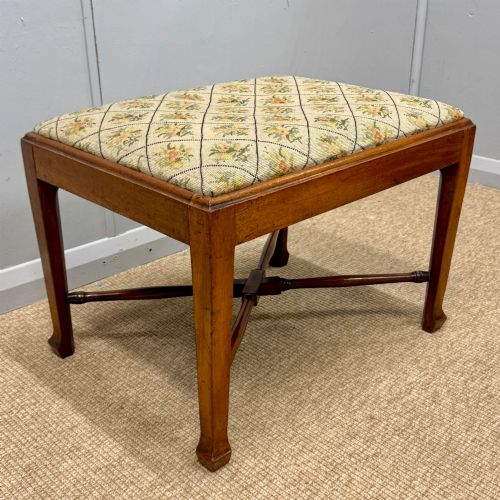
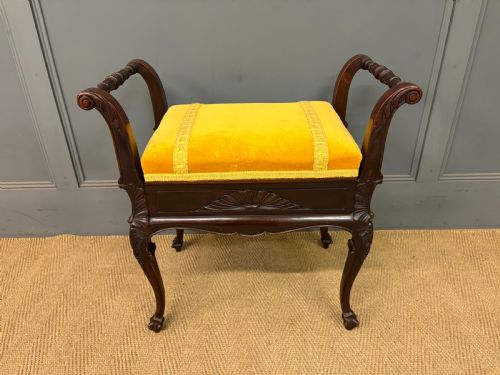
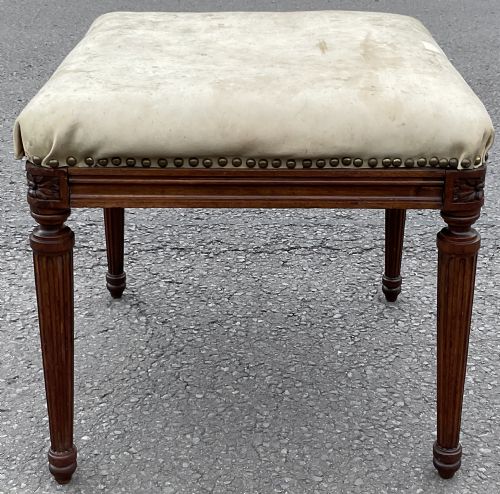
The selections on this page span from Victorian and Edwardian eras through to later revival styles like Chippendale. Makers produced these forms in mahogany, often integrating upholstered tops in velvet, tapestry, leather, or damask fabric to ensure comfort during long practice sessions.
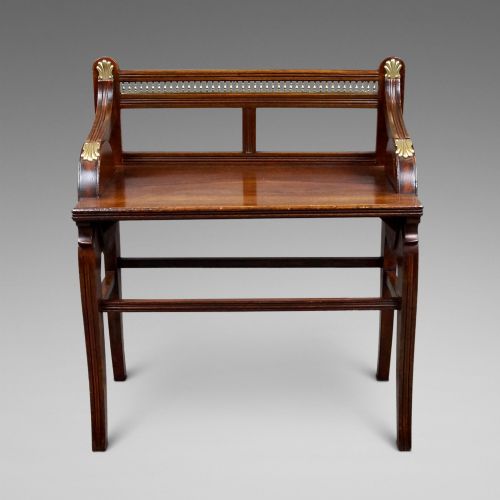
You will also find related dressing stools sharing the same timber and structural vocabulary. The typical form relies on turned or cabriole legs, sometimes featuring cross stretchers or ball and claw feet for added stability and decorative presence.
How they were made
Carpenters worked primarily with solid mahogany to construct the frames, utilising mortise and tenon joints to withstand the physical demands of daily use. Carvers applied ornamentation by hand directly into the dense timber, executing details such as cabriole curves and claw feet.
Upholstery techniques involved securing fabric over internal padding and webbing, using materials like velvet, tapestry, leather, and damask. Brass hardware frequently appeared on revolving screw mechanisms and hinges for duet seats that opened to store sheet music.
Some duet benches hide your forgotten piano scales beneath a hinged lid.
What varies in quality
The grade of timber and the crispness of the hand carving separate standard production items from finer workshop pieces. Dense mahogany with rich grain variation allows for sharper detailing in scrollwork and leg profiles compared to softer or plainer stock.
Mechanical complexity also dictates distinction, particularly in revolving seats or well-fitted hinged lids for duet storage. Superior examples maintain smooth movement in their adjustable threads and sturdy rigidity in their leg joints over generations of use.
Jas Shoolbred
The Carved Mahogany Piano Bench Glossary
- Mahogany
- A durable tropical hardwood prized for its deep reddish-brown colour and stable grain structure. It serves as the primary structural material for these benches.
- Cabriole leg
- A furniture leg that curves outward in a convex arc and tapers inward in a concave arc, ending in a pad or claw foot. This form derives from ancient Chinese motifs popularised in European design.
- Duet stool
- An extended seating bench designed to accommodate two musicians side by side at a piano. These often incorporate hinged seats concealing internal compartments for sheet music.
- Revolving piano stool
- A seat fitted with a threaded central screw allowing the player to adjust their sitting height by spinning the top. This mechanism provides customisable posture support.
- Cross stretcher
- Wooden reinforcement bars connecting the lower legs of a stool to prevent lateral movement. They add structural rigidity and visual weight to the underframe.
Carved Mahogany Piano Bench: Frequently Asked Questions
How do I date a piano bench?
Dating relies on stylistic clues such as the presence of cabriole legs, Edwardian neoclassical motifs, or Victorian turning.
Hardware types like brass screws for revolving tops and the choice of upholstery fabric also help narrow the period of manufacture.
What is a duet piano bench?
A duet bench provides an extended seating surface wide enough for two people to play together.
Many of these longer examples feature a hinged seat lid that opens to reveal storage space for music books.
Can I use these as dressing stools?
Yes, many period stools share identical dimensions and mahogany frames suitable for bedroom vanity use.
Their upholstered tops in velvet, tapestry, or leather coordinate easily with various interior schemes.
How do revolving piano stools work?
Revolving stools utilise a central wooden or metal screw mechanism hidden beneath the seat top.
Turning the seat clockwise or anticlockwise raises or lowers the player to the desired height.