
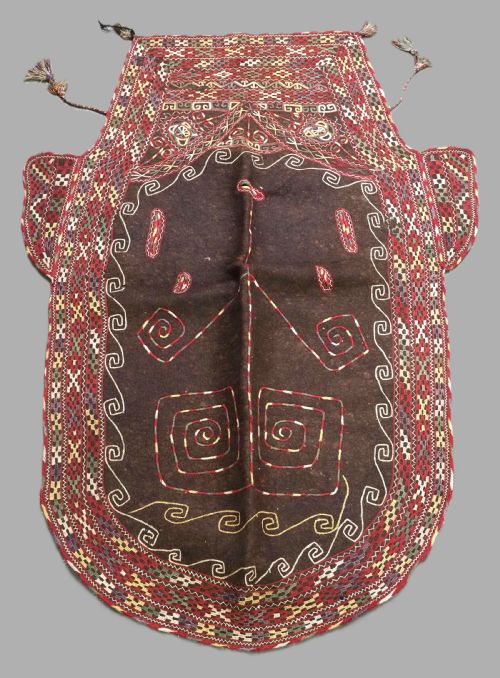


Brown Turkmen Rug
When you search for a brown turkmen rug, you enter the world of tribal Central Asian weaving, where nomadic heritage meets deep earthy tones.
Brown Turkmen Rug
A brown turkmen rug encompasses various forms created by nomadic and tribal groups across Central Asia, including main carpets, long rugs, and smaller wall hangings. These pieces often originate from specific tribal traditions such as the Yomut, Ersari, Saryk, Chodor, and Kizil Ayak groups.
The selections available range from utilitarian storage bags like torbas, mafrashes, and chuvals to expansive tent bands and prayer rugs. The visual language relies heavily on repeating guls, geometric motifs, and structured border arrangements.
Most examples date from the late nineteenth century into the early twentieth century, reflecting a period of traditional nomadic craftsmanship before industrial changes altered production methods. Buyers frequently encounter formats ranging from compact bags to substantial floor carpets.
Materials and Construction
Weavers utilised hand-spun wool for the pile, often paired with cotton and silk thread for specific structural or decorative details. Natural dyes provided the palette, yielding the rich browns, reds, and secondary tones characteristic of these textiles.
Construction techniques varied from dense pile weaving in rugs and tent bags to flatweave structures such as kilims and soumaks. Certain items incorporated felted wool or embroidery, particularly on ceremonial objects like horse blankets and tent-pole bags.
Materials recorded across the inventory include hand-spun wool, natural dyes, cotton threads, and occasional silk highlights.
Assessing Quality
Quality in these textiles often relates to the density of the weave and the precision of the geometric motifs. Finer weaves allow for sharper definition within complex gul designs and structural elements.
The handling of natural dyes and the integrity of the wool directly influence the tactile appeal and visual depth of the surface. Preserved edges, complete backs on bags, and balanced proportions distinguish superior examples within the weaving tradition.
The Brown Turkmen Rug Glossary
- Gul
- A repeating medallion or primary motif used across Turkmen tribal rugs. These octagonal or polygonal designs often identify the specific tribe or sub-group that produced the weaving.
- Torba
- A small storage bag traditionally used inside a nomadic tent. They feature detailed face designs and were hung against the yurt wall.
- Ensi
- A tribal rug designed specifically to hang as a door hanging over the entrance of a yurt. They typically display a segmented layout divided by a candelabra motif.
- Chuval
- A large storage bag utilised by nomadic families for domestic belongings. Surviving examples frequently appear as wall art or smaller rugs after the back has worn away.
- Soumak
- A flatweave technique involving wrapped weft threads that create a raised, textured surface on the face of the textile. This method provides durability without a traditional pile.
Brown Turkmen Rug: Frequently Asked Questions
What is a gul design?
A gul is a primary octagonal medallion repeated across the field of a tribal carpet. Each tribal group utilised distinct variations to signify their lineage and heritage.
These motifs anchor the visual composition of the weaving, surrounded by secondary ornaments and complex border systems.
How were storage bags used?
Nomadic families used functional bags like torbas and chuvals to store clothing, bedding, and household goods inside portable tents. They hung along the lattice walls or served as organizational containers.
Over time, many surviving pieces have been separated from their original plain-weave backs to be displayed as decorative wall hangings.
How do I care for an antique rug?
Protect the wool textile by placing it in areas away from direct, harsh sunlight to prevent natural dye fading. Gentle vacuuming without a rotating brush roll helps maintain the pile.
Allow air circulation underneath the textile and consult a specialist experienced in antique tribal pieces for periodic cleaning.
How are different tribes identified?
Tribal attribution relies on specific structural characteristics, colour palettes, and the specific geometry of the repeating guls. Yomut, Ersari, and Saryk weavers each employed distinct structural choices.
Examining the side cords, end finishes, and secondary motifs helps clarify the origin of nineteenth-century pieces.