

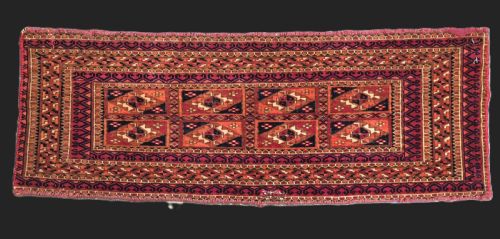
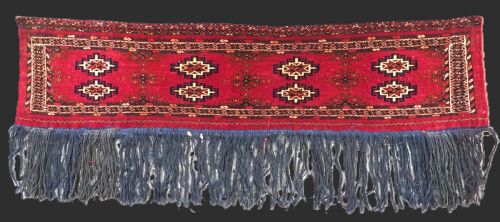
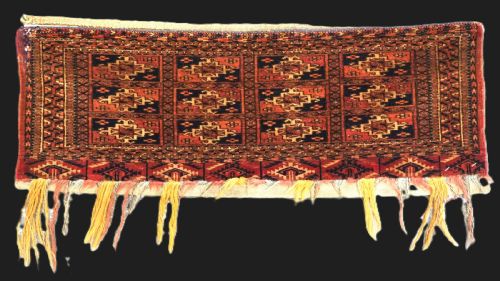


Wool Tribal Torba
A wool tribal torba is a nomadic storage bag woven by Central Asian weavers, prized for its intricate guls and rich history.
Wool Tribal Torba
A wool tribal torba represents a specific form of nomadic utility weaving originating from Central Asian groups such as the Tekke, Yomut, Saryk and Ersari tribes, alongside Lakai Uzbeks. These pieces functioned primarily as tent storage bags or horse covers within tribal households, designed to hold household goods or personal possessions.
Buyers browsing this selection will encounter wool tribal torba examples mostly dating from the mid-nineteenth century through to the early twentieth century. Many survivors appear as isolated bag faces, though complete specimens retain their plain weave backs, tassels and occasionally original carrying systems.
The geography of these items spans the Trans-Caspian steppes, Turkmenistan, and parts of Uzbekistan, reflecting the nomadic traditions of the region. Distinct tribal groups employed specific structural layouts and primary motifs, allowing collectors to identify the origin of a wool tribal torba by its design vocabulary.
Materials and construction
Makers constructed each wool tribal torba using hand-spun wool for the foundational pile and structural warps, frequently integrating cotton or silk highlights to accentuate specific design elements. Artisans relied on natural dyes to achieve deep madder reds, oranges, browns and ivory grounds that define the palette of these textiles.
Weaving techniques varied between dense asymmetric knotting for piled torba faces and intricate flatweave structures for banded mafrash or utility items. Finished bags often incorporated embroidered details, subsidiary wool tassels and sturdy plain weave backs designed to endure heavy daily use inside a nomadic dwelling.
Listings feature wool tribal torba examples dated across the nineteenth and early twentieth centuries, spanning 1850 to 1920.
Assessing quality in tribal bags
Quality in a wool tribal torba stems from the density of the weave, the precision of the knotting, and the depth or saturation of the natural dyes used across the field. Exceptional examples display a high knot count per square inch, rendering crisp outlines to complex tribal guls and secondary motifs.
The handling of secondary materials also dictates the upper tier of pieces, where the inclusion of silk highlights or complete structural elements like original plain weave backs and side cords elevates the integrity of the textile. Condition, proportion and the scarcity of specific tribal designs further separate standard utility pieces from masterworks.
The Wool Tribal Torba Glossary
- Gul
- A primary medallion motif used by Turkmen and other Central Asian tribes, often repeated across the field in ordered rows. Each tribal group utilised distinct gul variants.
- Torba
- A small horizontal storage bag traditionally hung inside a nomadic tent to hold personal items or bedding. These pieces feature decorated faces and sturdy backs.
- Mafrash
- A larger rectangular storage container or compartment bag used for transporting household belongings during tribal migrations. They share structural similarities with torbas.
- Flatweave
- A textile constructed by interlacing warp and weft threads without creating a piled surface. These structures appear frequently in banded utilitarian bags.
- At Torba Ilgich
- A specialised horse cover or hanging bag associated with Lakai Uzbek tribes from Uzbekistan. These feature distinctive embroidered surface designs.
Wool Tribal Torba: Frequently Asked Questions
What were wool tribal torbas used for?
Nomadic families used these bags inside their tents to store clothing, bedding, and smaller household possessions safely off the ground.
They also served decorative and symbolic functions within the household, often forming part of a bride's dowry weaving collection.
How do I identify a Tekke torba?
Tekke pieces typically display repeating octagonal guls arranged in strict geometric grids across a deep madder red field.
They frequently incorporate fine weave structures and characteristic secondary borders that distinguish them from Yomut or Ersari equivalents.
Are most listed torbas complete bags?
Many examples survive as individual bag faces because the sturdy backs wore out or were separated during decades of use and trade.
Complete pieces featuring their original plain weave backs, tassels, and side cords command particular attention from collectors.
How should I care for a textile wall hanging?
Display textiles away from direct sunlight to prevent natural dyes from fading over time.
Mount the piece using a breathable fabric sleeve or specialised support system that distributes the weight evenly across the entire top edge.