
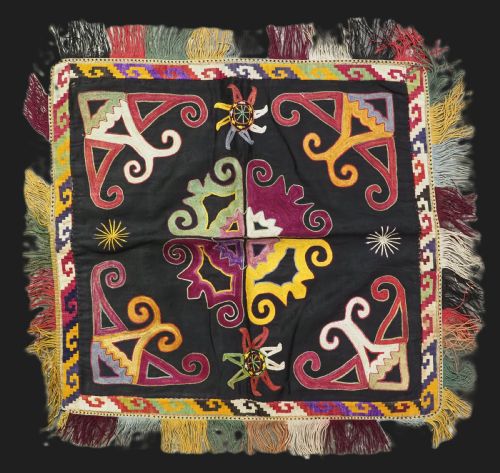


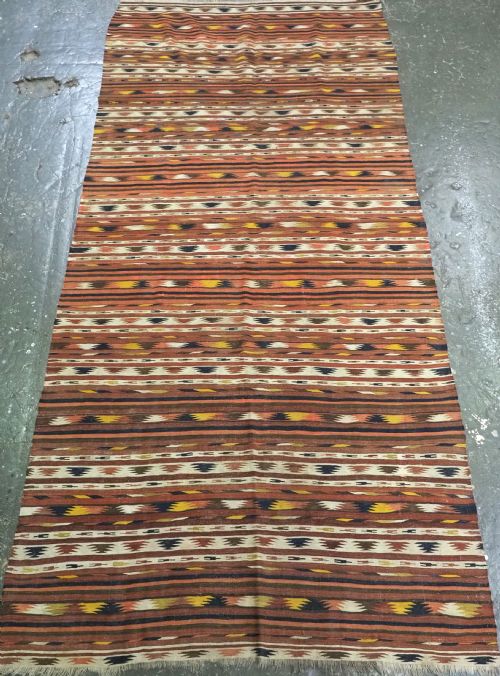

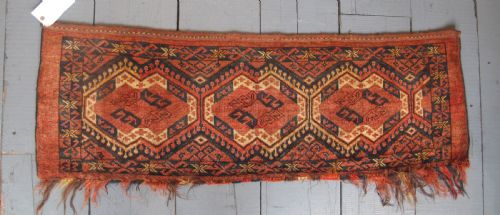


Decorative Tribal Textile
These decorative tribal textile pieces bring rich hand-woven character and traditional nomadic craftsmanship into modern rooms.
Decorative Tribal Textile
A decorative tribal textile encompasses functional nomadic weavings, dowry embroideries, and domestic storage bags created across Central Asia, Persia, and India. Buyers searching for a decorative tribal textile frequently encounter items designed for daily nomadic life, such as tent bands, portieres, and wall hangings.
The selections span the nineteenth and early twentieth centuries, capturing the distinct patterns of regional groups including the Uzbek, Tekke Turkmen, Yomut, and Timuri. These works range from small fragments and bag faces to substantial Suzani embroideries and complete kilim storage bags.
How they were made
These textiles rely primarily on wool, cotton, and silk foundations worked with natural dyes and occasionally embellished with glass beads or mounted on teak, iron, and metal stands. Artisans utilised fine weaving techniques, flat-weaving, and intricate needlework to construct durable domestic objects intended for heavy use.
Nomadic and village workshops produced these pieces through labour-intensive methods, knotting piles or embroidering complex geometric and floral motifs by hand. The reliance on natural dyestuffs yields deep, varied tones that settle across the fabric surfaces over generations.
Materials span wool, cotton, silk, and natural dyes, occasionally mounted on teak, iron, or metal stands with glass beads.
What varies in quality
The standard of a weaving depends on the tightness of the knotting or the precision of the embroidery stitches, with finer weaves creating sharper geometric definition. Material choice and the complexity of the design layout also distinguish standard utility items from masterwork dowry pieces.
Preservation of the original edges, the depth and saturation of the natural colours, and the integrity of the textile structure dictate the standing of an individual piece. Completeness of form, such as intact bag backs or full tent bands, elevates the significance of the item.
The Decorative Tribal Textile Glossary
- Suzani
- An embroidered textile from Central Asia, typically worked in silk on a cotton foundation for domestic decoration or dowries. These large hangings display bold botanical and medallion motifs.
- Torba
- A small Turkmen storage bag used within a tent for domestic possessions. They feature distinctive tribal gull patterns and banded designs.
- Sofreh
- A woven or spread cloth used for kneading bread or serving meals in Persian households. They often display minimalist geometric fields.
- Kapunuk
- A decorative tent door hanging produced by Turkmen and related nomadic groups. These architectural textiles frame the entrance of a yurt.
- Kilim
- A flat-woven textile produced without a pile using interlocking or slit-tapestry techniques. They offer crisp geometric patterns on both sides.
Decorative Tribal Textile: Frequently Asked Questions
How were tribal textiles used?
Nomadic communities utilised these woven works for practical storage, tent decoration, and domestic division within portable dwellings.
Many pieces served as dowry items, saddle bags, or ceremonial wall hangings that marked family status and tribal identity.
How do I hang a textile?
Mounting requires careful weight distribution along the upper edge, often using a hidden sleeve or archival stitching to a supportive backing.
Direct nail attachment damages the fabric, so professional framing or a fabric-wrapped batten is standard practice for preservation.
How should I clean these?
Gentle surface vacuuming through a mesh screen removes loose dust without catching fragile threads or old embroidery.
Water washing risks dye bleed and fibre shrinkage, meaning professional textile conservation is necessary for deeper cleaning.
How do I identify tribes?
Attribution relies on characteristic colour palettes, specific border motifs, and structural weaving traits unique to regional groups.
Comparing structural knotting, wool quality, and traditional repeat patterns helps separate Turkmen work from Persian or Caucasian pieces.