
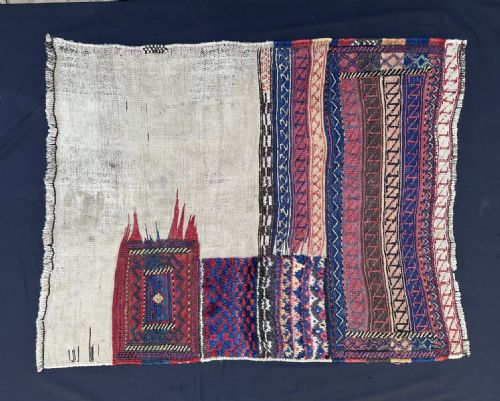
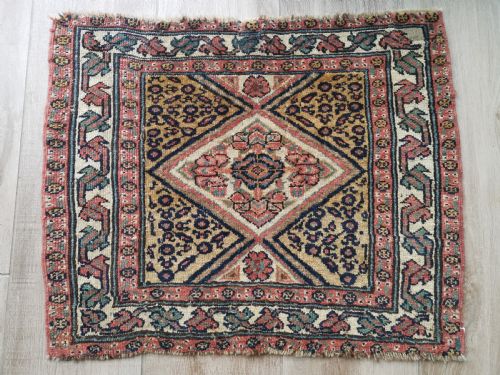
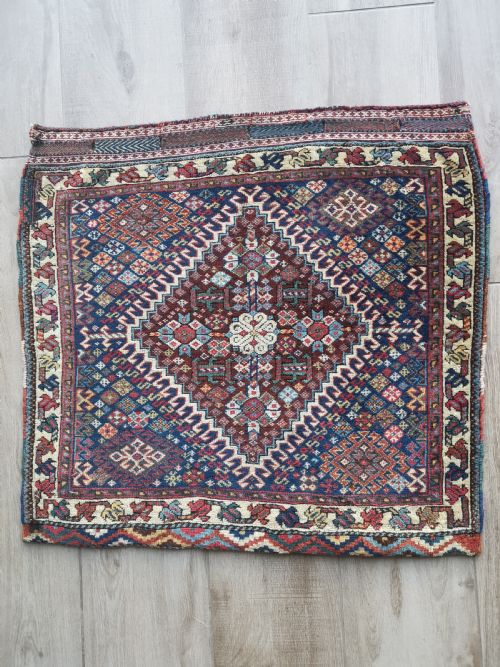
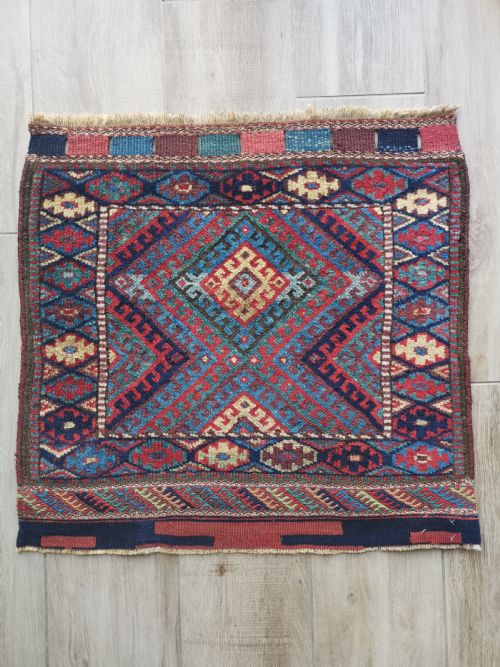

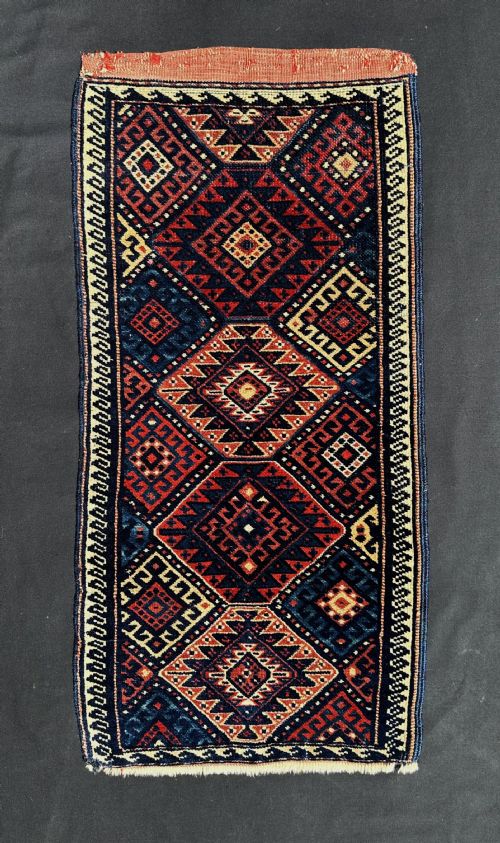
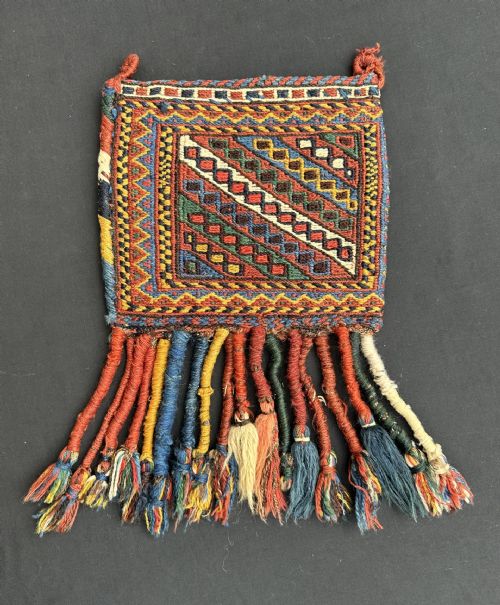


Persian Tribal Rug Fragment
These persian tribal rug fragment items are woven remnants of nomadic life, prized for their authentic geometry and rich, tactile history.
Persian Tribal Rug Fragment
A persian tribal rug fragment represents a surviving piece of a larger nomad textile, such as a saddlebag face, wheat sack, or pillow bag. When you search for a persian tribal rug fragment, you encounter items woven by specific tribal confederations across Persia during the nineteenth and early twentieth centuries.
The selections available here lean heavily toward functional utility pieces made by groups including the Afshar, Baluch, Qashqa'i, and Shahsavan. These remnants preserve traditional motifs and structural weaving techniques on a scale suited for modern display.
Most entries span from the mid-nineteenth century up to the early twentieth century, showing distinct regional aesthetics. Each piece captures the utilitarian artistry of nomadic weavers operating across western, southern, and north-east Persia.
Materials and construction
Weavers relied principally on hand-spun wool for the pile and face, often combined with cotton foundations for structural stability. Selected pieces incorporate silk or wood elements to achieve specific textural variations.
Colouring agents derived from natural dyes and vegetable dyes yield deep, muted tones that age with considerable character. Techniques range from standard hand knotting to flat-woven soumak structures and jajim weaves.
Period dates span from eighteen-fifty through to nineteen-thirty.
Factors of distinction
Quality rests upon the handle and lustre of the wool, alongside the precision of the tribal geometry. Lustrous, luminous wool combined with tightly packed knots signals superior craftsmanship.
The integrity of the remaining design elements and the complexity of the original bag face format dictate desirability. Pieces retaining clear regional iconography and stable foundations command greater appreciation among collectors.
The Persian Tribal Rug Fragment Glossary
- Khorjin
- A traditional double saddlebag used by nomads for transport and storage. Surviving fragments usually represent one face of this original pairing.
- Soumak
- A flat-weave technique involving wrap-threads over the warp, creating a textured surface resembling embroidery on the reverse.
- Boteh
- A motif resembling a almond or curved pear shape, frequently found in Persian weaving. It symbolises life and eternity.
- Tacheh
- A utilitarian grain or wheat sack woven for storage purposes. These items often feature robust geometric patterns.
- Bagface
- The visible front panel of a storage or saddle bag, separated from its reverse due to wear or damage over time.
Persian Tribal Rug Fragment: Frequently Asked Questions
What is a persian tribal rug fragment?
It is a surviving piece of a larger nomadic textile, such as a saddlebag face or storage sack.
These remnants allow collectors to own authentic tribal weaving without acquiring a full-sized carpet.
How were these fragments used originally?
Nomadic tribes utilised them for practical storage, animal transport, and household organisation.
Items like khorjins and wheat sacks served daily functional roles before being separated into individual panels.
How should I display a fragment?
Many collectors choose to mount or frame smaller textile pieces to protect the wool and structure.
Flat placement away from direct sunlight preserves the natural dyes and hand-spun materials.
How do I identify different tribal origins?
Specific knotting styles, structural materials, and characteristic motifs point toward particular groups like the Afshar or Baluch.
Regional palettes and specific geometric layouts help distinguish between western and southern Persian work.