






Flatweave Tribal Bag
When you search for a flatweave tribal bag, you encounter the woven utility items made by nomadic and village weavers across Persia, the Caucasus, and Central Asia.
Flatweave Tribal Bag
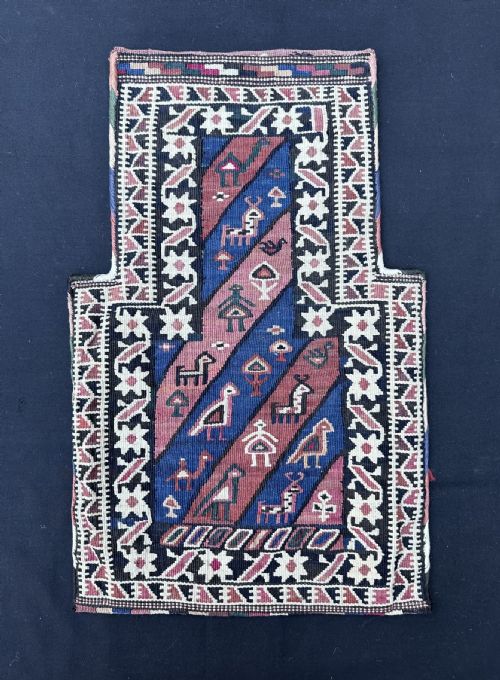
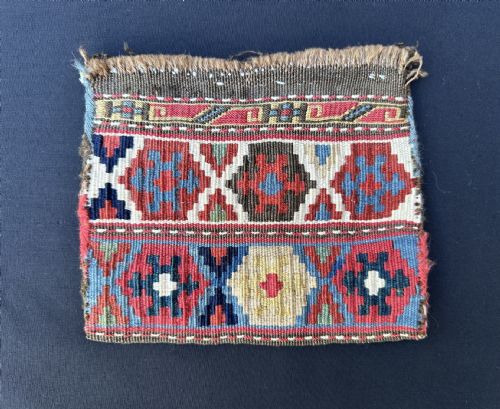
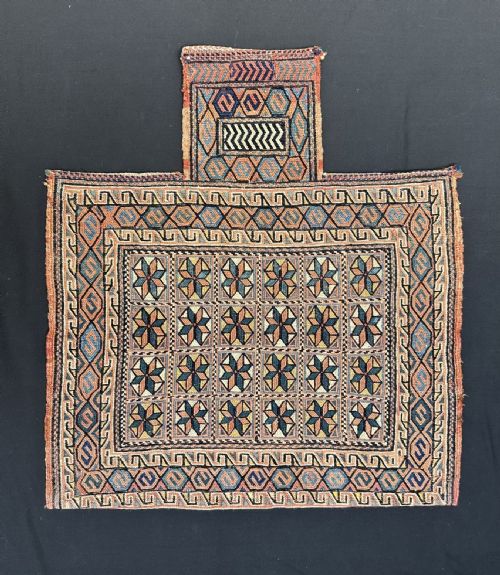
A flatweave tribal bag represents the utilitarian textiles produced by specific nomadic confederacies and tribal groups, including the Shahsavan, Qashqa'i, Bakhtiari, and various Turkmen tribes. These pieces served practical domestic functions for transport and storage, taking the form of salt bags, grain sacks, saddle bags, and small vanity containers.
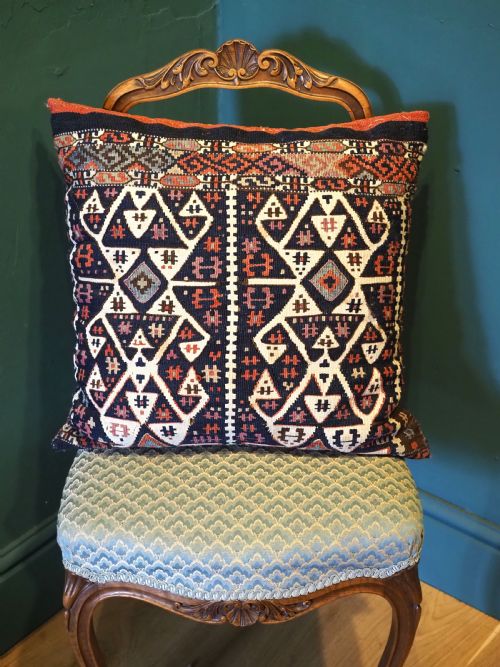
The selections available on this page date predominantly from the nineteenth and early twentieth centuries, spanning periods from the eighteen-fifties through to the nineteen-twenties. Buyers will find individual faces, complete containers with original backs, and items adapted into cushions.
Originating from regions such as Fars, Khorassan, Azerbaijan, and the Caucasus, these items reflect the distinct visual vocabularies and weaving traditions of their makers. Each tribal group utilised specific structural formats and pattern arrangements suited to their nomadic way of life.
How they were made
Weavers relied on hand-spun wool and occasionally goat hair or cotton, employing slit-tapestry flatweave, soumak wrapping, and banded weft work techniques to construct durable storage surfaces.
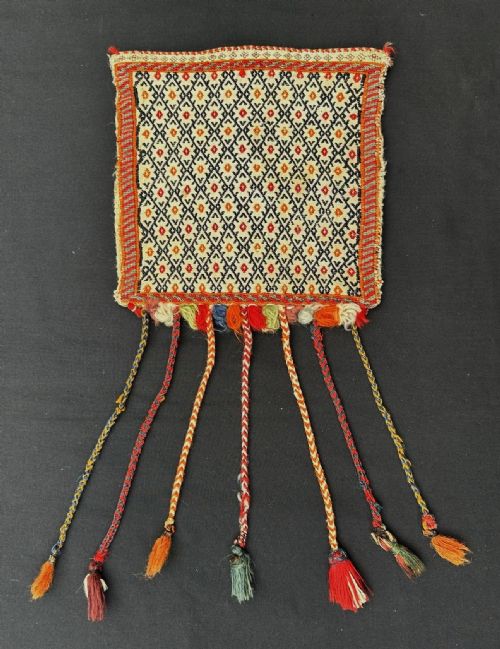
Colours derived from natural dyes applied to the fleece, complemented in certain examples by applied decorative elements such as cowrie shells, leather, and metal components.
Nomadic weavers occasionally incorporated cowrie shells into their utility bags to ward off the evil eye during long desert migrations.
What varies in quality
Quality rests upon the tightness of the weave, the precision of the geometric or banded design execution, and the handling of the flatweave structure. Pieces retain greater integrity when they preserve original backs, borders, and tassels.
The depth and variation of natural dye colours, alongside the fineness of the hand-spun wool, distinguish the construction of individual tribal textiles.
The Flatweave Tribal Bag Glossary
- Kilim
- A flatweave textile produced without pile by tightly interweaving warp and weft strands. This technique forms the structural basis for many utilitarian storage containers.
- Soumak
- A brocade-like weaving technique where coloured weft threads are wrapped over and under warp threads. This method creates a textured surface and adds durability to the face of a bag.
- Chuval
- A large Turkmen storage bag traditionally used for household goods inside a yurt. These pieces often feature tiered gul motifs across the face.
- Mafrash
- A rectangular storage bag or trapan side, typically woven in sets to carry bedding and belongings during migration. They frequently display banded flatweave or soumak designs.
- Tacheh
- A large grain or wheat sack woven by nomadic groups in western regions of Persia. They are characterised by robust flatweave construction intended for heavy agricultural use.
Flatweave Tribal Bag: Frequently Asked Questions
What were flatweave tribal bags used for?
Nomadic families utilised these containers to store salt, grain, wheat, and personal belongings during seasonal migrations. They functioned as practical household gear rather than decorative items.
Larger versions served as pack animal saddle bags or bedding containers inside tents, while smaller pouches held vanity items or pipes.
How do I care for a flatweave bag?
Protect the antique wool and natural dyes by keeping the textile away from direct, harsh sunlight to prevent fading. Gentle vacuuming with a mesh screen attachment helps remove surface dust.
Avoid excessive moisture and professional chemical washing, consulting a textile conservator if deeper cleaning becomes necessary.
How can I tell different tribal designs apart?
Different tribal groups employed distinct structural formats, colour palettes, and geometric motifs in their weaving. Shahsavan pieces often display precise soumak wrapping and banded patterns from Azerbaijan.
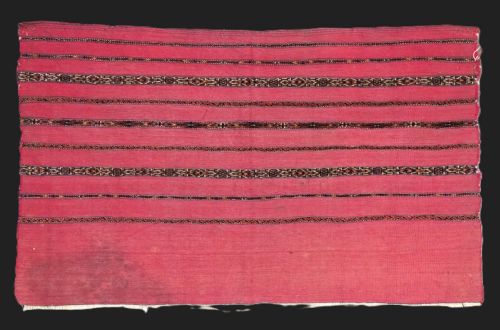
Turkmen groups like the Teke and Yomut utilised specific guls and red-ground layouts on their chuvals and torbas, reflecting their Central Asian heritage.
Are these bags complete with their original backs?
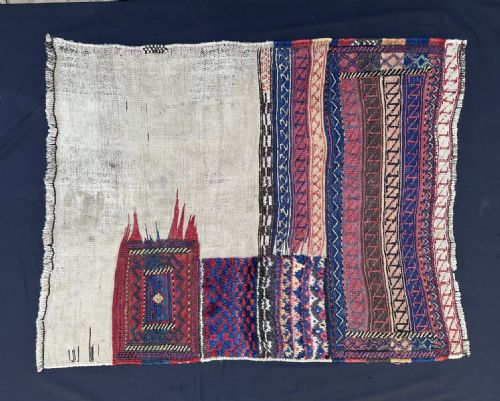
Survival varies across the pieces, with some surviving merely as decorative bag faces while others retain their complete plain weave backs and original tassels. Complete pieces with intact backs and closures offer a view of the original construction.
Listing descriptions specify whether a piece is a sole face or a complete container.