

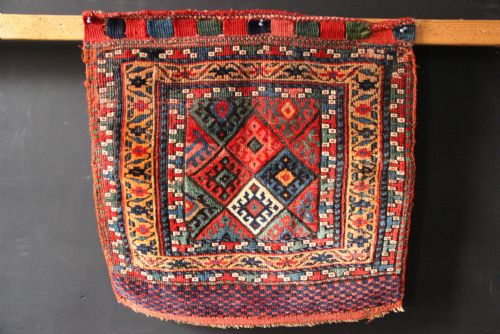
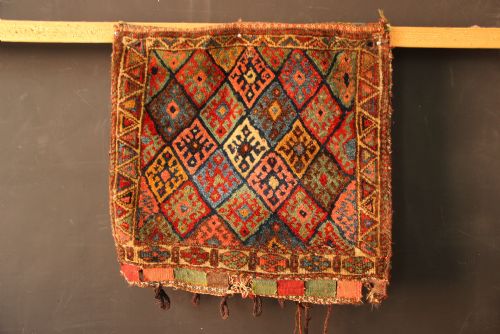


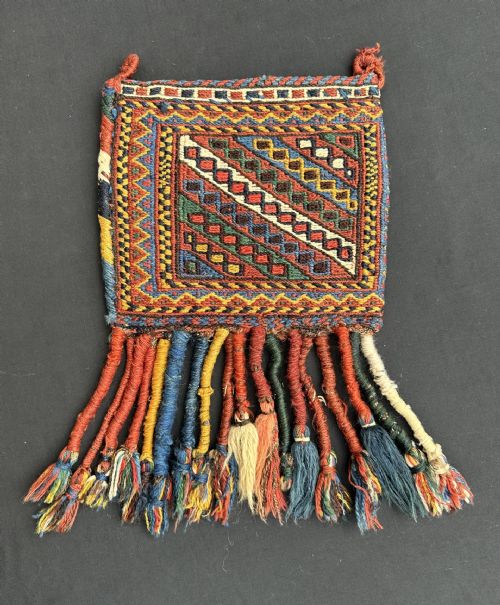
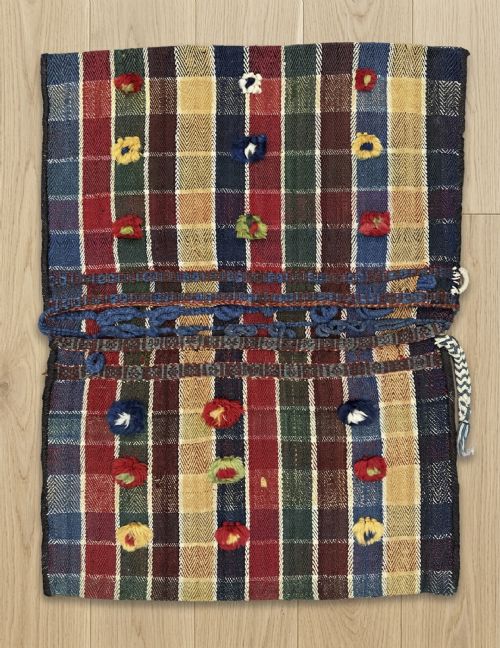


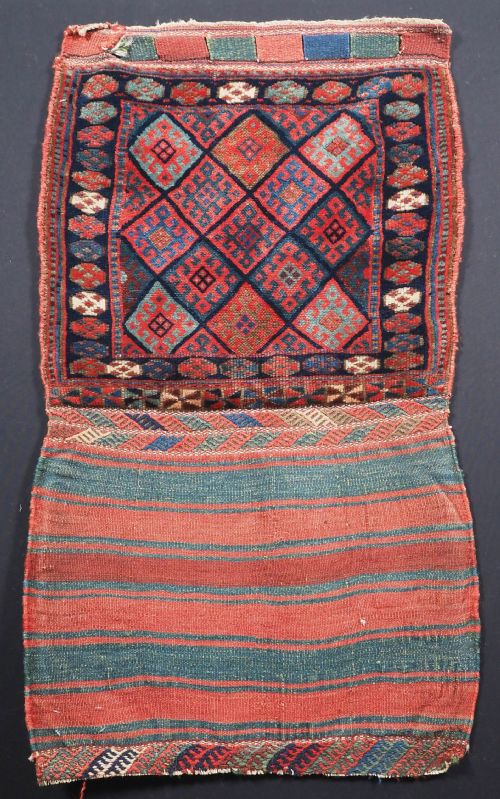
Multicoloured Woven Bag
A multicoloured woven bag brings genuine tribal artistry and nomadic history straight into a room.
Multicoloured Woven Bag
A multicoloured woven bag represents traditional nomadic textile work, primarily originating from Persian tribal confederacies, Caucasian groups, and Central Asian Uzbek or Kurdish makers. These pieces span from the late nineteenth century up to 1910, reflecting utilitarian storage objects produced for daily nomadic life.
How they were made
Weavers utilised natural dyes to colour hand-spun wool and cotton fibres before constructing each textile. These traditional dye methods produced the deep, enduring hues visible across the Persian, Caucasian, and Central Asian regions.
Construction involved dense weaving techniques, occasionally paired with plain weave backs and applied decorations such as cowrie shells. Silk also appears in specific smaller items, demonstrating varied regional textile traditions from 1880 to 1910.
Multicoloured Woven Bag Retail Price Guide 2026
Typical asking prices for multicoloured woven bag among the pieces listed under this phrase on Sellingantiques today, from the lower quarter to the upper quarter. They describe what is for sale here now, not the wider market.
Materials recorded include wool, cotton, cowrie shells, hand-spun wool, natural dyes, and silk.
What varies in quality
The finesse of the knotting or weaving density distinguishes finer examples from simpler utilitarian pieces. Artisans who maintained tight, precise structures created more durable and visually crisp geometric patterns.
The vibrancy and complexity of the natural dye palette also define the upper tier of these textiles. Richly varied multicoloured compositions demonstrate superior skill in dye preparation and colour pairing among tribal makers.
The Multicoloured Woven Bag Glossary
- Mafrash
- A large rectangular storage bag or compartment used by nomadic groups for bedding and household goods. These pieces were often woven in panels and assembled into sturdy containers.
- Torba
- A wide tribal storage bag traditionally hung inside a tent to hold provisions or personal items. They showcase distinct regional weaving patterns.
- Salt-bag
- A small, narrow-necked pouch designed specifically to hold and transport salt within a nomadic camp. Their shapes reflect practical daily utility.
- Ikat
- A dyeing technique where yarn is resist-dyed prior to weaving to create characteristic blurred pattern edges. It appears on portable silk purses from Central Asia.
- Cowrie shells
- Marine shells sewn onto tribal textiles as protective amulets or decorative borders. They signify status and traditional ornamentation in nomadic cultures.
Multicoloured Woven Bag: Frequently Asked Questions
What were these bags used for?
Nomadic communities used these woven containers to store salt, personal vanity items, spoons, or household goods during travel and inside tents.
Larger versions functioned as saddle bags or bedding containers, while smaller pouches served personal daily needs.
How do I live with them?
Display these textiles on walls as hanging art or place them flat on stable surfaces to preserve their structure.
Keep them away from direct sunlight to protect the natural dyes used in the wool and silk.
How do I tell periods apart?
Dating relies on structural analysis, wool quality, and regional dye characteristics typical of late nineteenth and early twentieth century production.
Pieces from the eighteen-eighties often exhibit specific tribal motifs that evolved slightly by nineteen-ten.
Where did these bags originate?
Origins trace back to tribal confederacies and minority groups across Persia, the Caucasus, and Central Asia.
Specific groups such as the Qashqai, Afshar, Kurds, and Lakai Uzbeks produced distinct regional styles.