
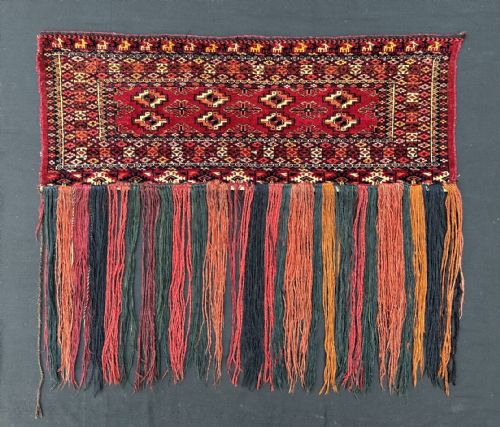
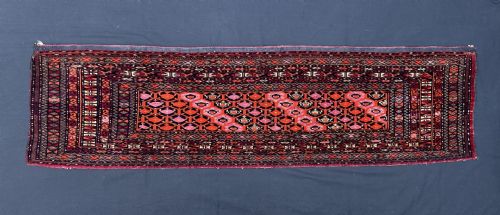
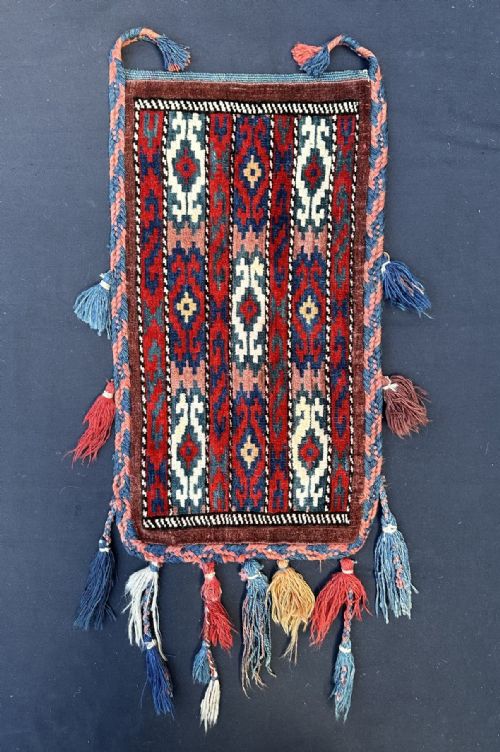
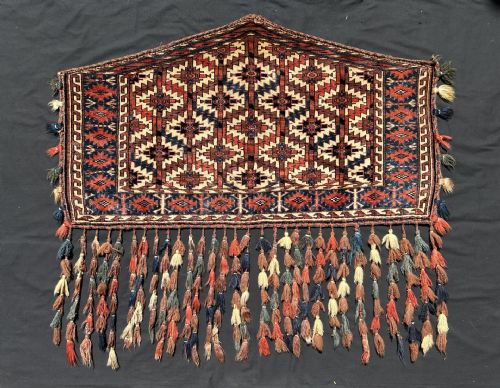

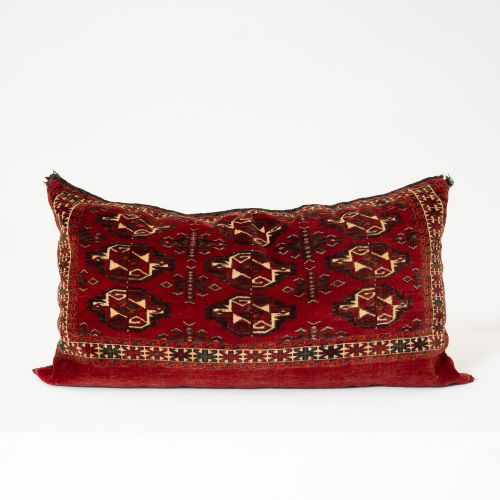


Turkmenistan Woven Textile
A turkmenistan woven textile delivers the rich geometric artistry of nomadic tribes, offering tactile depth and historic character for collectors.
Turkmenistan Woven Textile
The material record spans from the eighteenth century into the twentieth century, capturing distinct tribal traditions. Pieces represent groups such as the Yomut, Teke, Ersari, and Sariq.
Objects range from complete storage bags and saddle covers to fragments and flat weaves. Each item served a specific function within tribal domestic and ceremonial life.
What varies in quality
Quality rests upon the fineness of the knotting or weave density and the handling of natural dyestuffs. Superior examples display precise geometry and balanced proportions across the surface.
The integrity of surviving tassels, borders, and original backs influences the standing of a textile. Depth of colour and wool quality further distinguish finer tribal works.
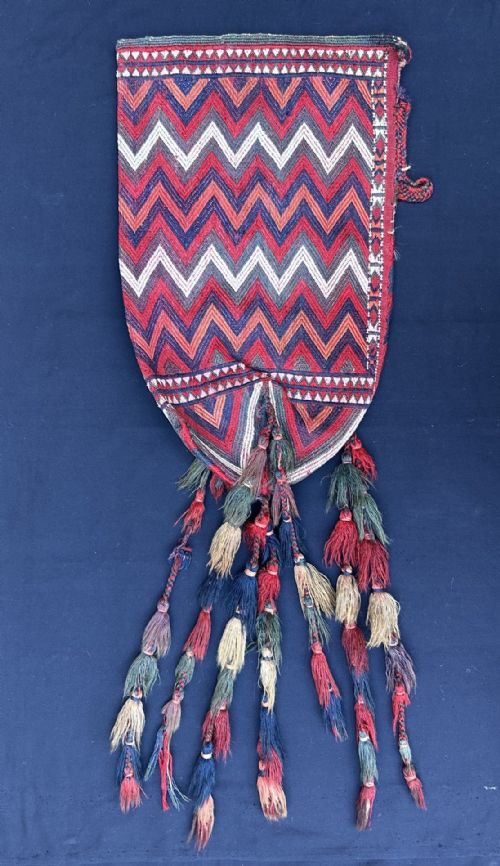
Some tent-pole bags retain their original wool tassels, surviving centuries of nomadic household migration.
The Turkmenistan Woven Textile Glossary
- Asmalyk
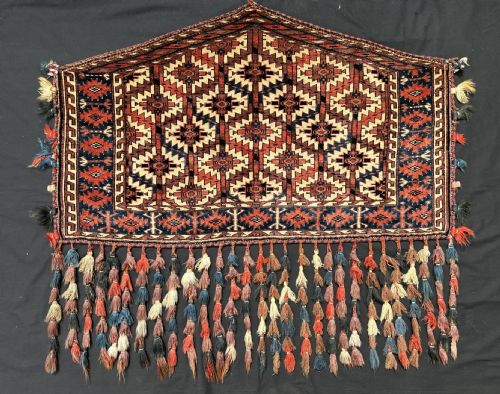
- A ceremonial pentagonal trapping produced by Turkmen tribes for camel decoration during weddings. These pieces display intricate field designs and geometric borders.
- Chuval
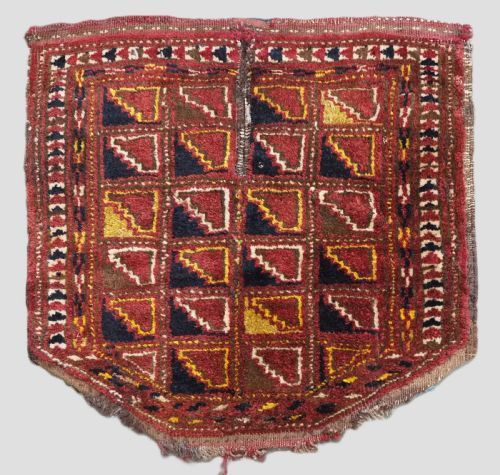
- A large storage bag utilised within the nomadic tent for household goods and bedding. They frequently feature rows of primary guls.
- Torba
- A smaller wall-hanging storage bag created by tribal weavers. These items were suspended inside the yurt for smaller possessions.
- Guls
- The repeating primary medallion motifs associated with specific Turkmen tribes. Each tribal group utilised distinct secondary and primary patterns.
- Cicim
- A supplementary woof-wrapping embroidery technique used to create decorative surface patterns on flat weaves. This method adds textural relief to the textile.
Turkmenistan Woven Textile: Frequently Asked Questions
What are asmalyks used for?
Asmalyks functioned as ceremonial camel trappings during traditional Turkmen wedding processions. They were mounted on the flanks of the bride's camel.
These pieces were later displayed inside the nomadic tent as prized household possessions. Their complex geometry reflects the artistic output of specific tribal groups.
How do I identify tribal origins?
Tribal attribution relies on specific guls, border arrangements, and colour palettes unique to groups like the Yomut, Teke, or Ersari. Each tribe utilised characteristic design vocabularies.
Structure and weaving techniques also offer clues to regional origins across the Trans-Caspian steppes and Amu Darya region.
Where were these textiles made?
Weavers produced these textiles across Central Asia in regions such as the Merv Oasis, Akhal Oasis, and the Middle Amu Darya valley. Nomadic and settled tribal communities created them for daily domestic use.
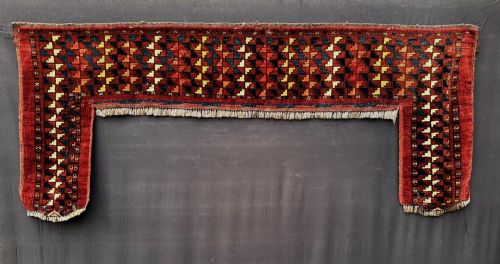
Workshops and tent camps throughout Turkmenistan contributed to the diverse range of surviving bag faces and tent bands.
How should I display textiles?
Wall hangings and smaller bags suit mounting on specialist fabric supports or display rods away from direct sunlight. Proper weight distribution prevents distortion of the wool structure.
Flat weaves and smaller trappings can also be utilised as surface coverings or enjoyed as textile art.