

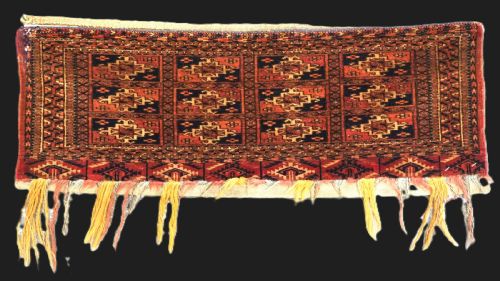


Woven Turkmen Bag
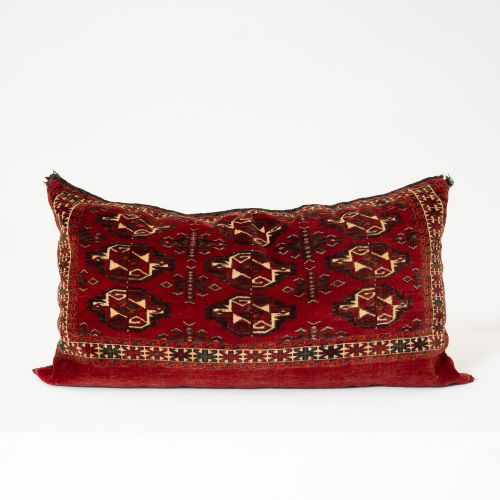
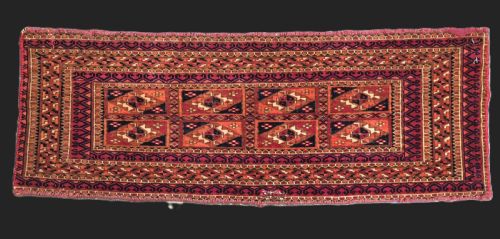
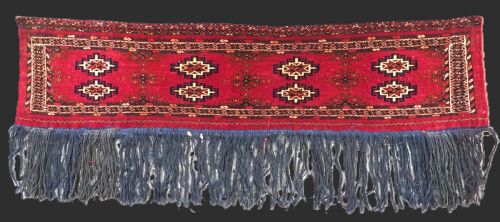
Woven turkmen bag examples are utilitarian tribal weavings from Central Asia created for nomadic storage and prized today for their rich, dark red palettes and geometric guls.
Woven Turkmen Bag
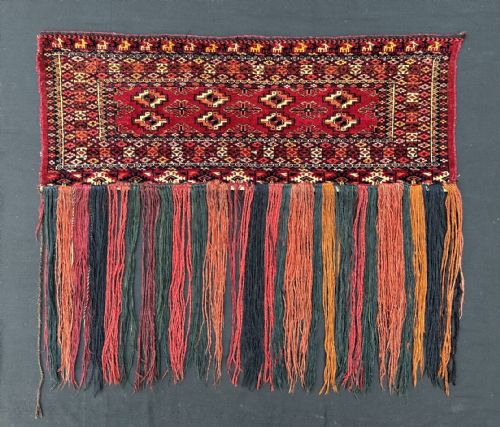
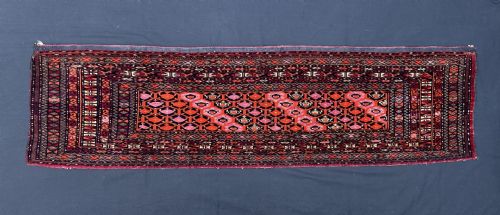
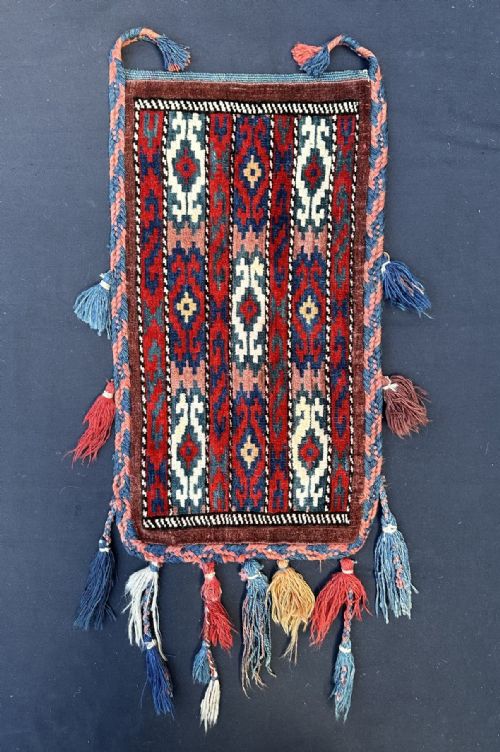
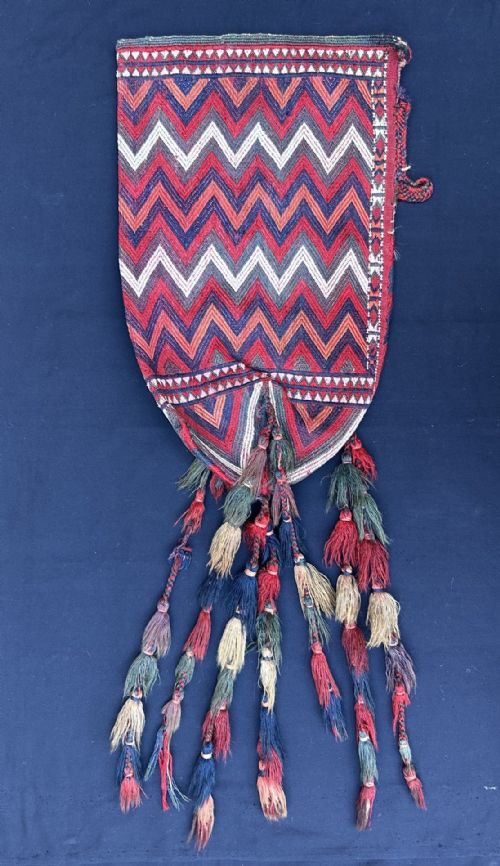
A woven turkmen bag encompasses various nomadic receptacles including torbas, chuvals, kap, jollars, and spindle bags produced across the Trans-Caspian steppes and oases. These textiles served practical functions within tribal households for storing household goods, bedding, and possessions.
The selections encountered here originate primarily from the nineteenth century, spanning from the 1850s through the early twentieth century. Pieces are attributed to specific tribal groups such as the Tekke, Yomut, Saryk, and Ersari.
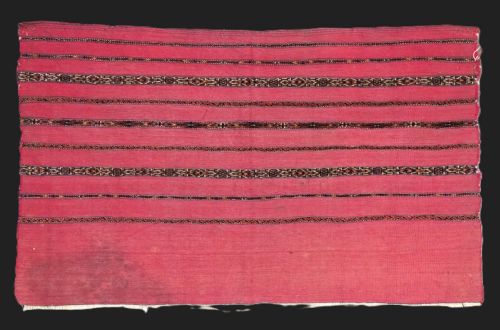
Many survivors are presented as bag faces where the original plain weave back has been lost, though complete examples with their original backs or flatweave structures occasionally appear.
Evaluating quality and execution
Quality rests upon the density of the weave and the precision of the geometric motifs. Finer knot counts allow for sharper delineation of tribal guls such as the kepse, salor, or chuval variations.
The depth and saturation of the natural dyes influence visual appeal, alongside the preservation of the original format whether complete with a back or surviving as a fragment.
Spindle bags preserve the exact tools of nomadic spinning within their narrow formats.
The Woven Turkmen Bag Glossary
- Gul
- A primary medallion motif repeated across tribal carpets and bags, often identifying the specific tribe or clan of the weaver.
- Torba
- A small horizontal storage bag traditionally used inside a nomadic yurt for household provisions.
- Chuval
- A large tent bag utilised for bedding and heavy storage, frequently displaying multiple rows of guls.
- Kap
- A general term for a bag or small sack used in nomadic households for various storage needs.
- Jollar
- A long, narrow bag intended for camel or horse transport, possessing a distinctive rectangular format.
Woven Turkmen Bag: Frequently Asked Questions
What were woven turkmen bags used for?
These bags functioned as practical storage containers within nomadic tents and during migrations across the Central Asian steppes. They held bedding, clothing, and household goods.
Over time, specific formats evolved for specialised tasks, such as housing spindle tools or transporting goods on pack animals.
How do I identify different tribal designs?
Tribal attribution relies heavily on the specific primary gul motifs and the secondary ornamentation used across the field. Tekke, Yomut, Saryk, and Ersari weavers each employed distinct structural layouts and colour preferences.
Examining the border patterns and minor guls further clarifies the origin of an individual weaving.
Are these pieces complete bags or fragments?
Many surviving examples appear as bag faces because the plain weave backs wore out through heavy use and were removed. Complete examples featuring their original wool or flatweave backs are less common.
Both formats hold historical interest for collectors of Central Asian tribal textiles.
How should I care for antique textiles?
Protect antique wool textiles from direct sunlight to prevent natural dye fading and fibre degradation. Regular gentle vacuuming with a mesh screen protects the pile from damage.
Keep the environment dry and stable to preserve the integrity of the natural materials.