
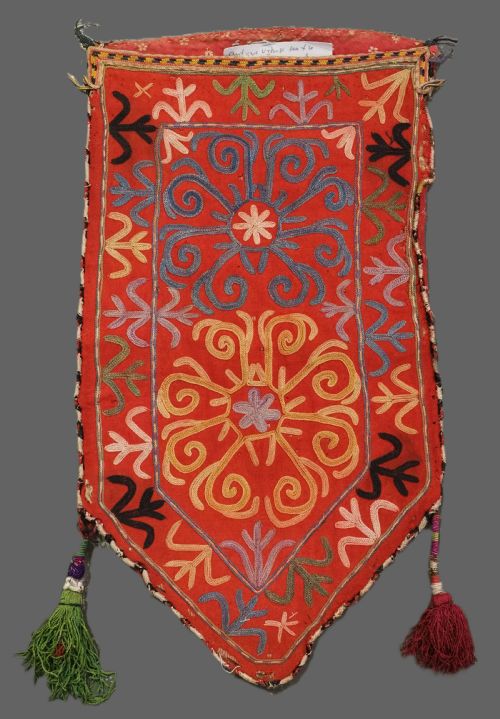
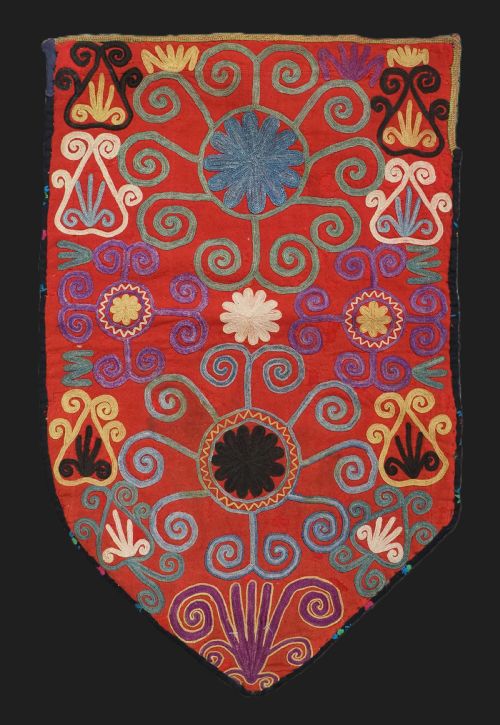
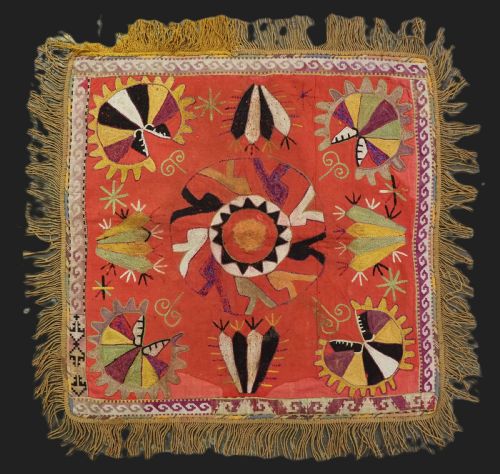
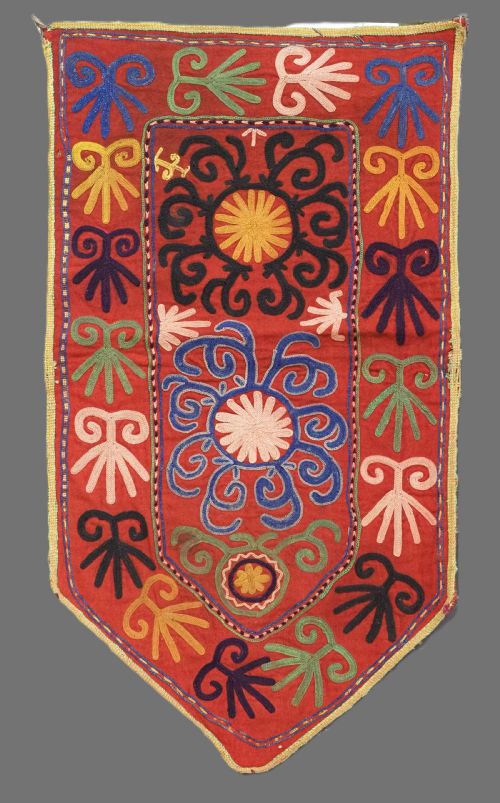
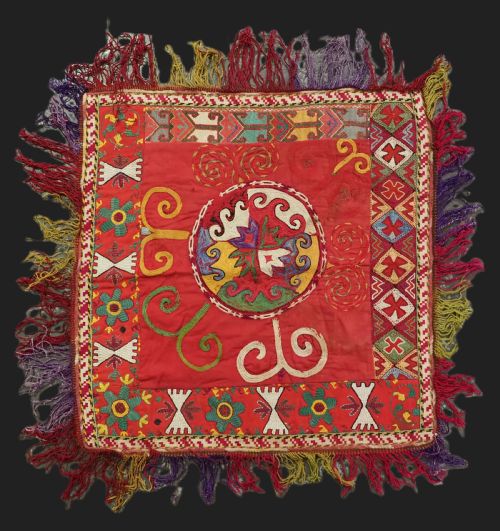


Uzbek Ilgich Wall Hanging
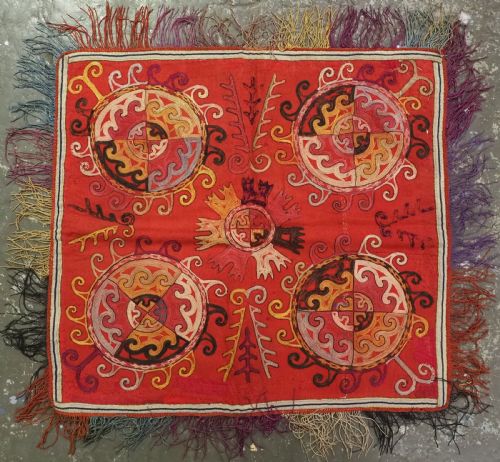
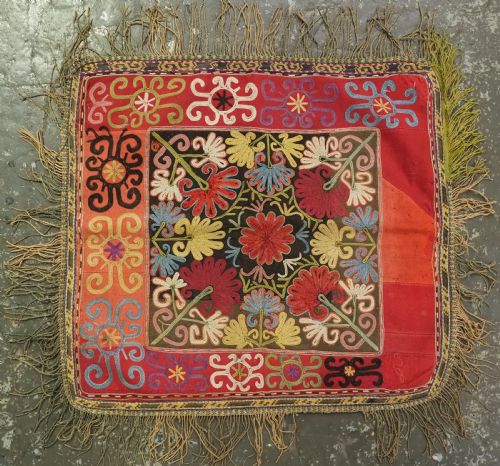
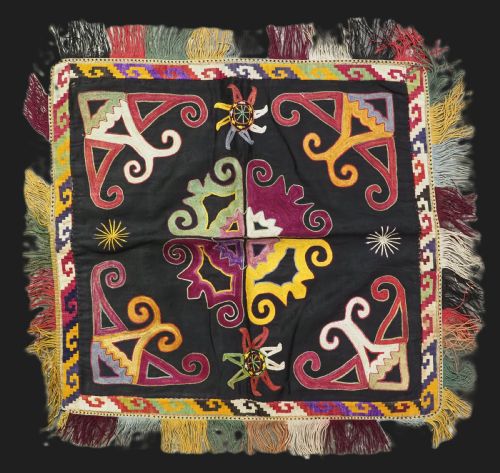
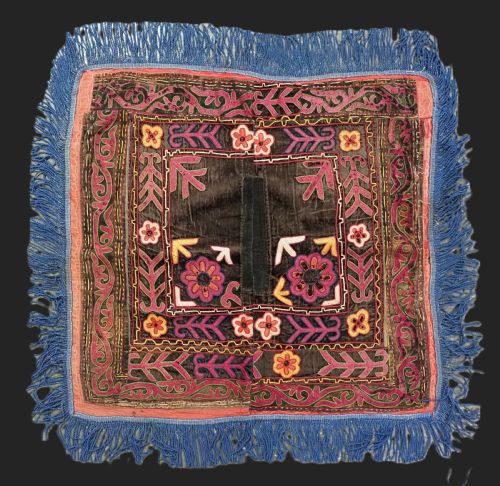
These uzbek ilgich wall hanging examples are tribal textiles offering rich Central Asian colour and history for your walls.
Uzbek Ilgich Wall Hanging
An uzbek ilgich wall hanging represents traditional Central Asian tribal textile art, often originating as dowry embroidery or utility bags from the Lakai tribe. These pieces bring nomadic character into a room through bold geometric designs and rich regional origins.
The versions most common here take the form of wall hangings, decorative textiles, and repurposed uut kap or at torba bags. They date from the late 19th century up to around nineteen hundred, showcasing Central Asian Nomad and Central Asian Tribal styles.
Materials and construction
Makers utilised combinations of silk, cotton, and wool, frequently setting delicate silk embroidery onto a Mogul red wool ground. This layering of natural fibres creates distinct texture and depth across each textile piece.
The construction relies on traditional needlework techniques executed by tribal artisans in locations such as Shakrisabz. These methods result in durable decorative textiles designed for domestic use and ceremonial display.
Some textile pieces started life as horse trappings or storage bags before finding a second career admiring your living room paint.
Distinctions in quality
Quality rests upon the fineness of the silk embroidery and the complexity of the tribal motifs rendered across the surface. Pieces featuring double faced work or particularly vibrant grounds demonstrate superior craftsmanship.
The integrity of the cotton, wool, and velvet foundations also dictates the overall standard of the textile. Stronger ground fabrics support the dense needlework more effectively over time.
The Uzbek Ilgich Wall Hanging Glossary
- Ilgich
- A Central Asian embroidered textile, frequently used as a wall hanging or decorative furnishing. These pieces carry traditional tribal patterns.
- Uut kap
- A type of bag or storage piece from nomadic groups, often later mounted and displayed as a wall hanging. They display distinctive tribal needlework.
- At torba
- A horse bag or decorative trapping originating from Uzbek tribal groups. Collectors prize them for their specific regional designs.
- Lakai tribe
- A Central Asian nomadic group known for distinctive and vibrant embroidery. Their work forms a major portion of these antique textiles.
- Dowry embroidery
- Textiles created by women as part of a bride's traditional marriage bundle. These items often received the finest needlework available.
Uzbek Ilgich Wall Hanging: Frequently Asked Questions
What is an uzbek ilgich wall hanging?
An uzbek ilgich wall hanging is a traditional embroidered textile originating from Central Asian nomadic tribes, specifically the Lakai people.
These pieces were originally created as dowry items or functional bags before being adapted for display on walls.
How old are these wall hangings?
The examples available generally date from the late 19th century, around eighteen eighty to nineteen hundred.
This period represents the height of traditional tribal textile production in the region before industrial changes altered local crafts.
What materials were used?
Artisan makers relied primarily on natural materials including silk, cotton, wool, and velvet.
Fine silk thread is typically embroidered onto a sturdy ground cloth, such as Mogul red wool.
How do I hang one safely?
Textiles require careful mounting to distribute their weight evenly without straining the ancient fabric and silk threads.
Working with a professional framer or using a sleeve-and-velcro method protects the structural integrity of the piece.