



Yomut Wool Carpet
A yomut wool carpet embodies the disciplined geometry and rich palette of Central Asian nomadic weaving.
Yomut Wool Carpet
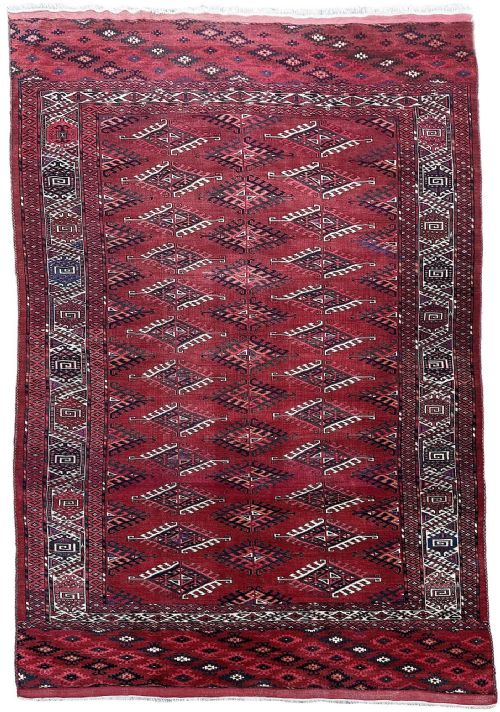
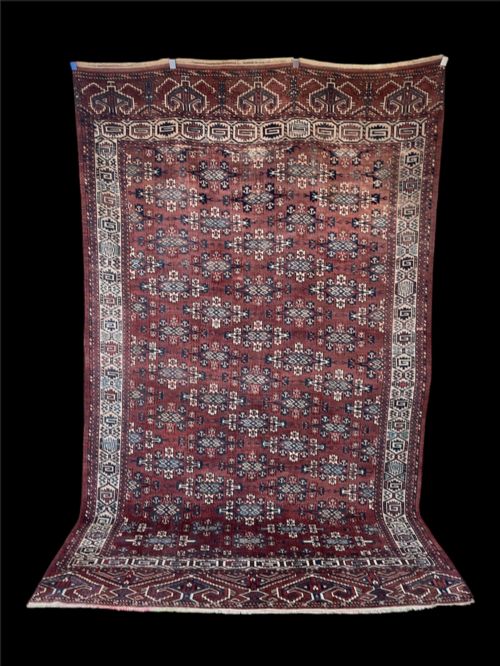
When searching for a yomut wool carpet, buyers encounter tribal textiles originating from the Trans-Caspian steppes and Turkmenistan. These items span various nineteenth and early twentieth century periods, reflecting the nomadic traditions of Turkmen weavers.
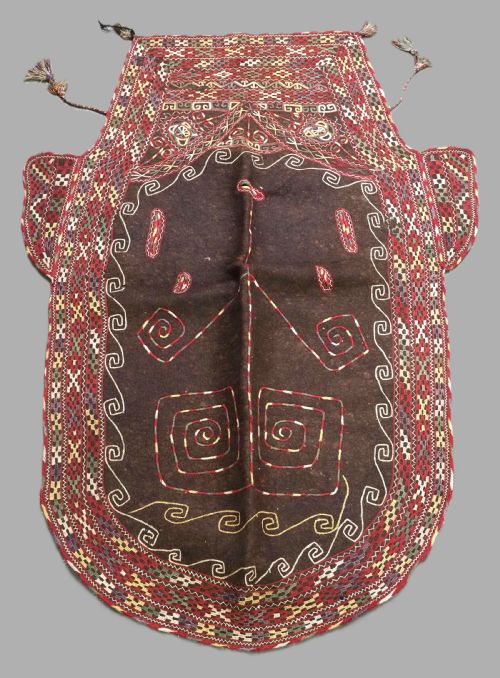
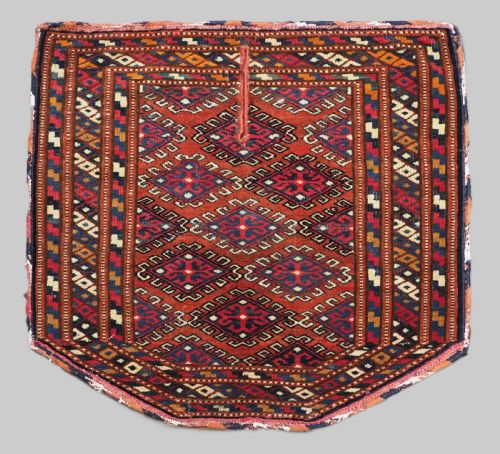
The selection on this page centres on main carpets, rugs, and functional domestic formats such as torbas, chuvals, and horse covers. Main carpets and smaller tribal weavings dominate the available forms, often displaying structured geometric motifs.
Pieces range from room-sized carpets down to compact bags and trapping fragments. Each category preserves specific tribal iconography linked to the Yomut lineage within the broader Turkmen tradition.
How they were made
Weavers constructed these textiles predominantly using hand-spun wool pile knotted onto wool or cotton foundations. Natural dyes provided the characteristic deep reds, browns, and contrasting accents that define the palette.
Structure varied according to function, incorporating flatweave techniques, soumak wrapping, and embroidered felt alongside standard knotted pile. Cotton thread and silk thread occasionally appeared for fine detail work and structural binding.
Nomadic workshops utilised locally sourced materials, producing durable fabrics designed for rigorous daily use inside tents or on animal transport. The resulting textures combine dense pile with flatwoven ends and sturdy selvedges.
Listings span periods from the mid-nineteenth century through the early twentieth century, utilising wool, natural dyes, and cotton.
What varies in quality
Quality rests upon the precision of knot density and the crispness of drawing within the primary guls and lattice designs. Finer executions maintain straight lines and proportional geometry across the entire field.
The depth and saturation of natural dye colours influence visual impact, as well-preserved tones enhance the contrast of secondary motifs. Superior examples display harmonious colour ageing without harsh transitions.
Completeness of original borders, kilim ends, and tassels dictates historical integrity. Pieces retaining their original structural perimeters command greater appreciation among collectors of tribal textiles.
The Yomut Wool Carpet Glossary
- Gul
- A primary medallion or octagonal motif repeated across Turkmen carpets. These secondary crests often signify specific tribal lineages and family sub-groups.
- Chuval
- A large tent storage bag used domestically by nomadic families for bedding and household possessions. They frequently feature rows of guls and detailed lower panels.
- Torba
- A smaller storage bag hung inside the tent for utensils or personal items. These pieces mirror the design vocabulary of larger main carpets on a compact scale.
- Ensi
- A tent door hanging designed to cover the entrance of a nomadic yurt. They typically feature a cross-shaped division of the field.
- Elem
- The heavily patterned lower panel found on main carpets and ensis. This decorative band sits beneath the main field design.
- Soumak
- A flatweave technique utilising wrapping threads over warp strands to create a textured, durable surface. It appears frequently in kilims and tribal trappings.
Yomut Wool Carpet: Frequently Asked Questions
How do I identify a yomut piece?
Yomut weavings are distinguished by specific tribal guls, such as the kepse or dyrnak design, arranged within disciplined geometric lattices. The palette relies heavily on rich madder reds combined with ivory, brown, and dark blue accents.
Structural traits include distinctive elem panels and wide borders featuring hooked motifs. Examining the weave density and wool quality helps separate these pieces from other Turkmen tribal groups.
How should I display a tribal textile?
Smaller formats like torbas, chuvals, and horse covers adapt readily to wall mounting using conservation-grade sleeve methods. This keeps fragile wool textiles flat and prevents distortion from hanging weight.
Larger carpets suit low-traffic floor placements where furniture weight is distributed evenly. Direct sunlight should be avoided to protect natural dye saturation over time.
What is an asmalyk?
An asmalyk is a pentagonal trapping traditionally placed on the flanks of a bridal camel during wedding processions. These ceremonial items display elaborate iconography intended to offer protection and good fortune.
They represent some of the most decorative tribal weaving from the region. Collectors value their distinctive shape and dense pile construction.