
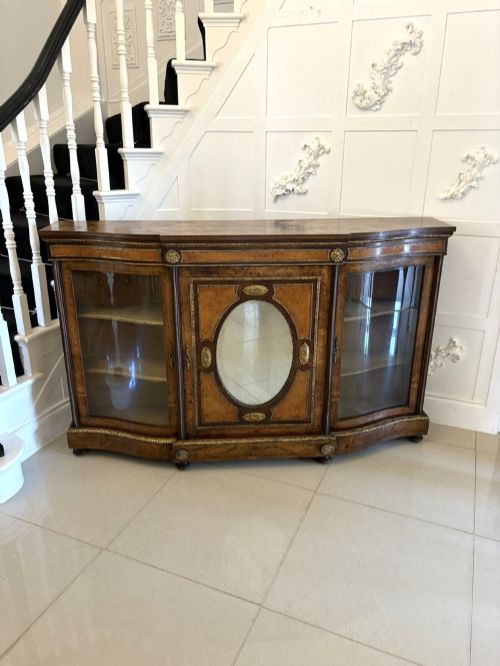
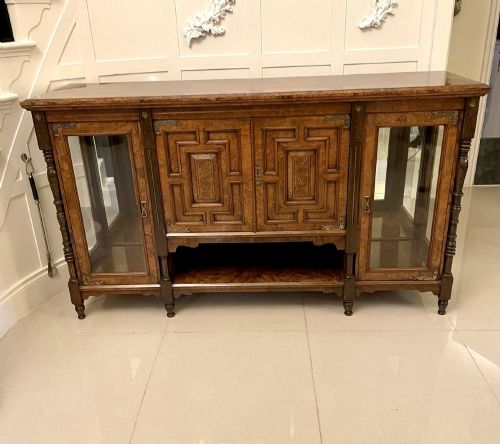
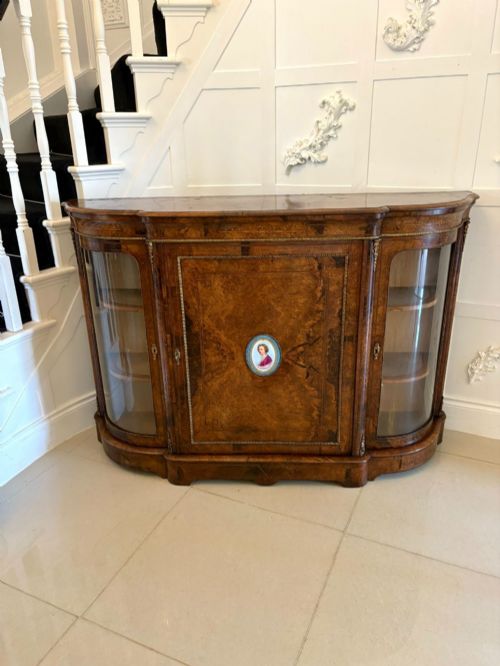
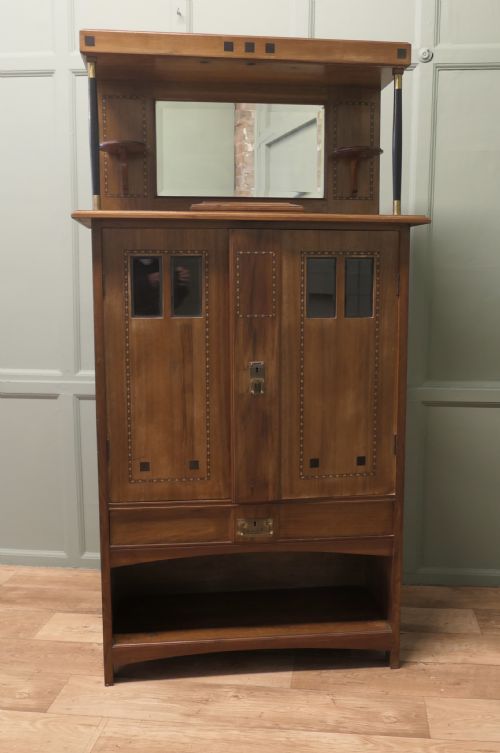
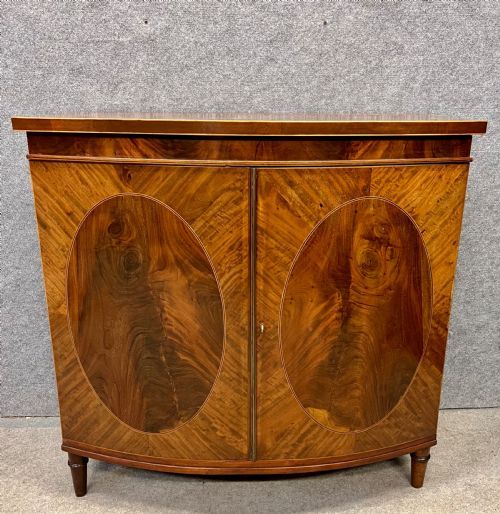
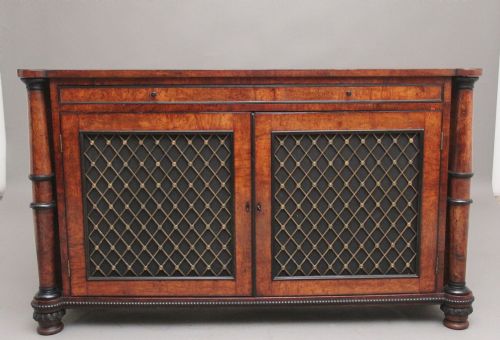
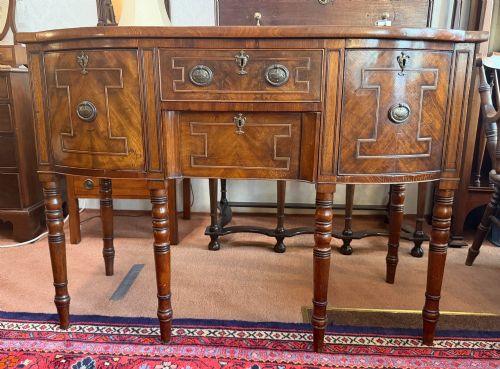
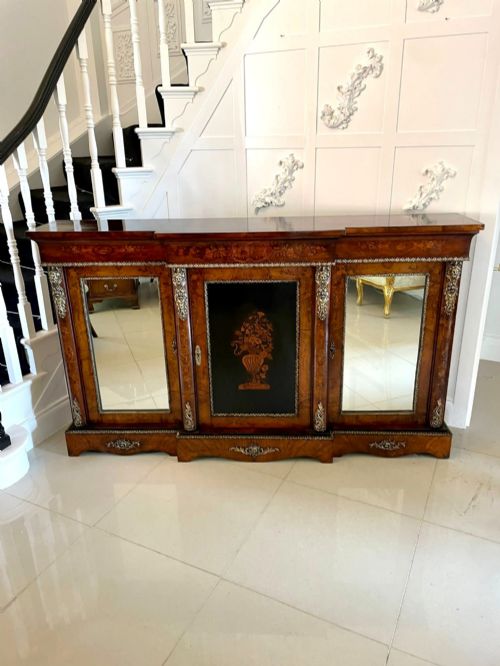
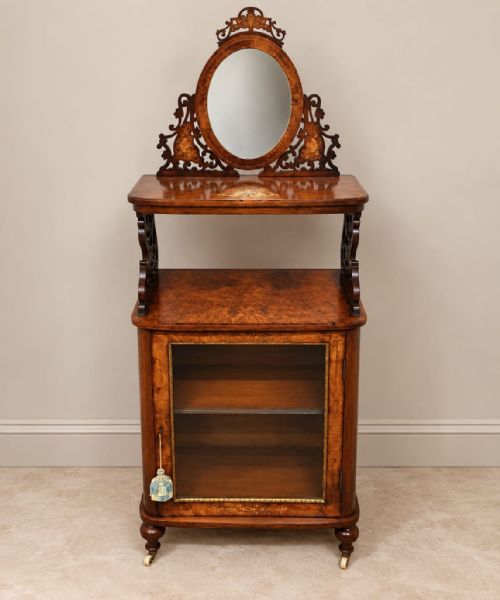
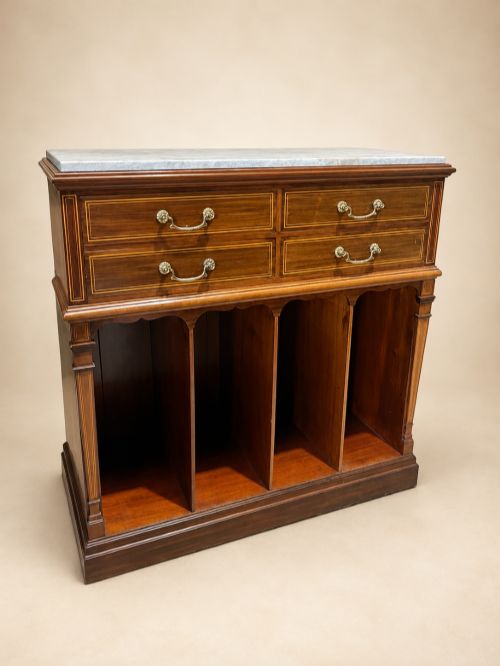
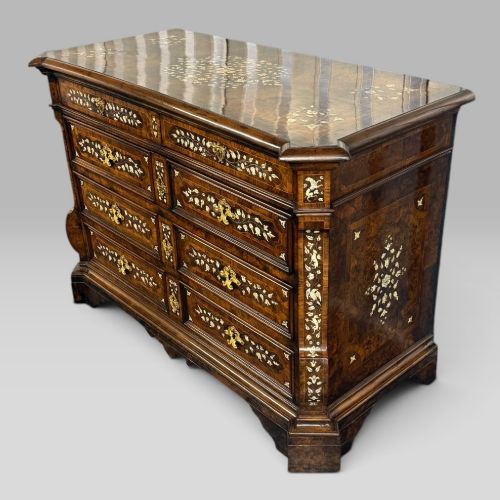
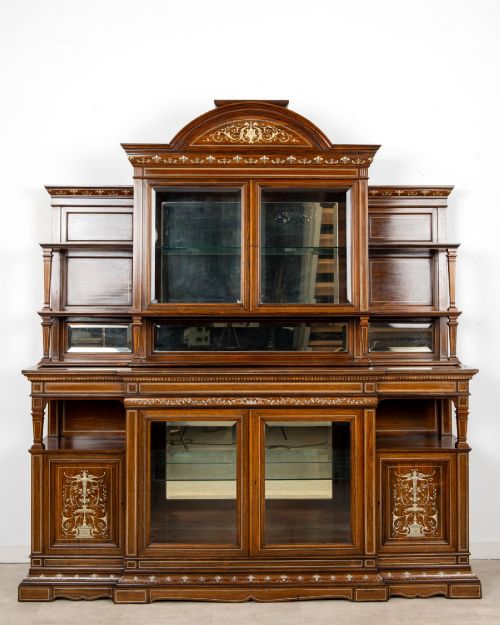
Brown Inlaid Credenza
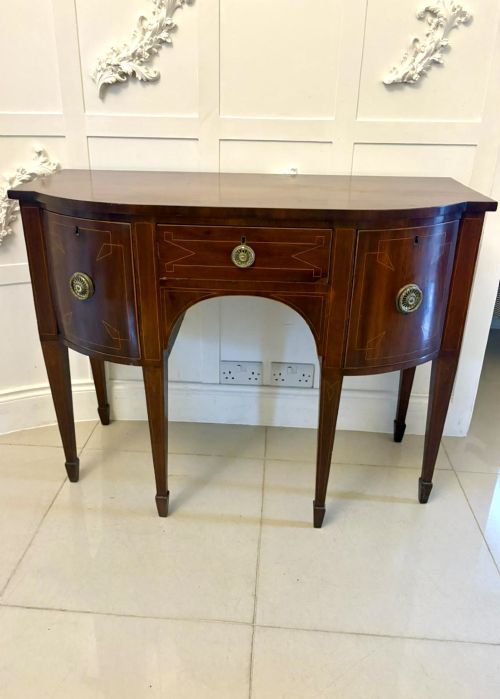
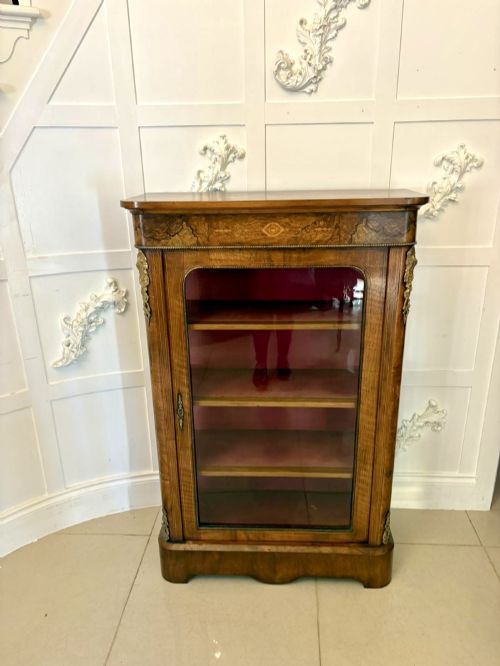
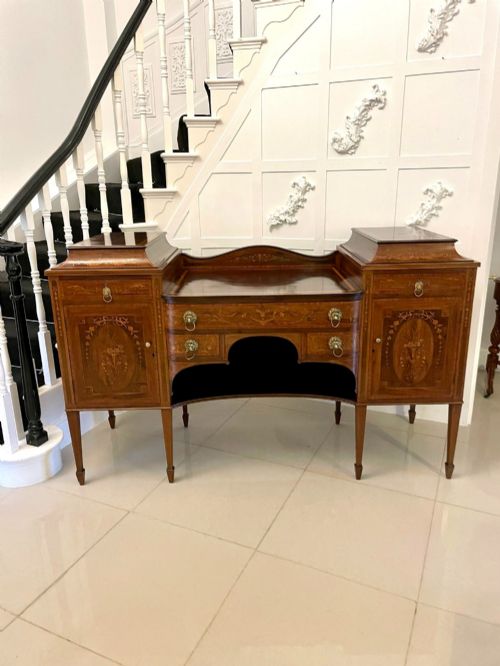
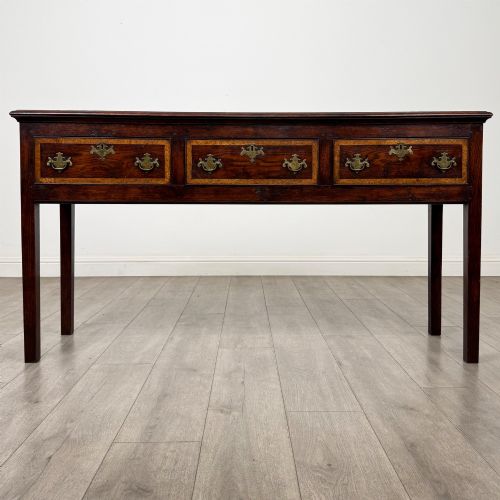
A brown inlaid credenza brings rich timber and delicate contrasting stringing into a room, offering both display space and concealed storage.
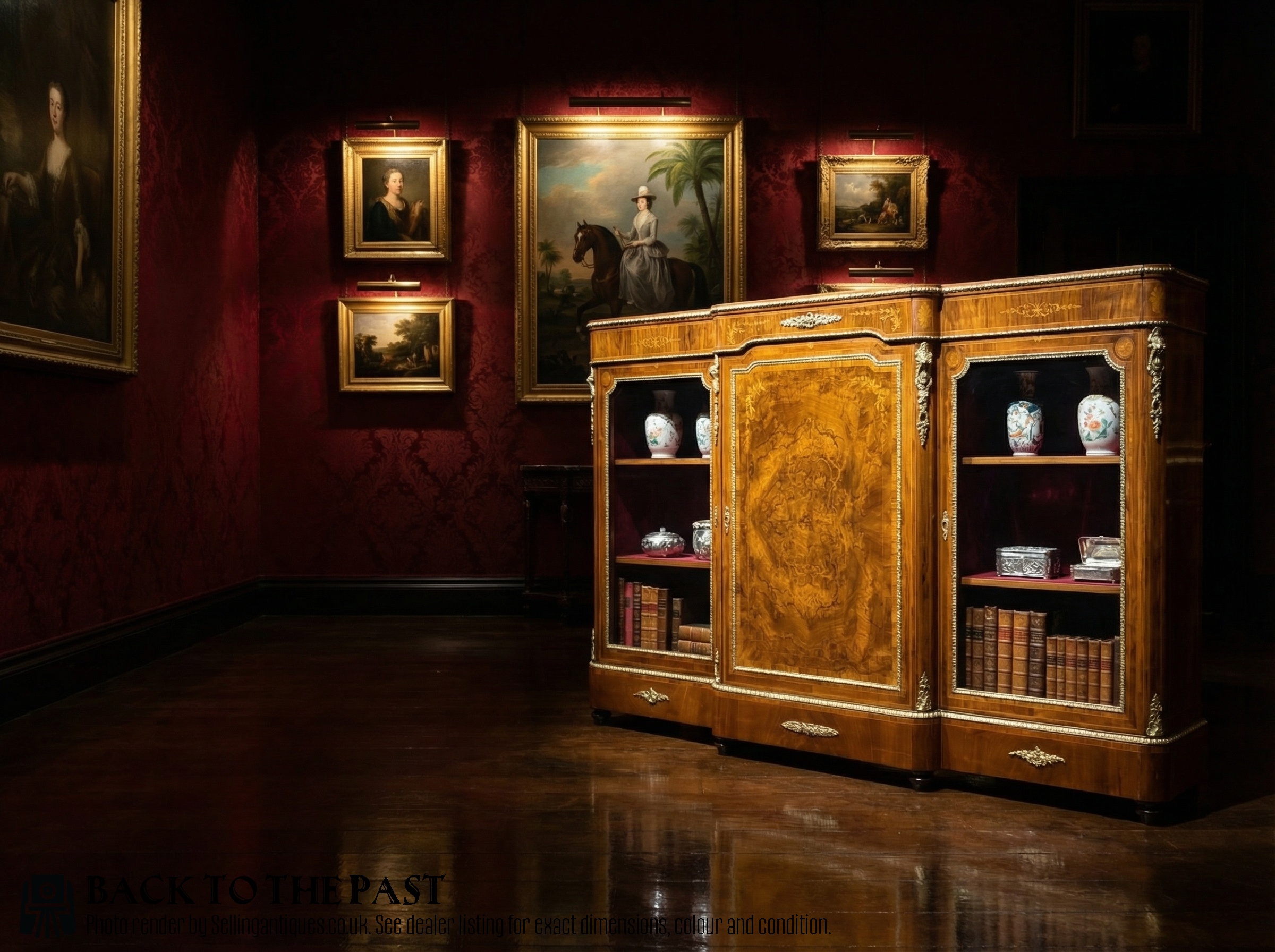
Brown Inlaid Credenza
A brown inlaid credenza is a substantial storage piece, typically featuring rich timber foundations decorated with fine contrasting wood details.
The pieces appearing under this description span Victorian, Georgian, and Regency periods, aligning with forms such as sideboards, side cabinets, and pier cabinets.
Makers utilised woods like burr walnut, mahogany, and satinwood, often pairing the dark timber bodies with boxwood or ebony stringing.
Materials and construction methods
Cabinet makers built the structural carcases from solid timbers including mahogany, walnut, and oak, applying decorative veneers such as burr walnut to the primary display surfaces.
Detailed marquetry and inlay work incorporated boxwood and satinwood to create geometric or floral patterns across doors and friezes.
Mounts in ormolu, porcelain plaques, and brass hardware completed the construction, adding metallic contrast and colour to the polished wooden surfaces.
Materials appearing across current pieces include mahogany, burr walnut, ormolu, porcelain, and satinwood.
Assessing quality in construction and detail
Quality rests in the selection of the timber veneers, where highly figured burr walnut or carefully matched mahogany grains distinguish finer examples from plain stock.
The precision of the inlay work reveals the maker's hand, with tight joints between contrasting woods showing superior workshop standards.
Finer pieces incorporate cast ormolu mounts and porcelain elements that integrate smoothly into the overall design rather than appearing secondary.
Hewetsons London·Collinson and Lock·Maison Gagneau·Grand Ducal Workshops
The Brown Inlaid Credenza Glossary
- Credenza
- A low cabinet piece used for storage and display, frequently fitted with glass doors or central cupboards. The form evolved significantly during the Victorian period.
- Inlay
- A decorative technique where pieces of contrasting timber or material are set flush into the surface of the carcase. Boxwood and satinwood are common choices for this work.
- Marquetry
- Elaborate veneer patterns arranged to form pictorial or decorative designs across furniture surfaces. It appears frequently on Victorian walnut cabinets.
- Ormolu
- Gilt-bronze mounts applied to furniture edges and panels for decorative effect. This technique was favoured on nineteenth-century revival pieces.
- Burr walnut
- Timber taken from walnut tree growths, yielding intricate swirling grain patterns. It forms the primary visual draw on many Victorian cabinets.
Brown Inlaid Credenza: Frequently Asked Questions
What is a brown inlaid credenza?
A brown inlaid credenza is a low cabinet designed for display and storage, constructed from timbers like walnut or mahogany with contrasting wood details.
These pieces typically date from the nineteenth century and reflect Victorian or earlier revival styles.
How were these credenzas used originally?
They served primarily in dining rooms and drawing rooms to store silver, linen, or china while displaying decorative items on top.
Glass-fronted versions also allowed owners to exhibit porcelain and small collectibles safely behind locked doors.
How do I care for burr walnut and mahogany?
Keep wooden furniture away from direct sunlight and heat sources to prevent the veneers from drying out or splitting over time.
Dust regularly with a soft dry cloth and apply a quality beeswax sparingly to maintain the polish.
How do I distinguish Victorian from Georgian pieces?
Victorian examples often employ burr walnut veneers, porcelain plaques, and ormolu mounts with heavier proportions.
Georgian and Regency pieces tend to rely on figured mahogany, clean architectural lines, and subtle stringing rather than heavy marquetry.