
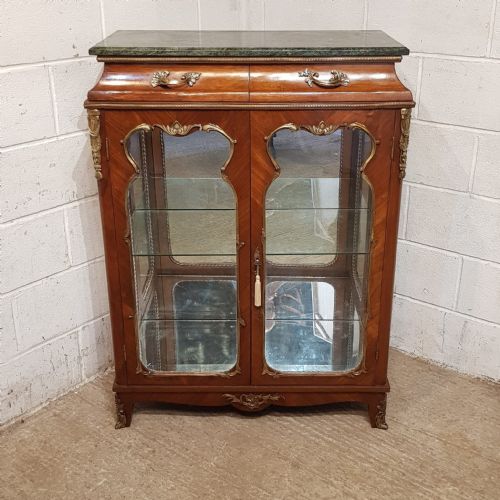


French Revival Walnut Cabinet
A french revival walnut cabinet brings warmth and continental grace into a room through rich timber and ornate mounts.
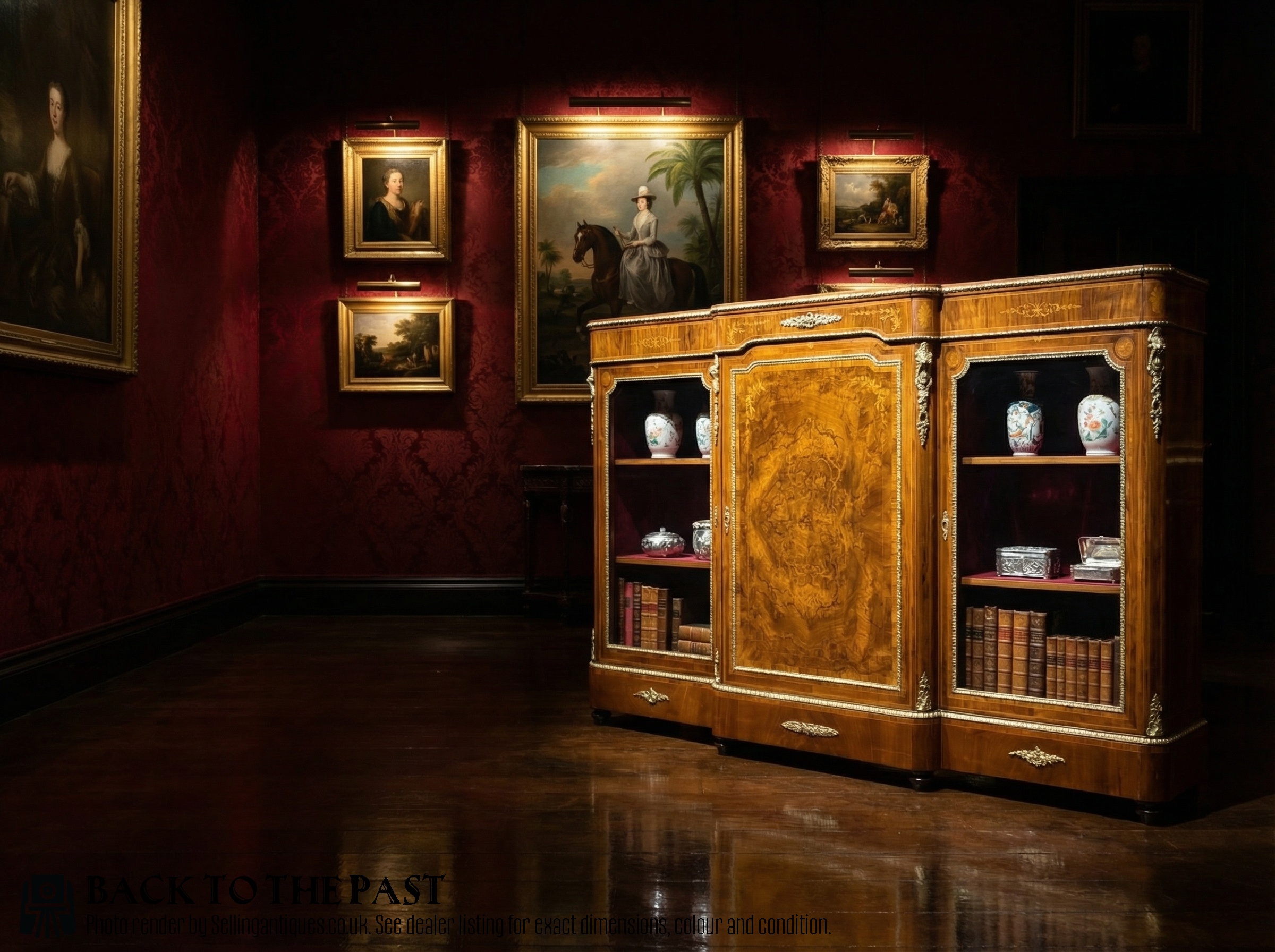
French Revival Walnut Cabinet
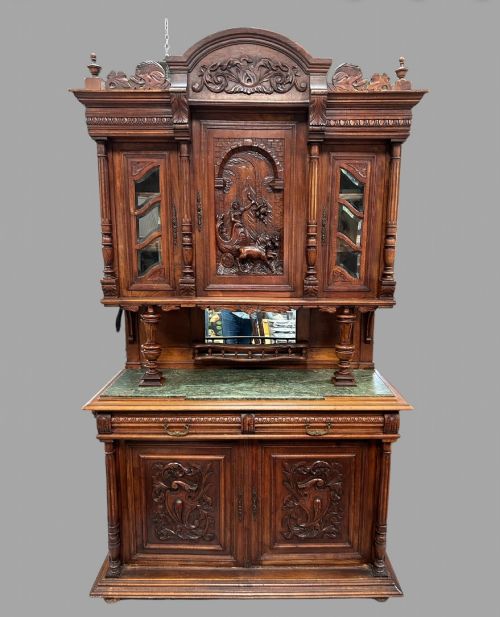
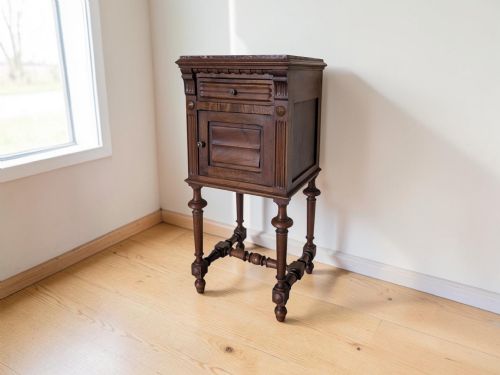
When you search for a french revival walnut cabinet, you encounter a diverse group of nineteenth and early twentieth-century pieces spanning credenzas, side cabinets, vitrines, and bedside tables. These furnishings draw heavily on Louis XV, Louis XVI, and Rococo design motifs, reinterpreted during the Victorian era and into the 1930s.
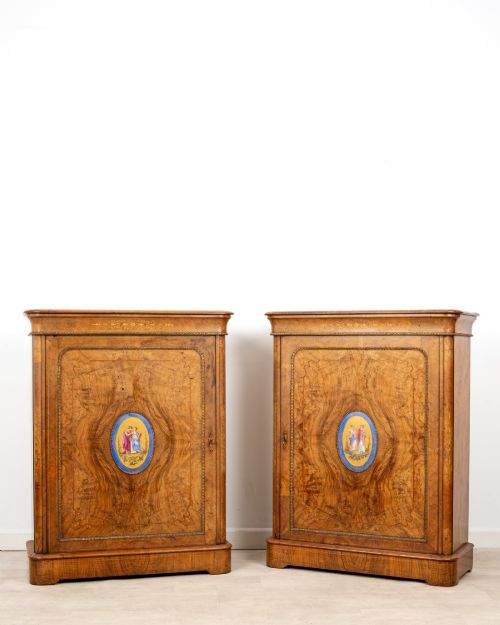
The version you are most likely to meet on this page is a credenza or side cabinet executed in burr walnut, often embellished with marquetry and gilt metal mounts. Such pieces served as formal display furniture in grand nineteenth-century drawing rooms and continue to function as focal points in modern interiors.
Materials and Construction Techniques
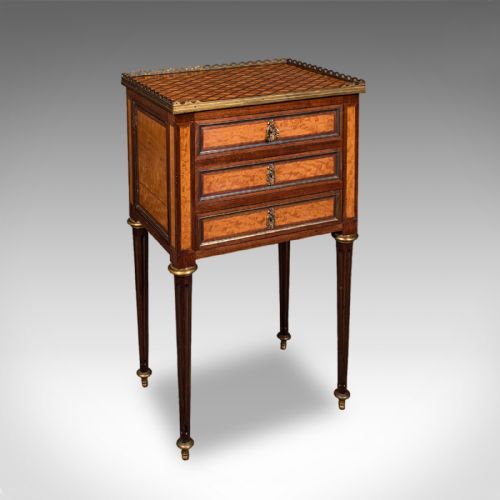
Cabinetmakers utilised solid walnut and figured burr walnut veneers over secondary timbers, frequently applying intricate floral marquetry and cross-banding to surfaces. These wooden elements are paired with cast or gilt metal and ormolu mounts that frame doors, corners, and plinths.
Many examples incorporate inset marble tops in white or coloured stone, alongside ceramic plaques such as Sevres-style porcelain panels. Glass panels are integrated into vitrines and display cabinets to showcase collections, while internal shelving provides practical storage.
Listings span periods from 1850 to 1930, uniting Victorian revivals with early twentieth-century interpretations.
Markers of Quality and Craftsmanship
The distinction between standard production and exhibition-quality pieces lies in the crispness of the carving, the complexity of the marquetry, and the weight of the ormolu mounts. Finer examples display meticulous matching of burr walnut veneer grains across doors and panels rather than repetitive, stamped patterns.
Structural integrity also separates tiers of quality, seen in the seamless operation of serpentine drawers, the precision of mitred joints, and the retention of original marble slabs and glass. Maker attribution, such as work associated with Gillows, elevates certain pieces through superior interior joinery and finishing.
Gillows
The French Revival Walnut Cabinet Glossary
- Burr walnut
- Timber taken from a tree growth that produces swirling, highly figured grain patterns. It is sliced into thin veneers for decorative cabinet fronts.
- Ormolu
- Gilded bronze or brass mounts applied to furniture. They protect vulnerable corners and add ornamental flourish.
- Marquetry
- Inlaid wood veneers arranged in pictorial or geometric patterns. Craftsmen use contrasting timbers to create floral or architectural motifs.
- Credenza
- A low cabinet or sideboard used for display and storage. Nineteenth-century versions often feature glazed central doors flanked by curved side cupboards.
- Vitrine
- A glass-fronted cabinet designed for displaying porcelain and small objects. These pieces rely on internal mirrors and glass shelves to maximise light.
French Revival Walnut Cabinet: Frequently Asked Questions
How do I identify the period of a walnut cabinet?
Examine the timber selection, hardware style, and construction methods used in the carcass. Mid-nineteenth-century pieces often feature heavy ormolu mounts and dense burr walnut veneers.
Later twentieth-century revivals tend to display simpler lines or lighter marquetry work. Comparing the interior secondary woods also helps establish the era of manufacture.
Where should I place a credenza at home?
A credenza suits a formal living room, dining area, or a spacious hallway where its decorative front can be appreciated. The flat top surface accommodates lamps, mirrors, or display objects.
Ensure the room has adequate clearance for doors that swing open or project outward.
How do I care for marble-topped cabinets?
Clean the marble surface regularly with a soft, damp cloth and neutral soap, avoiding acidic cleaners that etch the stone. Coasters should be used under glasses to prevent liquid rings.
Treat the walnut wood with appropriate furniture wax to nourish the grain without buildup.
What is the difference between a credenza and a side cabinet?
A credenza traditionally refers to a low, long sideboard configuration with doors across the front, frequently featuring glazed central compartments. Side cabinets encompass a broader category of smaller upright storage furniture.
Both serve similar functional roles in domestic display and storage.