

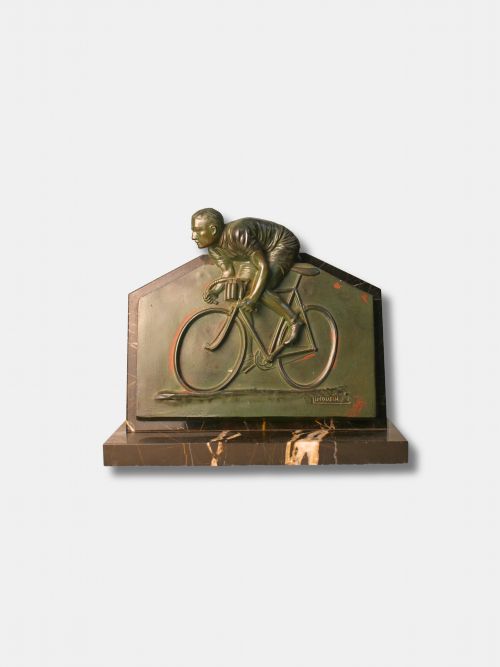


Bronzed Spelter Ornament
These bronzed spelter ornament choices bring affordable figural presence and decorative impact into a room through patinated zinc alloy figures.
Bronzed Spelter Ornament
When you examine a bronzed spelter ornament, you are looking at figural metalwork cast from zinc alloy and given a dark or metallic surface finish to resemble solid bronze. These decorative pieces take the form of statues, figurines, decorative urns, and figural groups.
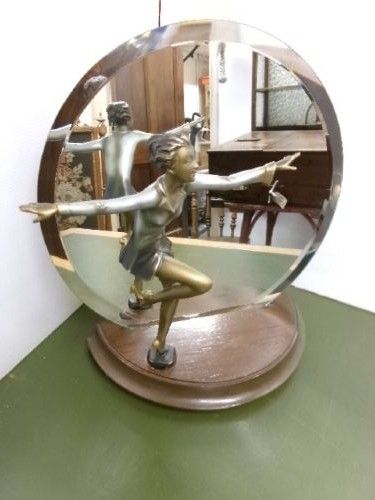
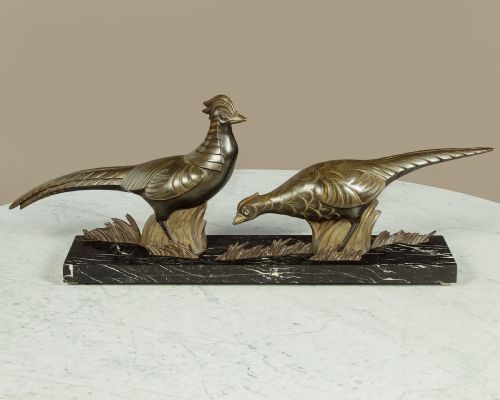
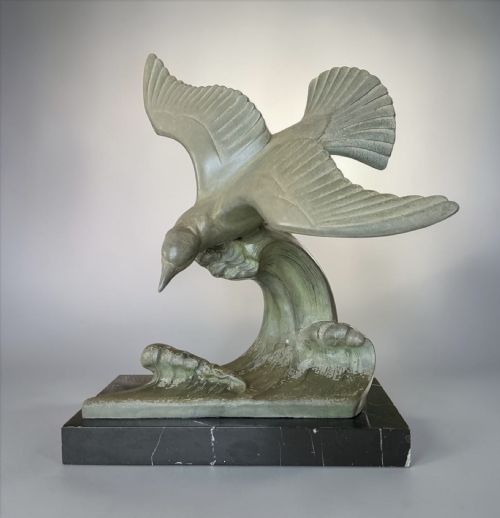
The version you are most likely to meet on this page originates from the Art Deco period of the nineteen thirties, often featuring female dancers, animals, or allegorical figures mounted on heavy stone plinths.
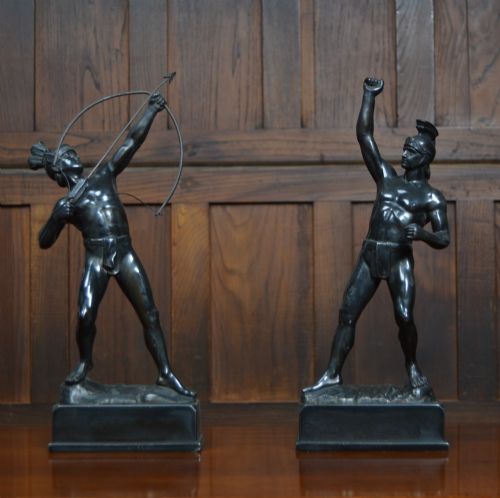
Earlier Victorian examples also appear, showing Roman figures, literary characters such as Falstaff, and French campana urns. These objects served purely decorative roles in nineteenth and twentieth century interiors.
What varies in quality
The distinction between tiers of quality rests heavily on the crispness of the casting and the fidelity of the surface chasing. Finer examples retain sharp facial expressions, distinct drapery folds, and clean lines that do not blur into the surrounding metal.
Quality also shows in the choice and proportion of the supporting plinth. Heavy, well-cut bases of genuine black marble, onyx, or alabaster provide stability and visual weight that elevate the standing figure above simpler mass-produced variants.
Listings feature Art Deco pieces alongside nineteenth century Victorian examples, utilising materials such as marble, onyx, and alabaster.
Josef Lorenzl·Auguste Moreau
The Bronzed Spelter Ornament Glossary
- Spelter
- A zinc alloy commonly used as a cost-effective alternative to bronze for decorative figures and statues throughout the nineteenth and twentieth centuries. It requires a surface coating or patination to simulate the appearance of copper-based metals.
- Patination
- The chemical or applied surface treatment that gives the metal its dark bronze-like tone or colour. This finish mimics the natural ageing process found on genuine bronze sculptures.
- Plinth
- The solid base block of marble, onyx, wood, or alabaster upon which the spelter figure or urn is mounted. It adds both structural support and aesthetic balance to the composition.
- Campana urn
- A bell-shaped decorative vessel originating from classical antiquity and frequently rendered in spelter during the nineteenth century. These urns typically sit on stepped square bases for display on mantelpieces.
- Figural group
- A multi-figure composition depicting two or more characters interacting within a single sculpture. These pieces require complex casting and assembly.
Bronzed Spelter Ornament: Frequently Asked Questions
What is spelter metal?
Spelter is a zinc-based alloy that served as a popular, economical medium for decorative sculptures and household ornaments. It allowed makers to produce intricate figurative designs at a fraction of the cost of bronze.
Because the metal is relatively soft, objects made from it require careful handling and robust mounting bases to prevent structural strain.
How do I clean a bronzed spelter ornament?
Cleaning should be limited to gentle dusting with a soft, dry cloth to protect the delicate surface patination. Liquid cleaners and abrasive cloths will strip the bronzed finish from the underlying zinc alloy.
Keep these pieces away from areas of high humidity or direct sunlight to preserve the integrity of both the metal coating and the stone plinth.
Are these pieces solid bronze?
No, these items are cast from a zinc alloy rather than copper-based bronze. Spelter is lighter, softer, and has a different internal grain structure that becomes visible if the surface finish sustains damage.
Makers often applied a dark bronzed coating to disguise the grey tone of the underlying metal and achieve a classical appearance.
Why are they mounted on stone bases?
The heavy bases made of marble, onyx, or alabaster provide necessary physical counterweight for the softer metal figures above. Without this dense foundation, many of these slender statues would tip over easily.
These stone plinths also provide a contrasting visual frame that complements the dark patination of the central sculpture.