
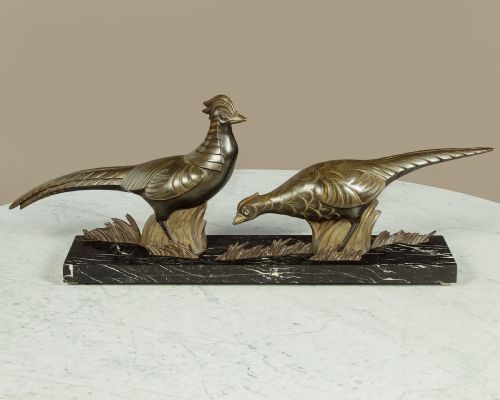
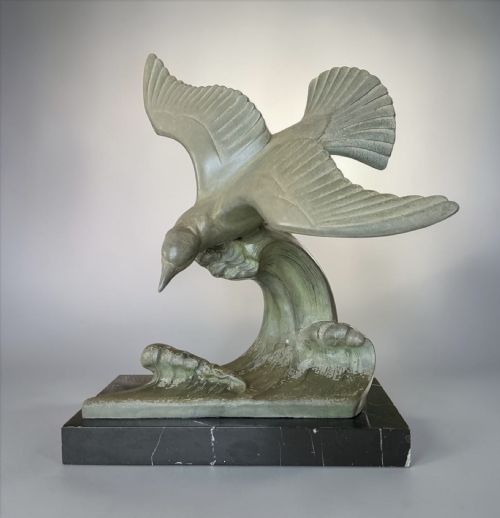


Patinated Spelter Statues
Patinated spelter statues bring sculptural form into a room through accessible metalwork.
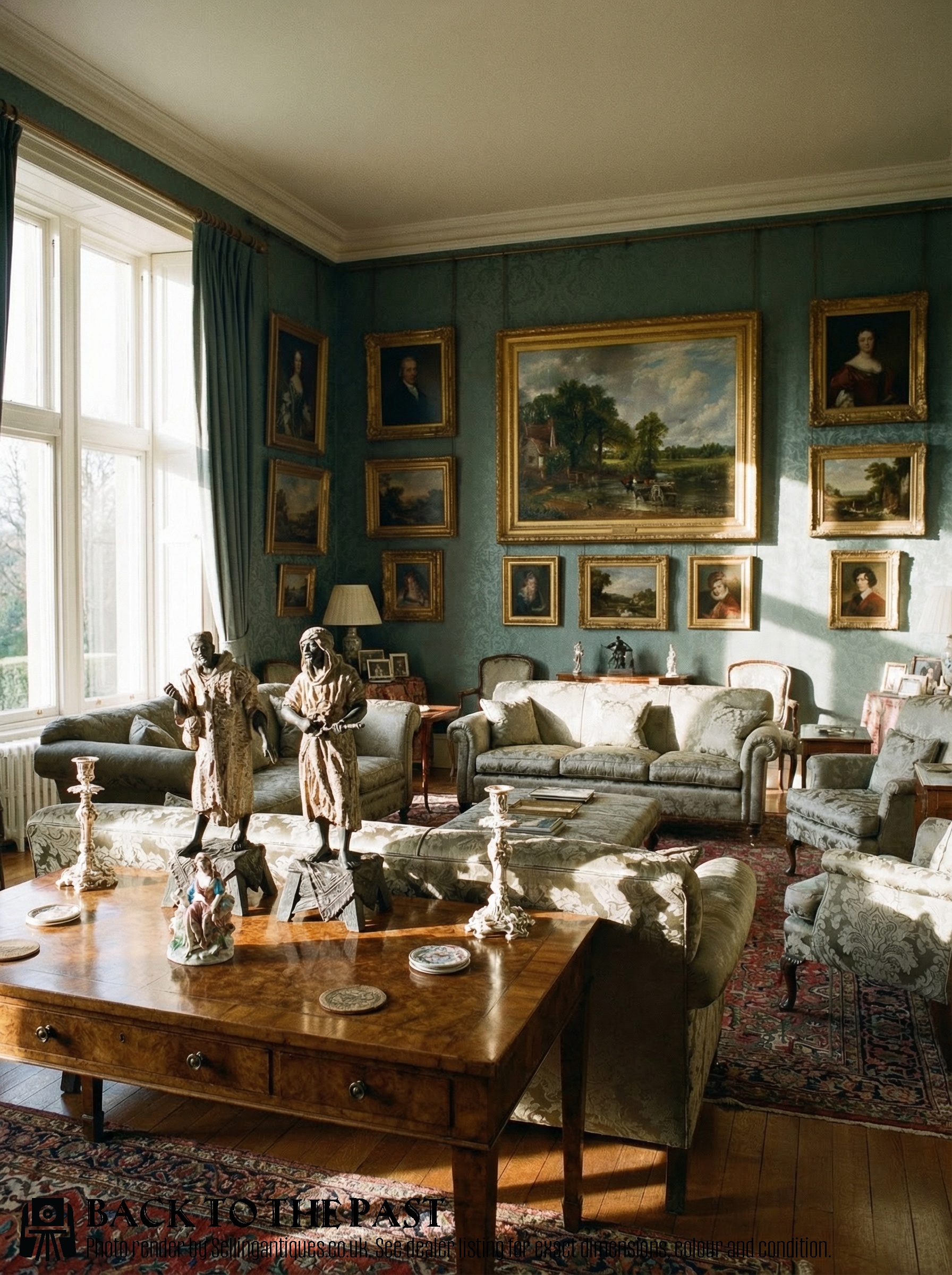
Patinated Spelter Statues
Patinated spelter statues appear frequently in forms linked to the nineteenth century and the Art Deco period, often taking the shape of figures, animals, and figural lamps. When buyers search for patinated spelter statues, they encounter decorative metalwork produced across various decades from the Victorian era onward.
The objects listed range from candlesticks and bookends to sculptural groups and table lamps, reflecting the versatility of the material. Many examples originate from French workshops, showing styles that span Renaissance Revival, Art Nouveau, and 1930s modernism.
Common subjects include human figures, dancers, dogs, deer, and birds, mounted on bases of marble or onyx. These pieces served primarily as decorative table items or mantel ornaments in period interiors.
What varies in quality
The clarity of the casting and the crispness of the surface chasing distinguish finer works from simpler commercial pieces. Skill in the application of the patination layer adds depth to the surface, bringing out details in drapery and animal forms.
The quality of the mounting, such as the selection of a heavy marble or onyx base, contributes to the overall stability and presence of the sculpture. Signed works by recognised modellers demonstrate a higher standard of artistic design than unmarked factory production.
Listings feature items from the Victorian period through to 1930, utilising materials such as spelter, marble, onyx, and bronze.
P. Sega·Geo Maxim·H. Bal·Chiparus·Auguste Moreau
The Patinated Spelter Statues Glossary
- Spelter
- A zinc alloy commonly utilised as an economical alternative to bronze for nineteenth and twentieth-century decorative figures. It accepts patination well to simulate heavier metals.
- Patination
- A chemically or physically induced surface finish applied to metal to alter its colour and appearance. This treatment gives spelter the appearance of aged bronze.
- Art Deco
- A design style prominent around 1930 characterised by streamlined forms, geometric styling, and depictions of modern dancers, animals, and female figures. It heavily influenced European metal sculpture.
- Art Nouveau
- A turn-of-the-century aesthetic movement featuring organic lines, flowing hair, and natural motifs drawn from plants and flowers. French makers applied this style widely to figural spelter models.
- Plinth
- A heavy base, often formed from marble or onyx, supporting the spelter figure or bookends. It provides both structural balance and visual contrast to the metal.
Patinated Spelter Statues: Frequently Asked Questions
What is spelter metal?
Spelter is a zinc-based alloy that makers used widely in the nineteenth and twentieth centuries for decorative sculptures and lamps. It allowed workshops to produce detailed figures at a lower cost than bronze.
The metal is relatively soft and lightweight, which is why makers often mounted the finished figures onto heavy marble or onyx bases for stability.
How do I care for patinated metal?
Dust the surface gently with a dry, soft cloth to prevent the accumulation of dirt in the recesses of the casting. Avoid liquid cleaners, polishes, or abrasive cloths that can strip the applied patination.
Keep the pieces away from direct sunlight and areas of high humidity to protect the metal finish and any attached stone bases.
Are these pieces solid bronze?
No, these items are made from spelter, which is a zinc alloy, rather than bronze. Makers often applied a dark patinated finish to give the metal the appearance of bronze.
You can sometimes distinguish spelter by its lighter weight and by checking the interior or underside where the base metal is exposed.
Why are marble bases used?
Marble and onyx bases provide weight and physical stability to the relatively light spelter figures mounted upon them. They also act as a decorative plinth that elevates the sculpture.
Many Art Deco and Victorian pieces incorporate stone or marble to frame the metal work and complete the design of bookends or lamps.