


Orientalist Metal Figures
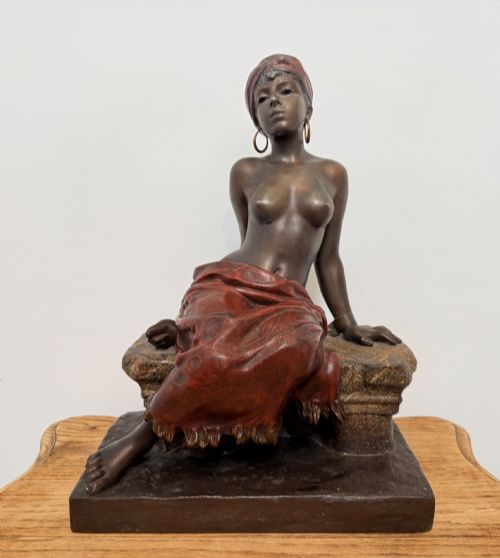
Orientalist metal figures capture nineteenth and early twentieth century fascination with Middle Eastern, North African, and East Asian subjects.
Orientalist Metal Figures
Orientalist metal figures represent human subjects, figurative desk accessories, candlesticks, and wall lights drawn from nineteenth and early twentieth century aesthetic movements. When you search for orientalist metal figures, you encounter sculptural works spanning the Victorian era through the 1930s, reflecting diverse international tastes from Vienna, France, and beyond.
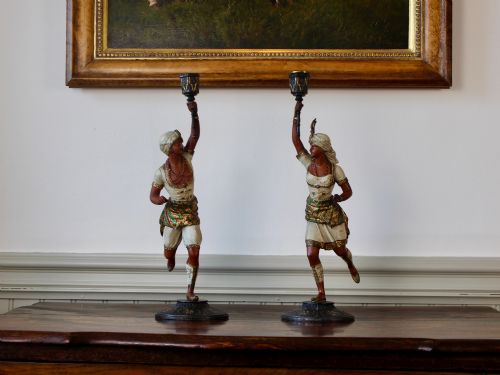
The most common examples on this page include cold-painted bronze figures of Arab figures, warriors, and merchants alongside spelter candlesticks, match strikers, and portrait busts. These pieces merge decorative utility with narrative subjects, taking forms such as figural inkstands, wall-lights for the Islamic market, and large statues of Japanese ladies in kimonos.
Stylistic variations range from traditional Victorian orientalist designs to Art Nouveau, Venetian Revival, Assyrian Revival, and Japonisme. Makers and founders of this period utilised recognisable regional dress, architectural motifs, and cultural tropes to satisfy European demand for exotic genre scenes.
How they were made
Foundries produced these pieces primarily through bronze casting or utilising spelter, a cheaper zinc alloy favoured for mass-market decorative items. Sculptors modelled subjects in clay or wax before casting, applying patinated finishes or polychrome paint directly onto the metal surface.
Cold-painted bronze, particularly associated with Viennese workshops, involved applying several layers of unfired oil paint over a hot-patinated bronze casting. This technique produced rich polychrome surfaces on small figures and inkstands, though the delicate paint layers remain vulnerable to flaking over time.
Materials recorded across these items include cast bronze, spelter, wood, and painted polychrome surfaces.
What varies in quality
Material choice dictates longevity and definition, with genuine bronze retaining sharper casting lines and greater durability than softer spelter. The preservation of original polychrome paint surfaces also separates museum-grade sculptural pieces from heavily restored or stripped examples.
E Villanis·Franz Bergman·Arthur Waagen·Louis Hottoot
The Orientalist Metal Figures Glossary
- Spelter
- A zinc alloy commonly utilised as a less expensive alternative to bronze for nineteenth century European decorative sculptures and candlesticks. It is softer than bronze and often finished with a bronze-coloured or painted coating.
- Cold-Painted Bronze
- A method where bronze sculptures are decorated with unfired oil paint rather than fired enamel. This technique was widely employed by Viennese foundries to achieve vibrant multi-coloured surfaces on small figures.
- Patinated Bronze
- Bronze treated with chemical solutions to produce a specific surface coloration, ranging from deep brown to metallic green. This process protects the metal and accentuates the underlying sculptural contours.
- Japonisme
- The nineteenth-century European craze for Japanese art and aesthetics that influenced decorative metalwork and sculpture. It appears in depictions of traditional dress and motifs.
Orientalist Metal Figures: Frequently Asked Questions
What are orientalist metal figures?
These works are nineteenth and early twentieth century sculptures, candlesticks, and desk accessories depicting Middle Eastern, North African, and Asian subjects. They reflect European artistic interest in distant cultures during the Victorian and Edwardian periods.
Foundries cast these objects in bronze or spelter, often finishing them with cold-painted polychrome surfaces or dark patination to enhance their narrative detail.
How do I distinguish bronze from spelter?
Bronze is heavier, harder, and cooler to the touch than spelter, with sharper casting details that endure through centuries of handling. Spelter is a zinc-based alloy that feels lighter and softer, sometimes revealing grey metal beneath chipped paint.
Examining the underside or areas of wear often exposes the base metal. Bronze pieces also tend to hold patination and fine chiselling work with greater precision than zinc alloy alternatives.
Where were cold-painted bronzes made?
The majority of fine cold-painted bronze figures and functional desk items originated in Vienna, Austria, during the late nineteenth and early twentieth centuries. Prominent workshops produced small bronzes depicting Arab figures, merchants, and animals.
These Viennese items gained international popularity for their detailed clothing and vibrant polychrome painted surfaces. Austrian foundries exported them widely across Europe and Britain.
How should I display these metal figures?
Place these sculptures and desk accessories away from direct sunlight and high humidity to protect fragile cold-painted surfaces and patinated finishes. Soft, dry dusting maintains the metal without harming the delicate paint layers.
Avoid placing cold-painted pieces near heat sources, which can cause oil-based pigments to dry out and flake. Stable indoor environments preserve both bronze and spelter items effectively.