





Pair Metal Statuettes
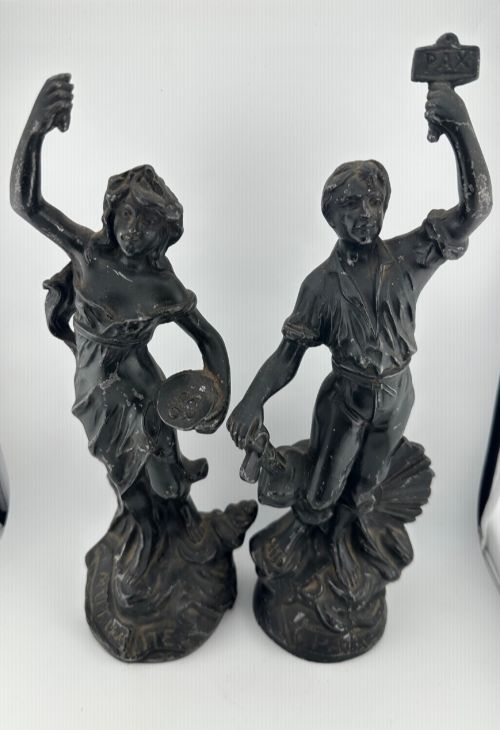
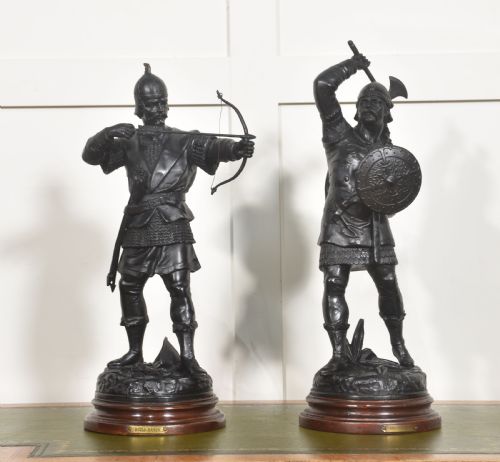
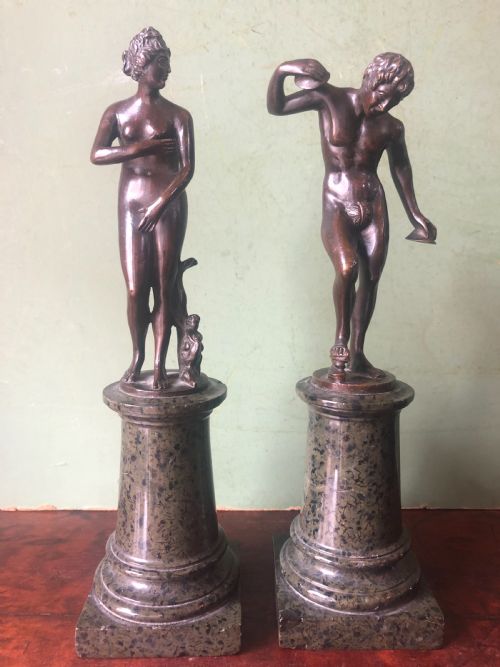
These pair metal statuettes bring sculptural presence to a room, offering matched subjects cast in bronze, spelter, and brass across the nineteenth and early twentieth centuries.
Pair Metal Statuettes
When you search for pair metal statuettes, you encounter matched sculptural figures cast in mediums such as bronze, gilt bronze, spelter, and brass. These decorative objects range from classical subjects and grand tour souvenirs to warrior figures, animals, and orientalist studies created across the nineteenth and twentieth centuries.
The pieces on this page include French, Italian, Russian, and Anglo-Saxon subjects, often mounted on bases of olive wood or marble. You will find works spanning Victorian historicism, Art Nouveau, and neoclassical styles, reflecting diverse foundry practices and artistic traditions.
Makers and artists referenced in these works include Emile-Coriolan Guillemin and Fabergé, alongside anonymous studio castings. These statuettes served primarily as mantelpiece decorations and cabinet ornaments for collectors.
Materials and casting methods
Foundries utilised casting techniques in bronze, spelter, and brass to produce these figures, frequently applying cold-painted details or gilt finishes to the metal surface. Gilt-bronze and cold-painted bronze treatments required precise hand-finishing after the initial metal pour.
Mounts and integral bases incorporate subsidiary materials such as marble and olive wood to support the weight of the metal sculptures. These secondary elements provide stability and complement the patination of the main figures.
Pair Metal Statuettes Retail Price Guide 2026
Typical asking prices for pair metal statuettes among the pieces listed under this phrase on Sellingantiques today, from the lower quarter to the upper quarter. They describe what is for sale here now, not the wider market.
Assyrian royalty and Russian Kamer-Kazaks share shelf space here, proving nineteenth-century mantelpieces possessed remarkably eclectic tastes.
Distinctions in quality
The integrity of the original patination and the quality of the base materials, such as veined marble or turned olive wood, influence the overall character of the piece. Matching symmetry between the two figures remains essential for a balanced pair.
Emile-Coriolan Guillemin·Fabergé
The Pair Metal Statuettes Glossary
- Spelter
- A zinc alloy frequently used as a less expensive alternative to bronze during the nineteenth century. It is softer than bronze and generally requires a painted or electroplated finish to simulate more costly metals.
- Cold-painted bronze
- A technique where oil paint is applied to a cold bronze casting without subsequent firing. This method allows for vivid polychrome details on animal and human figures.
- Grand tour
- A nineteenth-century travel phenomenon where wealthy collectors acquired souvenir bronzes after classical antiquities in Italy. These small-scale sculptures were cast to replicate famous museum pieces.
- Gilt bronze
- Bronze that has been coated with a thin layer of gold using mercury amalgamation or electrochemical methods. This finish protects the underlying metal and provides a rich golden lustre.
Pair Metal Statuettes: Frequently Asked Questions
What are pair metal statuettes?
These are matched sculptural figures cast in metals such as bronze, brass, and spelter designed to be displayed together.
They encompass a wide variety of subjects, including classical figures, animals, and historical characters produced by European foundries.
How were these figures used?
Historically, they served as decorative ornaments placed upon mantelpieces, sideboards, and display cabinets in nineteenth and early twentieth-century homes.
Their balanced pairing provided symmetrical visual interest to interior decorative schemes.
How do I care for metal statuettes?
Maintain the pieces by gently dusting them with a soft, dry brush to prevent the accumulation of grit in the crevices.
Avoid using abrasive cleaning agents or polishes that might strip the original patination or cold-painted finishes.
How do I distinguish bronze from spelter?
Bronze is heavier, harder, and possesses a resonant ring when lightly struck, whereas spelter is softer and more brittle.
Examining the underside or areas of wear often reveals the greyish metal beneath a painted spelter surface compared to the warm brown of bronze.