

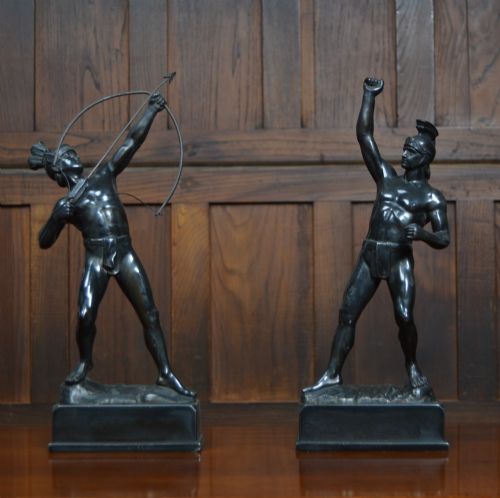


Victorian Spelter Statue
These Victorian spelter statue pieces are zinc alloy figures and lamps bringing affordable figurative presence to period interiors.
Victorian Spelter Statue
A Victorian spelter statue represents a popular nineteenth-century alternative to solid bronze, offering sculptural detail through cast zinc alloy metal. Buyers searching for a victorian spelter statue will encounter figures, pairs of Roman and cavalier characters, and figural lamps spanning the Victorian era through the early twentieth century.
The selections on this page range from nineteenth-century French models and Renaissance Revival soldiers to Art Nouveau female figures and nodding dogs. Many pieces serve functional roles as candlesticks, table lamps, and clock garnitures while retaining their primary sculptural character.
Origins heavily lean towards French workshops, with subjects including farm labourers, literary characters like Falstaff, and allegorical pairs such as Modestie and Gaiete. The forms vary from single decorative figurines to large matched pairs designed for mantelpieces.
Materials and casting methods
Spelter, fundamentally a zinc alloy, formed the primary body of these sculptures, providing a workable medium for intricate casting. Foundries frequently applied a bronzed finish to simulate the appearance of more expensive cast bronze.
Makers utilised various secondary materials to complete functional objects, integrating wood bases, brass fittings, fabric components, and glass torchere shades for lamps. Cold painted techniques appear on specific pieces, adding superficial colour to the metallic surface.
Listings demonstrate a strong representation of French origin, spanning styles from Victorian Historicism to Art Nouveau.
Distinctions in craftsmanship
The sharpness of the cast definition separates superior examples from softer pieces, as finer moulds capture facial expressions and garment folds with greater clarity. Well cast figures retain crisp details in hair, weaponry, and drapery.
The application and preservation of the bronzed finish or cold painted surface influence the visual success of the piece. Intact patination and signed works by modellers indicate higher workshop standards.
F.Milliot
The Victorian Spelter Statue Glossary
- Spelter
- A zinc-based alloy used extensively in the nineteenth century for decorative figures and statues. It provides an economical substitute for bronze.
- Bronzed finish
- A surface coating applied to spelter to mimic the appearance of genuine bronze. This treatment creates a metallic brown tone.
- Cold painted
- A method where paint is applied to a metal object without subsequent firing. This technique appears on decorative items.
- Clock garniture
- A set comprising a mantel clock flanked by matching decorative objects such as urns or figures. These matching sets sit together on a mantelpiece.
- Torchere shade
- A decorative lamp shade directing light upwards. These shades accompany tall figural lamps.
Victorian Spelter Statue: Frequently Asked Questions
What is spelter made of?
Spelter is primarily a zinc alloy, sometimes mixed with lead or tin to ease the casting process. It melts at lower temperatures than bronze.
Foundries used this metal to produce affordable decorative sculptures throughout the nineteenth century.
How do I clean a spelter statue?
Dusting with a dry, soft cloth remains the safest method for maintaining these metal surfaces. Moisture and abrasive cleaners damage the applied bronze finish.
Preserving the original surface patina maintains the character of the piece.
Were these statues originally painted?
Some pieces received a dark bronzed finish to imitate bronze, while others utilised cold painted decoration for coloured details. Artists applied these finishes after casting to enhance realism.
Over time, handling and light wear can alter the appearance of these surface treatments.
How can I tell the age?
Stylistic indicators such as Victorian dress, Art Nouveau curves, or Renaissance Revival armour provide initial chronological markers. Inscriptions, signatures, and manufacturing techniques help narrow the production period.
Comparing mounting hardware and base materials offers further clues regarding dating.