
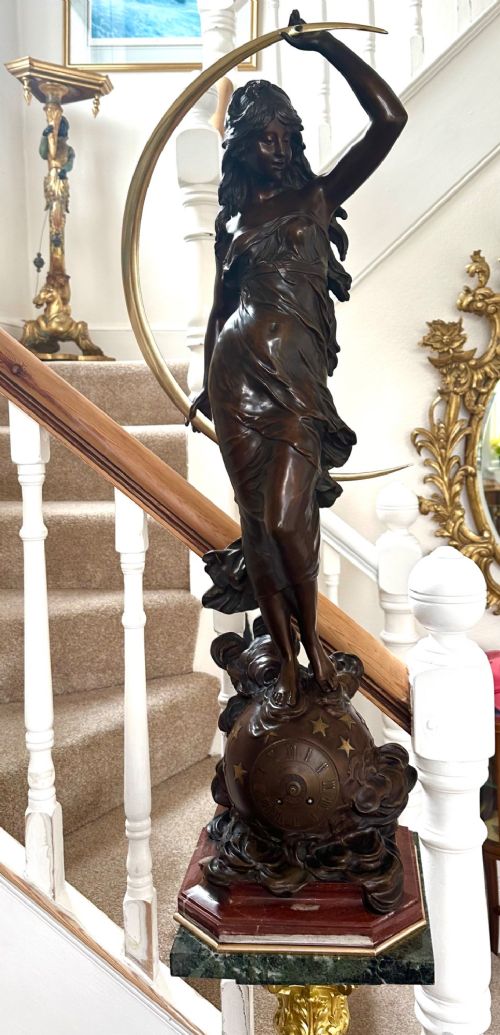


Auguste Moreau Sculpture
An Auguste Moreau sculpture brings nineteenth-century French figural artistry into your interior through mythological and allegorical subjects.
Auguste Moreau Sculpture
An auguste moreau sculpture captures nineteenth-century French romanticism through figures like Selene, Cupid, Aurora, and mythological maidens. You will find these pieces rendered as standalone bronze figures, figural lamps, mantel clocks, and portrait busts.
The works span the nineteenth century and extend into the early twentieth century, showing strong ties to French Art Nouveau and classical styles. Many pieces originate from this active French tradition, depicting graceful youths, water carriers, and dancers.
Beyond standalone sculptures, you frequently encounter functional decorative objects incorporating these figures, such as table lamps and clock garnitures. These items combine sculptural casting with utilitarian purposes like lighting and timekeeping.
Materials and methods
Foundries shaped these works primarily in bronze and spelter, often finishing the metal with patination, dark patina, or silvering. Sculptors also worked in Carrara marble for portrait busts and incorporated onyx into clock bases.
Casting methods allowed workshops to produce both solid bronze statuary and hollow spelter figures for decorative objects. Artisans then applied surface treatments including gilt bronze and patinated metal to highlight drapery and facial expressions.
Aurora drives her chariot across the nineteenth century while Cupid plays the flute nearby.
Defining quality
The refinement of the casting and the clarity of the chasing separate the standard production from the finest pieces. Sharper definition in hair, hands, and drapery indicates a superior execution by the foundry.
The choice of base material fundamentally shapes the character of the piece, with heavy bronze and carved Carrara marble sitting at the upper end compared to patinated spelter. Original surface treatments and patinas that remain undisturbed also preserve the intended visual depth.
Auguste Moreau·Louis Auguste Moreau·Aug. Moreau
The Auguste Moreau Sculpture Glossary
- Spelter
- A zinc alloy used as a cost-effective alternative to bronze in nineteenth-century decorative metalwork. It frequently accepts patination and silvering to mimic more expensive metals.
- Patina
- The surface coloration or sheen developed naturally over time or applied chemically to bronze and metal sculptures. It accentuates the contours and depth of the cast metal.
- Gilt bronze
- Bronze that has been coated with a thin layer of gold or gold-coloured alloy. This technique adds a bright, decorative finish to figural bronzes and decorative mounts.
- Carrara marble
- A type of white or blue-grey marble quarried in Italy, valued for its fine grain and translucency. Sculptors utilised it for portrait busts and classical figures.
- Art Nouveau
- An international style of art and architecture prominent around the turn of the twentieth century. It is characterised by intricate asymmetrical lines inspired by natural forms.
Auguste Moreau Sculpture: Frequently Asked Questions
Are these sculptures solid bronze?
The evidence shows works cast in bronze, patinated bronze, and gilt bronze, alongside pieces made from spelter and patinated metal.
Foundries used different metals depending on the intended object, with figures also appearing in Carrara marble.
How do I identify a lamp conversion?
Listings include items described specifically as table lamps, floor lamps, and figural lamp sculptures.
These pieces integrate the sculptural figure directly with lighting hardware, often utilising spelter or bronze.
What subjects do these sculptures depict?
The pieces portray mythological and allegorical figures, including Selene, Cupid, Aurora, Eros, and nymphs.
You will also find depictions of everyday youths, flute players, and water carriers from the nineteenth century.
How do I style a mantel clock?
Clock listings combine a sculptural figure, such as Amphitrite, with an onyx and spelter body.
Position the clock centrally on a mantelpiece where the contrasting stone and patinated metal remain visible.