




Bronze Musician Statue
A bronze musician statue captures performers caught in motion, offering tactile metal forms that bring nineteenth-century performance and Art Deco rhythm into a room.
Bronze Musician Statue
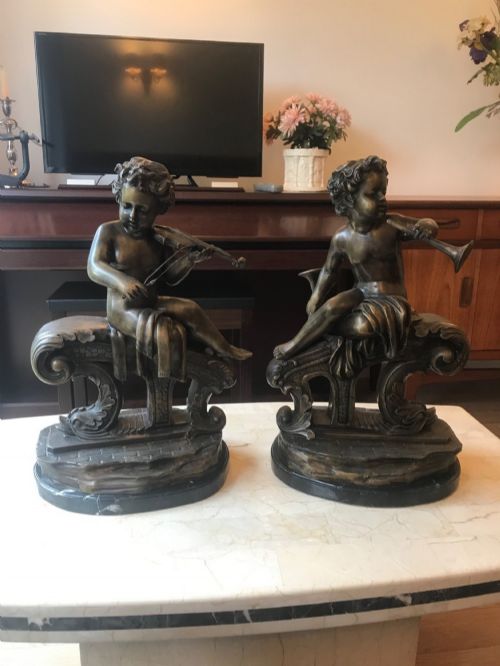
A bronze musician statue represents figures playing instruments, including harps, flutes, lutes, and mandolins, cast across the nineteenth and twentieth centuries. Buyers encounter French antique works alongside Art Deco era pieces, depicting harlequins, minstrels, and classical youths.
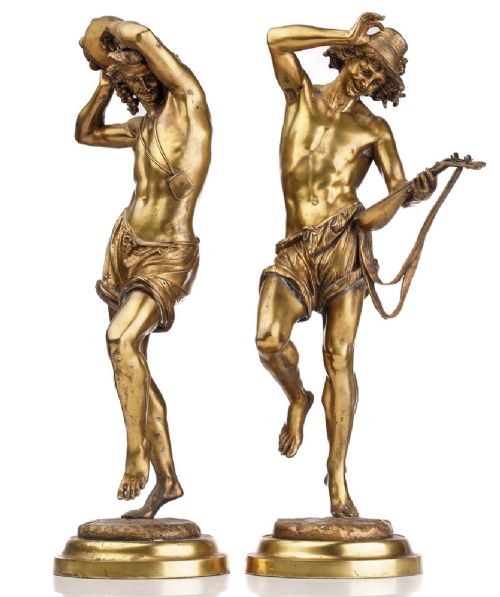
The nineteenth-century examples often favour patinated or gilt bronze surfaces combined with marble bases. Art Deco pieces introduce stylised dancers and musicians from the nineteen-twenties and nineteen-thirties, sometimes utilising plaster and paint alongside metal.
Makers and foundries of this phrase span French realism and Japanese Meiji production. Pairs of figures playing tambourines or standing as pipers appear frequently alongside large single statues.
Materials and Technique
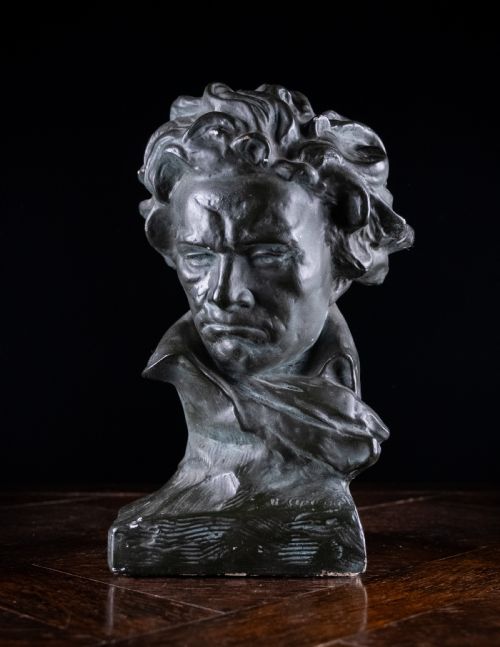
Foundries utilised cast bronze, patinated bronze, and gilt bronze, often mounting figures on marble or onyx plinths. Alternative works employ painted plaster to render portrait busts of composers and cellists.
Sculptors shaped these pieces through traditional casting methods, adding chased detail to garments and instruments. Patination treatments created deep brown or dark green surface tones, while gilding provided bright metallic finishes.
Bronze Musician Statue Retail Price Guide 2026
Typical asking prices for bronze musician statue among the pieces listed under this phrase on Sellingantiques today, from the lower quarter to the upper quarter. They describe what is for sale here now, not the wider market.
Listings feature works in bronze, patinated metal, marble, and painted plaster, spanning nineteenth-century realism to Art Deco.
Craft and Finish
Quality rests in the crispness of the chasing and the fidelity of the cast. Superior pieces render fingers, strings, and facial expressions with sharp precision rather than soft definition.
The weight and selection of the base material also mark distinction, with dense marble or onyx plinths supporting better bronzes. The depth and evenness of the patination contribute further to a piece's visual presence.
Edouard Drouot·Carrier Belleuse·Alfred Grevin·Justo de Gandarias·Aug Moreau·Paul Fournier·Albert Ernest Carrier Belleuse·Miyao·Josef Lorenzl·Marcel Debut·Renzo Colombo·Barbedienne
The Bronze Musician Statue Glossary
- Patinated bronze
- Bronze treated with chemical solutions to produce a specific surface colour, usually brown or greenish. This finish protects the metal and defines sculptural contours.
- Gilt bronze
- Bronze coated with a thin layer of gold, providing a bright, reflective surface. It appears frequently on nineteenth-century decorative figures.
- Chasing
- The process of refining a bronze casting by hand using hammers and punches. Skilled chasing restores surface textures lost during the casting process.
- Foundry mark
- A stamp or signature applied by the casting workshop to identify its origin. These marks assist in dating and attributing sculptures.
- Plinth
- A heavy base supporting a statue, commonly fashioned from marble or onyx in these pieces. It provides stability and visual framing.
Bronze Musician Statue: Frequently Asked Questions
What periods do these statues date from?
The pieces span the nineteenth century, including works from eighteen sixty and the eighteen eighties, alongside Art Deco examples from nineteen thirty.
French ateliers and Japanese Meiji period workshops produced the majority of these sculptural figures.
How were these bronze statues finished?
Foundries used patinated bronze treatments to create deep surface tones, or applied gilding for bright metallic finishes.
Many figures are mounted upon heavy marble or onyx bases to provide stability.
What instruments do the figures play?
Sculptures depict musicians holding harps, lutes, mandolins, flutes, and tambourines. Some figures appear as pipers or minstrel performers.
Harlequins and classical youths also feature prominently among the instrument players.
Are these pieces signed by artists?
Several works bear the signatures of known sculptors or foundry stamps from makers such as Barbedienne.
Signatures typically appear on the bronze base near the feet of the figure.