


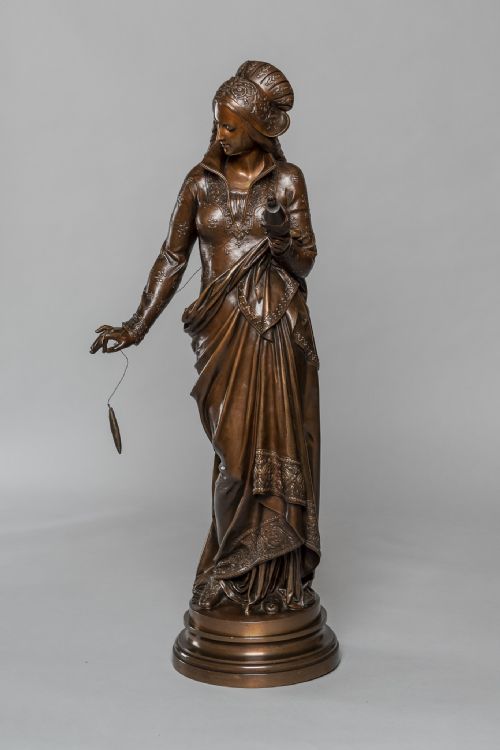


French Academic Figural Sculpture
These pieces of french academic figural sculpture bring the theatrical weight of the nineteenth-century salon directly into a modern room.
French Academic Figural Sculpture
When you search for french academic figural sculpture, you are looking at nineteenth-century works rooted in the rigorous training of the Academie des Beaux-Arts. The examples gathered here span from the 1870s through the Second Empire and into early twentieth-century interpretations, taking the form of standalone statues, figural table lamps, and detailed studies.
You will most commonly meet bronze figures and lamps depicting classical, allegorical, or literary subjects like Mignon, David, and youth water carriers. The materials range from heavy patinated bronze to spelter and frosted glass, often mounted on marble bases.
How they were made
Sculptors combined their metal figures with architectural marble plinths and functional elements like lamp fittings, integrating fine art directly into decorative household objects.
French Academic Figural Sculpture Retail Price Guide 2026
Typical asking prices for french academic figural sculpture among the pieces listed under this phrase on Sellingantiques today, from the lower quarter to the upper quarter. They describe what is for sale here now, not the wider market.
Sculptures combined with functional lighting appear frequently, turning decorative bronze figures into table lamps.
What varies in quality
Quality in these figures rests upon the crispness of the chasing and the depth of the foundry work after the casting process is complete. Finer pieces retain sharp details in hair, hands, and clothing folds, whereas lesser examples lose definition in the finishing stages.
The sophistication of the patina also marks the grade of a piece, with nuanced chemical colorings outlasting simpler painted or dipped metal finishes over time.
Emile Picault·Claudius Marioton·Auguste Moreau·Lucien Madrassi·Albert Carrier-Belleuse·Adrien Gaudez·Eugene Laurent
The French Academic Figural Sculpture Glossary
- Spelter
- A zinc-based alloy commonly utilised as a cheaper alternative to bronze for nineteenth-century decorative figures. It is softer than bronze and typically carries a painted or patinated surface finish.
- Patina
- The surface coloration and sheen developed naturally through age or applied chemically by the foundry. It protects the metal and defines the visual depth of the sculpture.
- Academic
- Pertaining to the traditional style and strict standards taught by European art academies during the nineteenth century. It prioritises classical form, mythological subjects, and technical precision.
- Lost-wax casting
- A historic method of metal casting where a molten metal is poured into a mould that has been created by melting away a wax model. This technique allows for complex, highly detailed sculptures.
French Academic Figural Sculpture: Frequently Asked Questions
How do I clean a bronze sculpture?
Dust the surface gently with a soft, dry brush to prevent the buildup of particles in the crevices of the casting.
Avoid using water, soap, or chemical polishes, as these can strip away the historic patina and damage the metal.
Is spelter the same as bronze?
Spelter is a zinc alloy that is much lighter and softer than true bronze, often used for more commercial nineteenth-century figures.
You can usually tell the difference by weight and by checking areas of wear where the underlying grey metal might show through the dark finish.
How were these lamps originally wired?
Many nineteenth-century figural lamps were adapted for electricity later in their lives, often during the early twentieth century or more recently.
Original gas or oil fittings are frequently replaced with modern wiring to allow safe daily use in a contemporary home.
What is an academic figure?
An academic figure follows the strict classical proportions and narrative themes taught in nineteenth-century European art academies.
These pieces typically depict allegorical characters, historical heroes, or literary figures with an emphasis on realistic anatomy and dramatic expression.