


Bronze Warrior Statue
A bronze warrior statue brings classical drama and historical narrative into a room, spanning figures from Roman gladiators to African horsemen.
Bronze Warrior Statue
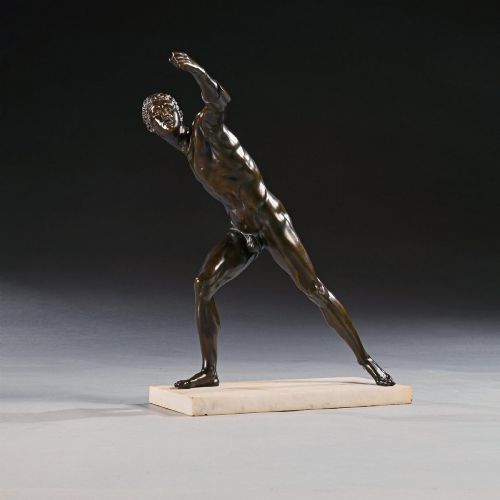
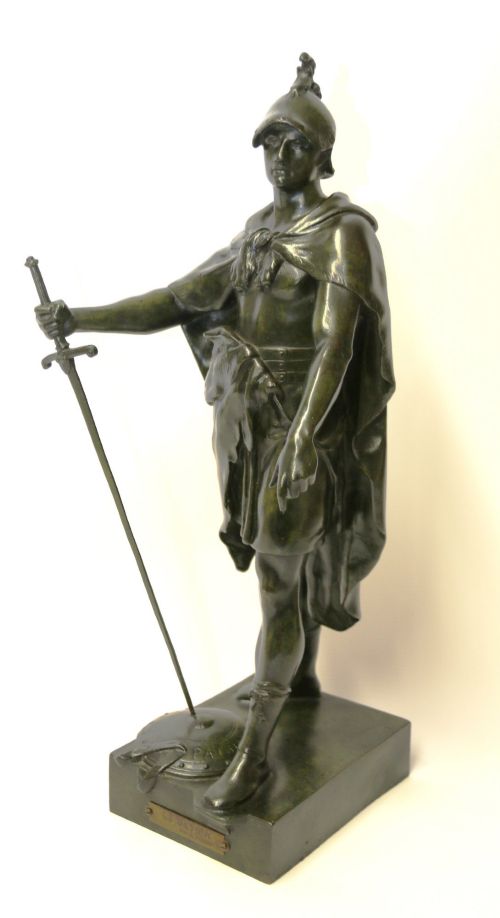
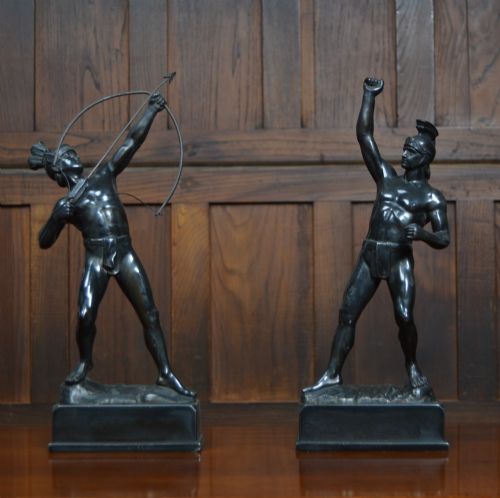
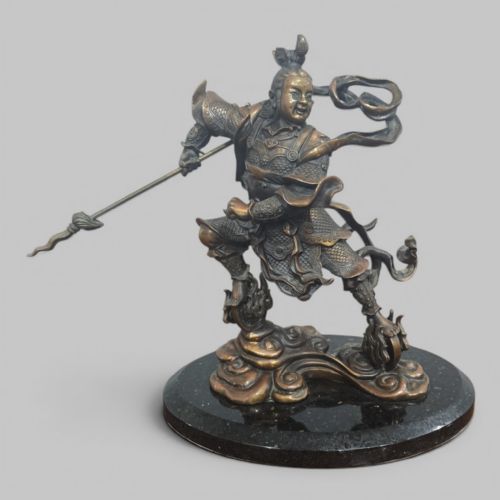
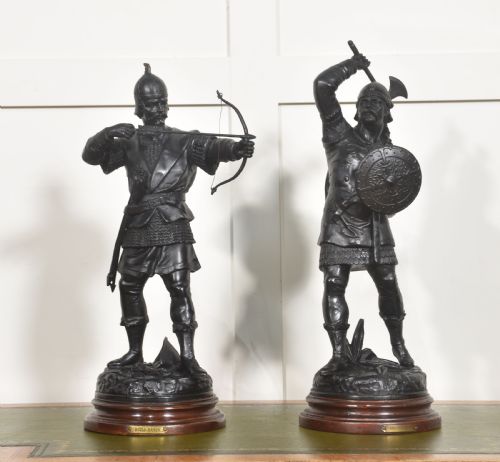
When you search for a bronze warrior statue, you encounter subjects drawn from classical antiquity, mythology, and various global histories. These sculptures depict figures such as Greek archers, Roman soldiers, Celtic leaders, and medieval knights, rendered in poses of combat or post-victory reflection.
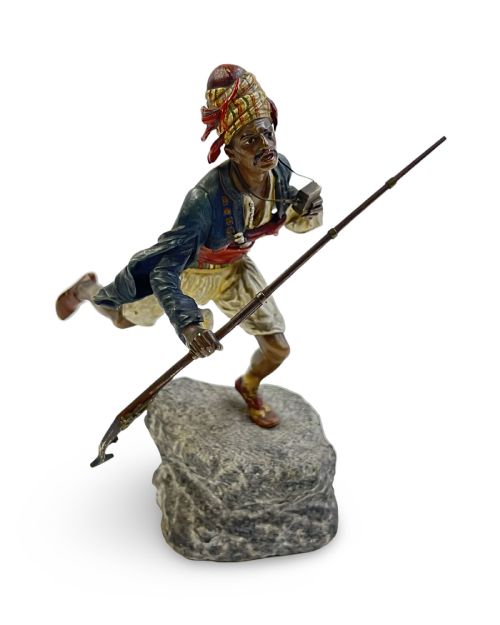
The versions most common on this page date predominantly from the nineteenth century, including Grand Tour souvenirs, French salon bronzes, and Vienna cold-painted pieces. Alongside European subjects, the selections incorporate African Benin brass and bronze horsemen as well as Orientalist depictions.
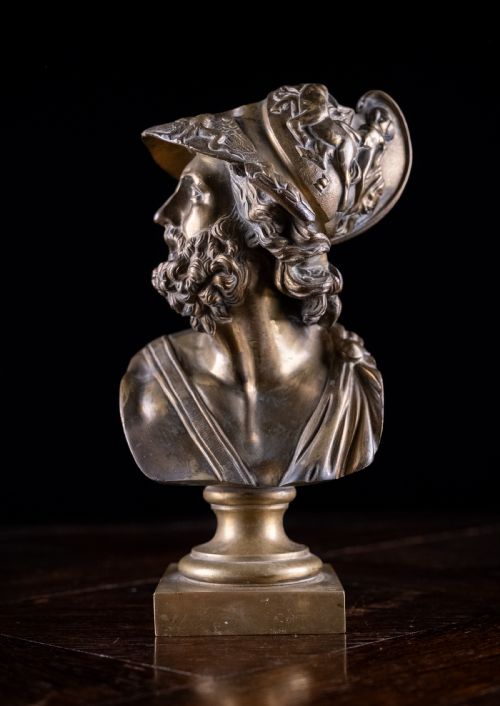
Scale varies widely, from cabinet busts of Spartan kings to large two-foot standing figures and equestrian monuments. The forms serve primarily as decorative focal points for libraries, studies, and drawing rooms.
Materials and casting methods
The pieces rely primarily on traditional metal casting, utilising solid or hollow bronze alongside alternative base metals such as spelter and brass. Bronze allows for sharp detail in muscular definition and armour, while spelter appears frequently in nineteenth-century decorative castings.
Many works incorporate surface treatments, ranging from rich dark patination and gilt finishes to polychrome and cold-painted enamel colours. Accompanying plinths often utilise contrasting materials like carved marble to support the heavy metal forms.
Listings feature works from the 1860s through the 1950s, utilising bronze, spelter, marble, and wood.
Distinctions in execution
The reputation of the foundry or the individual sculptor dictates the standing of a piece, with signed works by known nineteenth-century bronzeiers commanding greater interest. Material integrity, such as the weight of the bronze and the quality of the marble base, further separates mass-produced items from fine salon sculpture.
Émile Louis Picault·Franz Xaver Bergman·Eugene Barillot·Edward Aagaard·Raoul Francois Larche·Franz Iffland·Emile Laporte·Richard Aurili
The Bronze Warrior Statue Glossary
- Grand Tour
- A nineteenth-century tradition where wealthy travellers collected small-scale bronze copies of classical antiquities in Italy.
- Patinated bronze
- Metal treated with chemical solutions to produce a specific surface colour, commonly deep brown or green.
- Spelter
- A zinc alloy frequently used as a cheaper alternative to bronze for decorative figures, often painted to resemble bronze.
- Cold-painted
- A technique where paint is applied to cold bronze without subsequent firing, common in Vienna bronzes.
- Equestrian
- A sculpture depicting a human figure mounted on a horse, such as a military commander or knight.
Bronze Warrior Statue: Frequently Asked Questions
Where should I display a large bronze warrior?
These heavy statues require sturdy surfaces like heavy timber desks, low bookcases, or dedicated marble-topped pedestals.
Position them away from direct heat sources to protect any patinated or cold-painted surfaces over time.
How do I clean a bronze sculpture?
Dust the surface gently with a soft, dry brush to prevent accumulation in the crevices of armour and clothing.
Avoid using commercial metal polishes or water, as these treatments can strip the historic patina.
What is the difference between bronze and spelter?
Bronze is a durable alloy of copper and tin that takes fine chisel work and ages with a stable patina.
Spelter is a softer zinc alloy that feels lighter and appears more brittle if damaged.
What periods do these sculptures cover?
The pieces span nineteenth-century revivals of classical antiquity through to early twentieth-century Art Deco interpretations.
Subjects reference historical eras from ancient Greece and Rome up to medieval and nineteenth-century military campaigns.