


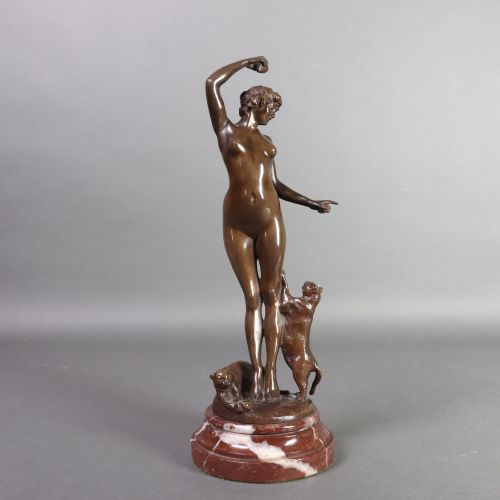
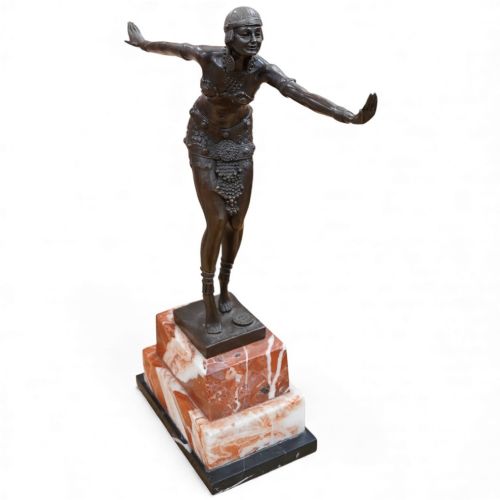
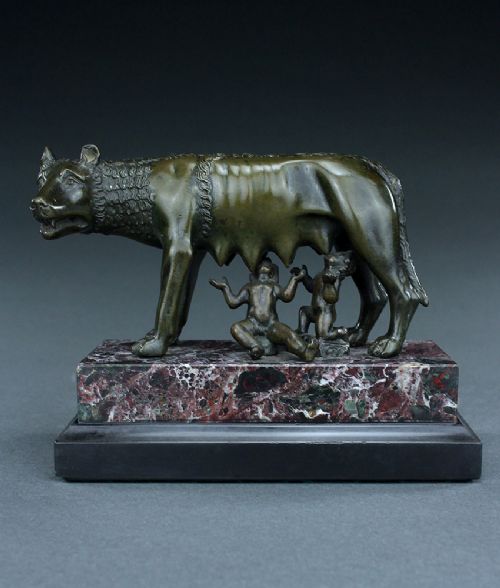
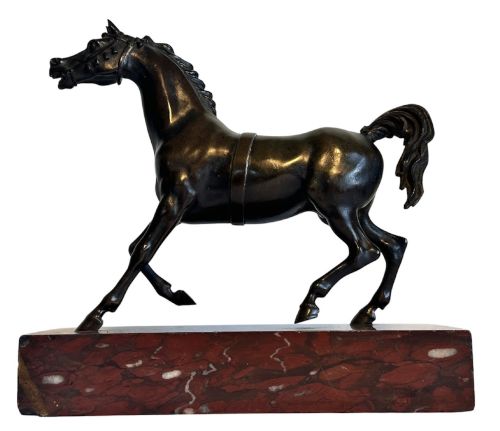



Bronze Figure Red Marble Base
A bronze figure red marble base brings classical subjects and animalier studies into your room through solid metal cast over rich stone.
Bronze Figure Red Marble Base
When you search for a bronze figure red marble base, you encounter a selection of nineteenth-century sculptures, statuettes, bookends and table lamps set upon striking stone plinths. The pieces divide principally between Grand Tour souvenirs from Italy and French animalier or classical subjects cast during the nineteenth century.
You are most likely to meet Italian Grand Tour reductions of famous antiquities alongside French animalier studies of greyhounds, stallions and boxers. These works pair dark bronze or gilt bronze patination with distinctive red marble bases, including Rosso Levanto varieties.
The assortment spans diverse styles such as Neoclassical, Classical Revival, French Animalier, Directoire, Art Nouveau and Art Deco. Makers represented in this tradition include Prosper Lecourtier, Messina Roma, Christophe Fratin and Emmanuel Villanis.
Materials and construction methods
The metal components utilise bronze, dark bronze, gilt bronze or brass, shaped through traditional casting techniques into figural studies and animal subjects. These metal elements sit securely upon heavy marble or Rosso Levanto marble bases that provide a stable foundation.
Finishes vary from polished gilt surfaces to rich dark patination on the bronze, contrasting with the varied veining of the red stone plinths beneath. The union of metal and stone creates substantial decorative objects designed for display on tables, desks or mantelpieces.
Bronze Figure Red Marble Base Retail Price Guide 2026
Typical asking prices for bronze figure red marble base among the pieces listed under this phrase on Sellingantiques today, from the lower quarter to the upper quarter. They describe what is for sale here now, not the wider market.
Current listings feature pieces spanning the nineteenth and early twentieth centuries, incorporating materials such as bronze, brass and Rosso Levanto marble across Neoclassical and Art Deco styles.
Factors influencing quality
The choice and preparation of the marble base also distinguish the work, with select pieces utilising richly veined Rosso Levanto marble rather than plain stone. The proportion between the metal figure and its stone plinth determines the visual balance of the complete object.
Prosper Lecourtier·Messina Roma·Christophe Fratin·Emmanuel Villanis
The Bronze Figure Red Marble Base Glossary
- Grand tour
- Souvenirs purchased by travellers on cultural journeys through Europe during the eighteenth and nineteenth centuries. These objects typically reproduce famous classical sculptures on a smaller scale.
- Animalier
- A nineteenth-century French artistic movement focusing on realistic depictions of animals. Sculptors in this tradition studied anatomy closely to capture creatures in natural postures.
- Rosso Levanto
- A striking dark red marble featuring prominent white or grey veins. This stone frequently appears in bases for classical and Grand Tour bronzes.
- Patina
- The surface coloration and sheen developed on bronze over time through age or chemical treatment. Artists often enhanced this layer to accentuate the contours of the figure.
- Directoire
- A transitional French style bridging Louis XVI and Empire periods. It is characterised by classical restraint and archaeological revival themes.
Bronze Figure Red Marble Base: Frequently Asked Questions
What is a Grand Tour bronze?
A Grand Tour bronze is a nineteenth-century souvenir cast in Italy after famous classical sculptures from antiquity. Travellers collected these portable reductions to commemorate their educational journeys across Europe.
Such pieces often feature distinctive stone bases and capture iconic subjects from museums and archaeological sites.
How do I identify animalier bronzes?
Animalier bronzes focus specifically on realistic representations of animals, particularly dogs, horses and wild beasts in dynamic poses. Christophe Fratin and Prosper Lecourtier worked prominently within this sculptural tradition.
These works emphasise anatomical accuracy and natural behaviour rather than human subjects.
What is Rosso Levanto marble?
Rosso Levanto is a deep red ornamental marble characterised by intricate white and grey veining. It provides a dramatic and colourful foundation for nineteenth-century bronze figures and lamps.
Its presence often signals a piece of elevated decorative ambition within Grand Tour and classical productions.
How were these figures used originally?
These pieces served as decorative ornaments, desk accessories, bookends or functional table lamps in nineteenth-century interiors. Their compact scale allowed them to sit comfortably on mantelpieces, libraries and writing tables.
Owners displayed them to signal classical learning, artistic refinement and travel experience.
How do I distinguish nineteenth-century casts?
Nineteenth-century casts reveal distinct patination, foundry marks and handling wear appropriate to their age. Examination of the bronze texture and the joinery of the marble base helps establish the period of production.
Sculptures after the antique or by known makers carry specific stylistic traits characteristic of workshops active between eighteen hundred and nineteen thirty.