


Neoclassical Bronze Putti
Neoclassical bronze putti bring classical mythology into domestic interiors through figures cast in metal across the eighteenth and nineteenth centuries.
Neoclassical Bronze Putti
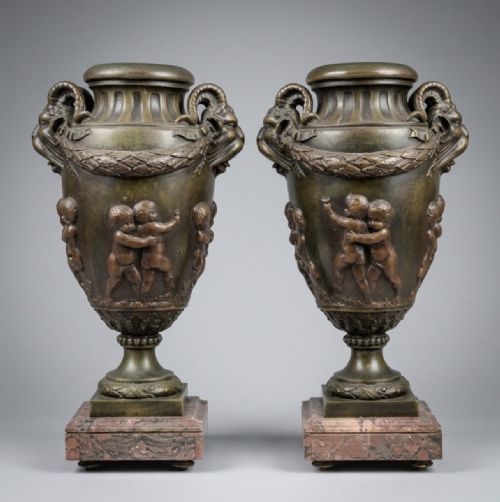
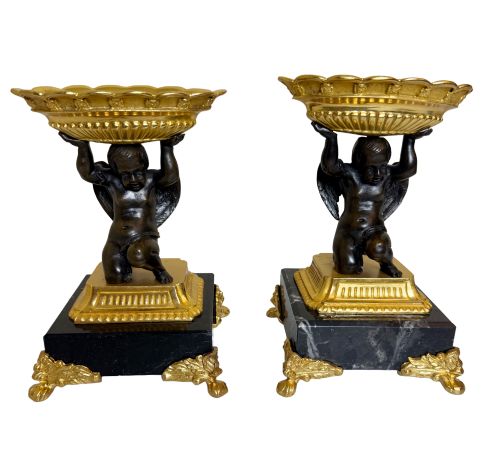
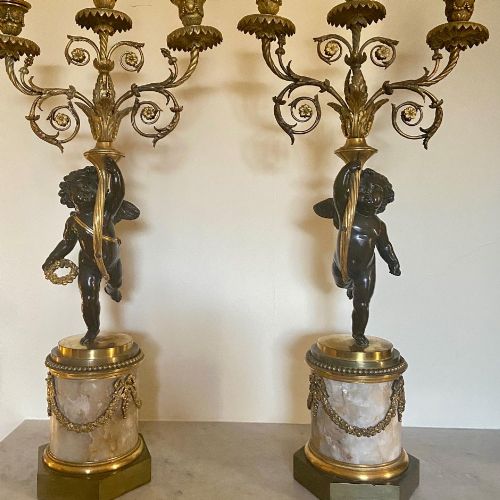
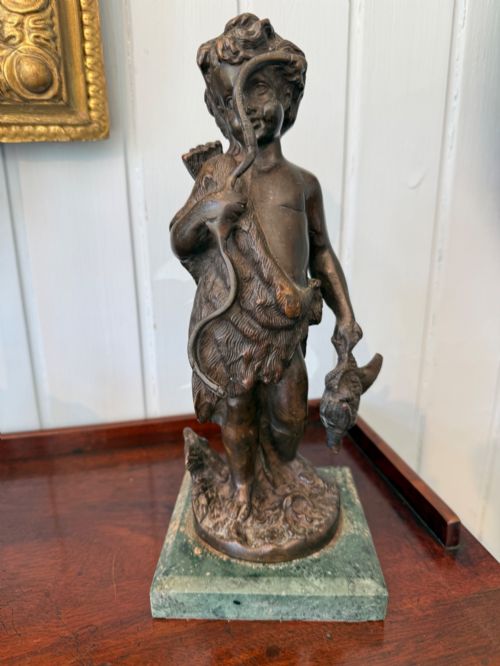
Neoclassical bronze putti appear as standalone sculptures, candelabra supports, and clock mounts reflecting eighteenth and nineteenth-century taste.
The pieces on this page span the Victorian era, the French Empire, and the Grand Tour period, originating primarily from French and Italian workshops.
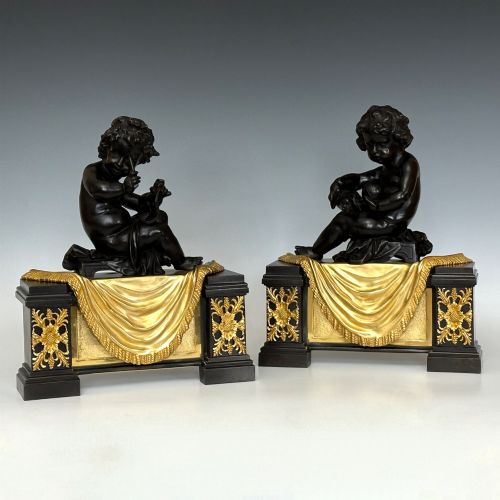
Buyers encounter figures seated on marble bases, holding attributes like bows or wheat sheaves, or incorporated into larger garnitures and lamps.
Materials and technique
Foundry work combines cast bronze with ormolu, patinated bronze, and occasionally gilded brass to create contrasting surface textures.
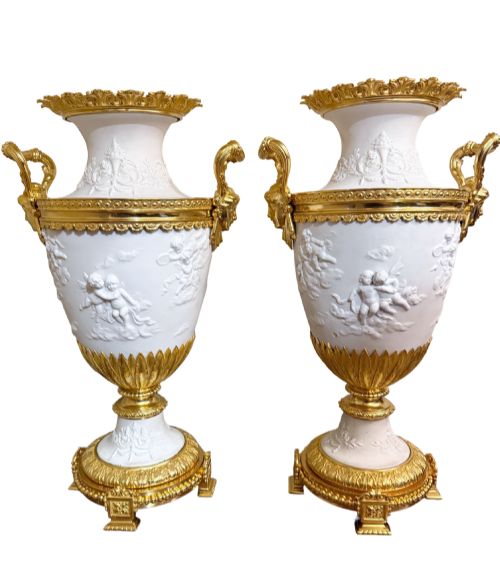
Mounts frequently integrate white marble, specimen marble, or porcelain elements such as Sevres bodies beneath the metal figures.
Casting methods range from traditional lost-wax techniques to later nineteenth-century commercial production using spelter as a bronze substitute.
Listings combine bronze, marble, and gilt metal, showing periods from eighteenth-century neoclassical revivals through the late nineteenth century.
Distinctions in craftsmanship
The refinement of the chasing work on the bronze surface distinguishes finer castings from more mechanical production.
The quality and weight of the supporting marble or ormolu mounts indicate the original workshop tier and period ambition.
Francois Redmond·Le Roy Paris·Claude Clodion
The Neoclassical Bronze Putti Glossary
- Ormolu
- Gilded bronze produced by applying a mercury-gilding amalgam to cast metal. This finish creates a distinctive warm lustre characteristic of French decorative arts.
- Putto
- A plump, naked male child depicted in classical art, often winged. These figures derive from Renaissance revivals of classical antiquity.
- Grand Tour
- A cultural journey undertaken by wealthy young Europeans visiting historical sites in Italy. Souvenirs from these travels included small bronzes and architectural models.
- Garniture
- A set of matching decorative objects, typically comprising a central clock flanked by candelabra or vases designed for a mantelpiece.
Neoclassical Bronze Putti: Frequently Asked Questions
What are neoclassical bronze putti?
These pieces are cast metal sculptures depicting winged or unwinged infants derived from classical mythology, produced mainly during the nineteenth century. They often serve functional roles as candle holders, lamp bases, or clock components rather than purely decorative items.
Craftsmen integrated these figures into domestic items following archaeological discoveries in Italy, capturing the aesthetic of antiquity for European drawing rooms.
How were these figures used originally?
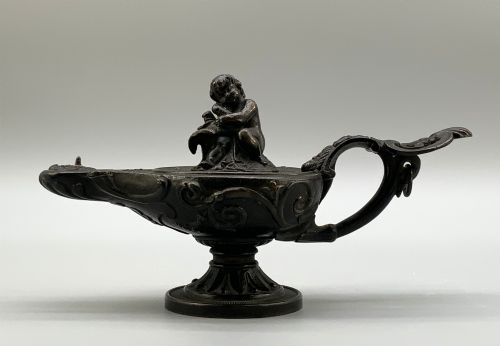
Period interiors utilised these bronze figures on mantelpieces, desks, and side tables as integrated parts of lighting and timekeeping hardware. Candelabra and oil lamps positioned putti to hold nozzles or shade fittings.
As decorative art, they demonstrated the owner's classical education and taste during the Regency, Victorian, and French Empire periods.
How do I identify Grand Tour pieces?
Grand Tour bronzes typically originate from nineteenth-century Italian workshops catering to foreign travellers visiting archaeological excavations. They often feature dark patination and mount directly onto specimen marble bases.
These smaller sculptures replicate famous antique statues seen during European travels, serving as portable educational souvenirs.
How do I care for bronze and ormolu?
Maintenance requires only gentle dusting with a soft, dry brush to prevent dirt accumulation on patinated surfaces. Avoid chemical cleaners or metal polishes that strip historical patination and gilding.
Keeping pieces away from direct heat sources and moisture preserves the underlying bronze and any associated marble or porcelain elements.