


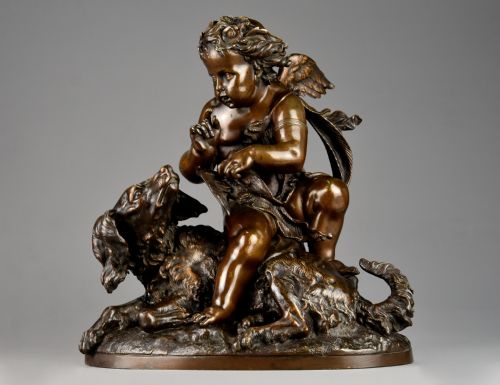


Victorian Bronze Cherub Statues
Victorian bronze cherub statues bring classical grace and figural charm to interior spaces through finely cast nineteenth century metalwork.
Victorian Bronze Cherub Statues
Victorian bronze cherub statues encompass nineteenth century sculptural works depicting winged putti, amorini, and classical children in various mythological and domestic pursuits. These figures appear singly or in pairs, often standing upon heavy marble bases or integrated into functional objects such as table lamps, timepieces, and doorstops.
The selections on this page lean heavily towards nineteenth century French and Italian Grand Tour productions, alongside English decorative items. Buyers frequently encounter musical figures playing triangles, Bacchic groups gathering grapes, or hunting studies cast in patinated and gilt bronze.
Originating predominantly from the 1860s through the 1890s, these pieces reflect Neoclassical, Classical Revival, and Rococo Revival tastes. They bridge the gap between pure sculpture and decorative arts, serving as focal points for mantelpieces, tables, and desks.
Evaluating craftsmanship and detail
The distinction between tiers of work rests in the sharpness of the chasing and the fidelity of the cast. Finer examples retain crisp facial expressions, well-defined hair, and delicate hand-tooling on wings and drapery, whereas lesser pieces exhibit softer contours and obscured surface textures.
Compositional complexity and the integration of the figure with its base also influence the overall standard. Pairs matched by the foundry demonstrate superior planning compared to assembled groupings, and pieces retaining original patination outrank those with heavy modern intervention.
Victorian Bronze Cherub Statues Retail Price Guide 2026
Typical asking prices for victorian bronze cherub statues among the pieces listed under this phrase on Sellingantiques today, from the lower quarter to the upper quarter. They describe what is for sale here now, not the wider market.
Several cherubs double as practical household guardians, cast solidly enough to prop open heavy drawing-room doors or keep time on a mantel.
The Victorian Bronze Cherub Statues Glossary
- Putto
- A plump, often winged male child figure common in classical art. This term frequently appears interchangeably with cherub in nineteenth-century sculpture titles.
- Patination
- The chemical or natural coloration of the bronze surface over time. Skilled founders used patination to create depth and shadow across the metal.
- Grand Tour
- The cultural journey undertaken by nineteenth-century elites across Europe. Souvenirs from this travel often included small bronze classical figures and statues.
- Neoclassical
- An artistic style drawing inspiration from the art and culture of classical antiquity. It emphasises proportion, restraint, and mythological themes.
- Chasing
- The manual finishing process used on cast bronze to refine details and remove casting flaws. High-quality chasing separates master foundries from mass production.
Victorian Bronze Cherub Statues: Frequently Asked Questions
How do I clean bronze statues?
Dust the surface regularly with a soft, dry brush to prevent dirt accumulation. Avoid using chemical polishes that strip the original patination.
Apply a very thin layer of microcrystalline wax occasionally if the metal requires protection. Buff gently with a clean cloth to maintain the finish without altering the historic surface.
What is a putto?
A putto is a classical figure of a small, winged child depicted in painting and sculpture. These figures frequently represent attendants to mythological deities.
In nineteenth-century bronze work, putti often engage in playful activities like music-making or harvesting grapes. The plural form is putti.
Are these French or English?
The listings include both continental European and English productions from the nineteenth century. French foundries specialised in finely chased decorative bronzes and sculptural groups.
English examples often served utilitarian purposes such as heavy doorstops. Examining the casting style and base materials helps clarify the likely origin.
Why are some mounted on marble?
Marble bases provide necessary weight and stability for relatively heavy bronze figures. This pairing also creates a polished aesthetic suitable for domestic display on desks and mantelpieces.
Neoclassical and Grand Tour pieces frequently utilise contrasting marble plinths to elevate the sculpture. The stone type can offer clues regarding the period and regional workshop.
What does patinated mean?
Patination refers to the surface coloration applied to bronze through chemical treatments or natural ageing. It protects the underlying metal and defines the visual tone of the piece.
Artisans created varied shades from deep brown to golden hues to highlight sculptural details. Preserving this original surface is essential for maintaining historical integrity.