




Bronze Putti Candle Holders
Bronze putti candle holders bring figurative charm and classical warmth to a mantelpiece, combining sculpted cherubs with functional lighting.
Bronze Putti Candle Holders
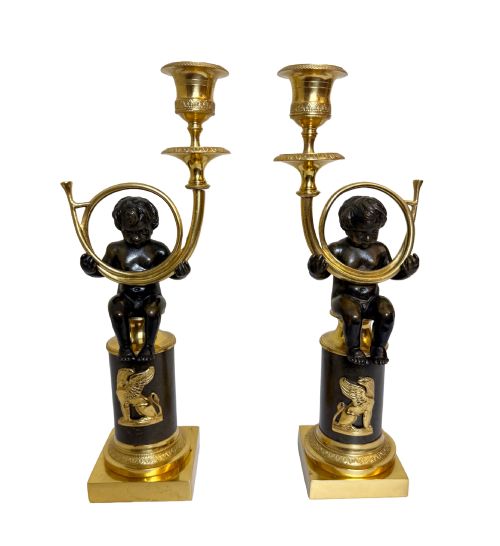
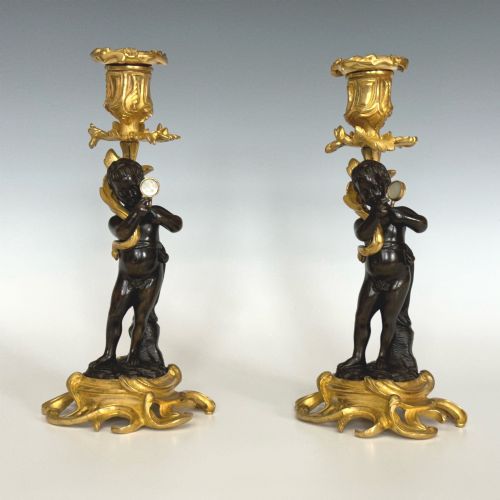
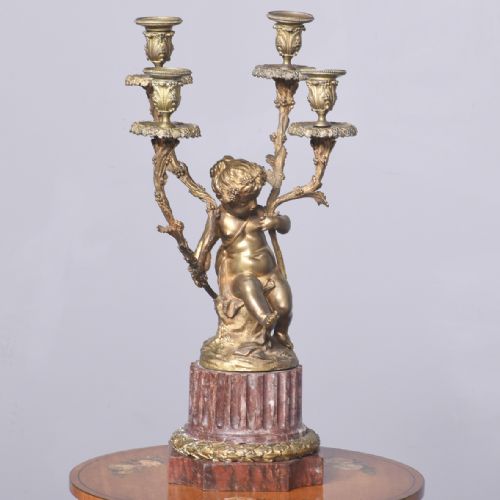
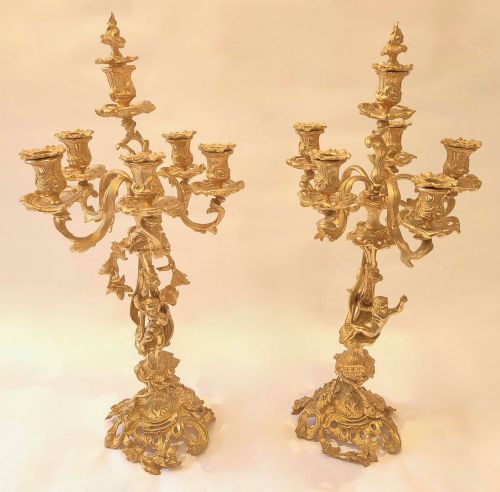
Bronze putti candle holders depict winged child figures supporting sockets or branches for illumination. The pieces on this page span the eighteenth and nineteenth centuries, taking forms such as single candlesticks, multi-light candelabra, and clock garniture sets. They appear in French Empire, Louis XVI style, and Italian Grand Tour designs.
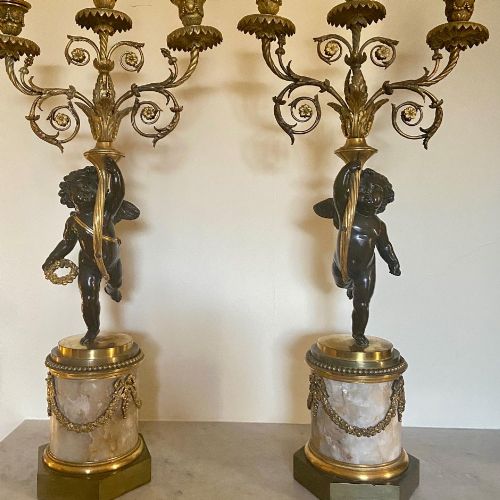
Most examples pair cast metal figures with contrasting bases made of white marble or natural stone. Makers often utilised patinated bronze for the figures and gilt bronze or ormolu for the mounts and candle nozzles. Pairs predominate, designed to sit symmetrically on a desk or mantel.
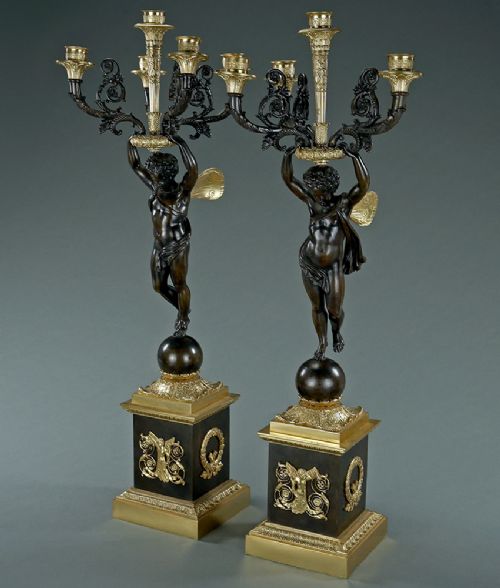
The aesthetic draws heavily on classical antiquity and continental revival periods. Pieces range from small desk sticks to large multi-arm candelabra featuring cherubs holding floral branches or draped in classical garments.
Materials and technique
Foundry work relies on bronze casting, producing figures with detailed musculature, hair, and wings. Artisans applied patination to darken the metal or used mercury gilding, known as ormolu, to create a brilliant golden finish on highlights and mounts.
Many designs incorporate carved white marble or fluorspar bases that anchor the heavier metal work. Assemblages are held together by internal threaded rods and screws, allowing the bronze components to be securely fastened to stoneplinths.
Some cherubs appear to struggle under the generous weight of multi-branch candelabra with unwavering, chubby determination.
Judging quality
Quality rests on the crispness of the bronze chasing and the depth of the casting detail in the cherub faces and hair. Superior pieces show hand-finished tool work across the metal surface rather than soft, mass-produced contours.
The choice of materials contributes significantly to the standing of a piece. Fine integration between polished ormolu, dark patinated bronze, and unblemished marble bases distinguishes exceptional examples from standard nineteenth-century workshop production.
Francois Redmond·Claude Clodion
The Bronze Putti Candle Holders Glossary
- Putti
- Plural of putto, a plump, winged child figure derived from classical art and frequently depicted in Renaissance and revival decorative pieces.
- Ormolu
- Gilt bronze produced by applying a mixture of gold and mercury to a bronze base and heating it to drive off the mercury.
- Candelabra
- A branched candlestick holder designed to support multiple candles from a single central stem.
- Garniture
- A set of matching ornamental objects for a mantelpiece, typically comprising a clock flanked by matching candelabra or vases.
- Patination
- The surface coloration of bronze achieved through natural ageing or chemical treatment to produce deep brown or black tones.
Bronze Putti Candle Holders: Frequently Asked Questions
What is a putto?
A putto is a chubby, winged infant motif commonly found in classical and revival art. Sculptors used them to represent mischievous spirits or cherubs.
In candle holders, these figures typically support the weight of the drip pans and candle nozzles with their raised arms.
How do I date these pieces?
Dating relies on examining the casting methods, the style of the marble base, and the composition of the bronze. Nineteenth-century revival pieces often copy eighteenth-century models closely.
Clues appear in the wear patterns on the gilding and the type of assembly screws used beneath the base.
Where should I place a candelabra?
These pieces suit prominent flat surfaces such as mantelpieces, sideboards, and large console tables. Pairs work best when centered symmetrically in a room.
Keep them away from direct heat sources and strong drafts to protect the delicate marble and gilt surfaces.
What is the difference between ormolu and bronze?
Bronze is an alloy of copper and tin used to cast the structural body and figures. Ormolu refers specifically to the gold-wash finish applied to the bronze.
Many antique pieces combine both materials, using dark patinated bronze for the cherubs and bright ormolu for the decorative mounts.