


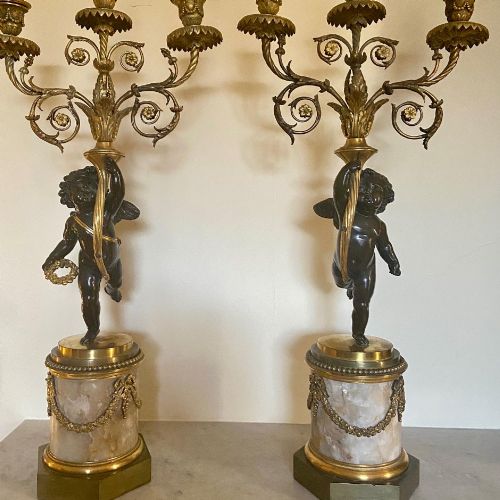
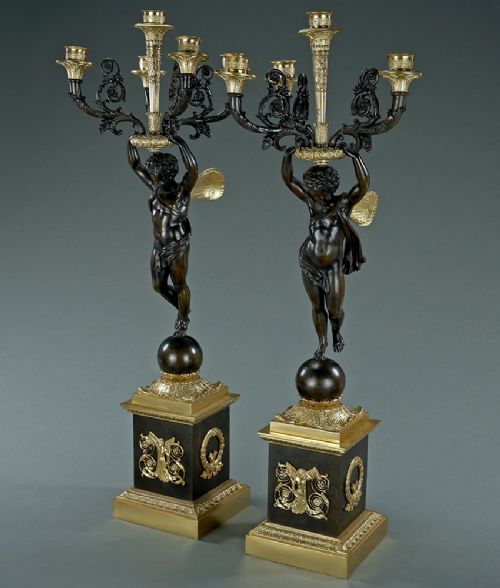


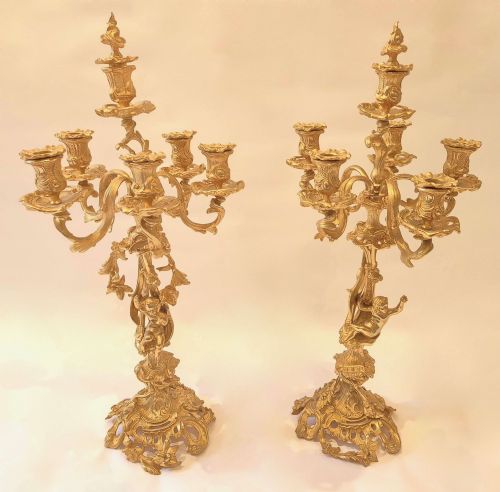


Pair Bronze Putti Candlesticks
Pair bronze putti candlesticks bring neoclassical elegance to a room, casting warm light from cast metal figures of winged infants.
Pair Bronze Putti Candlesticks
When you search for pair bronze putti candlesticks, you encounter figural lighting fixtures shaped around mythological winged children, often holding candle sockets or branches. These items appear primarily across nineteenth-century French and Italian manufacture, including Regency, Napoleon III, and Louis XVI styles.
The objects take the form of single candlesticks or multi-light candelabra, frequently mounted upon heavy stone bases. Surviving examples demonstrate how makers combined classical sculptural motifs with functional domestic lighting during the eighteenth and nineteenth centuries.
Materials and construction methods
The construction of these pieces relies on metal casting, utilising bronze, ormolu, gilt bronze, patinated bronze, and occasionally bronzed spelter. Artisans formed the figures through casting processes before applying surface finishes such as gilding or dark patination to accentuate the sculptural detail.
Many examples incorporate mineral bases, pairing the cast metal figures with white marble or fluorspar plinths. Candle nozzles and arms were cast separately and joined to the main figural components through threading or pinning.
Pair Bronze Putti Candlesticks Retail Price Guide 2026
Typical asking prices for pair bronze putti candlesticks among the pieces listed under this phrase on Sellingantiques today, from the lower quarter to the upper quarter. They describe what is for sale here now, not the wider market.
Materials documented across the inventory include gilt bronze, patinated bronze, ormolu, white marble, and fluorspar.
Factors of quality and execution
Quality in these figural works rests upon the crispness of the metal chasing and the depth of the casting detail in the figures' faces and hair. Superior examples exhibit refined hand-finished tooling across the bronze surfaces rather than soft, indistinct contours.
The selection and mounting of the supporting stone elements also indicate the grade of the piece, with dense, well-fitted marble or fluorspar bases marking higher production standards. The articulation of the arms and the structural stability of the entire assembly distinguish finer decorative items from standard production.
Francois Redmond·Claude Clodion
The Pair Bronze Putti Candlesticks Glossary
- Putti
- Plumed or unwinged infant figures derived from classical art, frequently depicted as cherubs in decorative metalwork. They form the central sculptural focus of these lighting pieces.
- Ormolu
- Finely ground high-carat gold mercury-gilded onto a bronze base, creating a bright golden surface. This technique appears extensively on French decorative metalwork.
- Fluorspar
- A colourful halide mineral sometimes utilised for the decorative bases of nineteenth-century candelabra. It offers distinctive natural banding and coloration beneath the metal figures.
- Patinated bronze
- Bronze treated with chemical solutions to produce a darkened surface tone rather than a gilded finish. This treatment contrasts with brighter ormolu highlights on the figures.
Pair Bronze Putti Candlesticks: Frequently Asked Questions
What is the difference between candlesticks and candelabra?
Candlesticks hold a single candle in a fixed socket atop a stem. Candelabra feature multiple branches or arms extending from a central shaft to support several lights at once.
Both forms appear frequently with figural putti supports, though candelabra provide greater illumination through their multi-light branches.
Where were these pieces made?
The majority of these figural lights originate from French workshops working in Louis XVI, Empire, or Second Empire styles. Other notable examples emerge from Italian Grand Tour production centres.
French makers dominated the export market for gilt and patinated bronze table ornaments throughout the nineteenth century.
How do I identify the period?
Dating relies on stylistic clues, casting techniques, and the materials used for the associated bases. Pieces associated with the Regency or Louis XVI revival periods often display precise neoclassical ornament.
Napoleon III and later nineteenth-century pieces tend to incorporate heavier bronze castings and varied patination finishes.
How should I clean bronze and ormolu?
Dust these decorative items gently with a dry, soft cloth to prevent accumulation. Avoid chemical polishes or abrasive cleaners, which can strip the original ormolu gilding or alter the bronze patina.
Professional conservation advice should be sought if the metal requires deeper cleaning or stabilization.