





Bronze Cherub Statuette
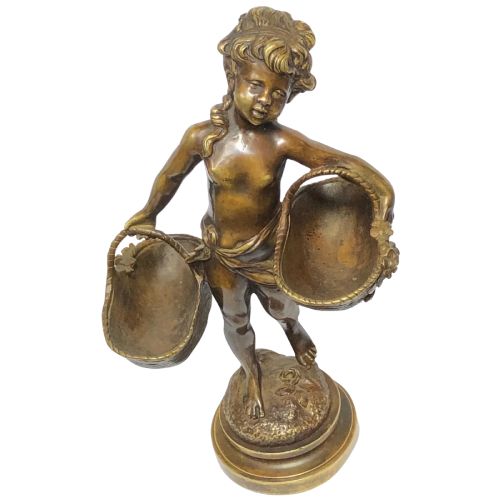
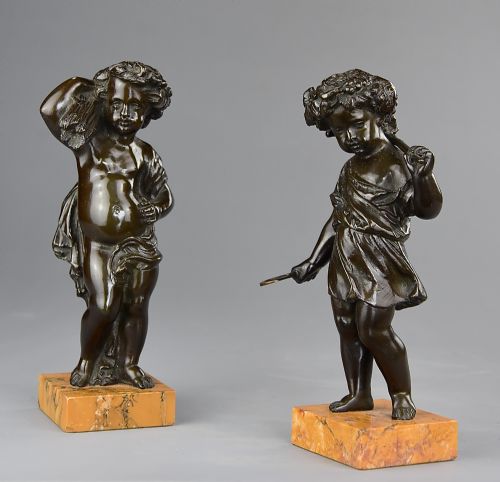
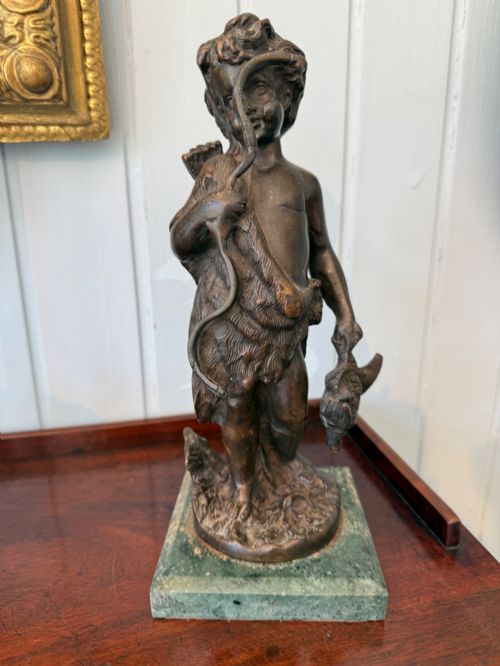
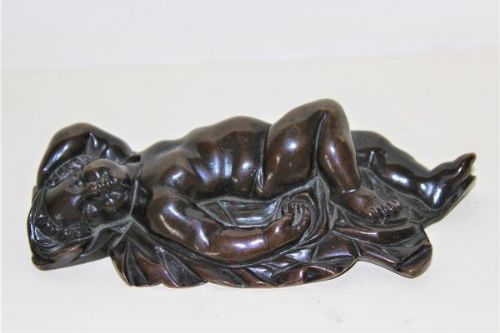
These bronze cherub statuette pieces capture the nineteenth-century fascination with classical putti, offering expressive figures cast in metal and mounted on stone.
Bronze Cherub Statuette
A bronze cherub statuette represents classical putti or amorini, frequently cast during the nineteenth century in France and Italy. These figures often appear as single decorative sculptures, paired groups, or components of table lamps and mounted objects.
Makers drew heavily on Neoclassical, Rococo Revival, and French Empire styles, modelling the cherubs as hunters, harvest figures, or sleeping children. Many examples pay homage to well-known sculptors such as Claude Michael Clodion or Auguste Moreau.
The objects frequently incorporate contrasting bases made from red marble, white marble, or inlaid wood, which elevate the metal figures and provide structural stability.
How they were made
Foundries utilised the lost-wax casting technique to capture fine details in the bronze, from hair texture to facial expressions. Artisans then applied patination or ormolu gilding to the metal surface to create varied tonal effects.
Mounting required combining the cast bronze with shaped marble bases, and in some instances, incorporating fabric elements or glass beads for lamp conversions.
Bronze Cherub Statuette Retail Price Guide 2026
Typical asking prices for bronze cherub statuette among the pieces listed under this phrase on Sellingantiques today, from the lower quarter to the upper quarter. They describe what is for sale here now, not the wider market.
Listings feature nineteenth-century dates spanning from eighteen-sixty to nineteen-hundred, predominantly utilising bronze, marble, and ormolu.
What varies in quality
The choice and integration of materials dictate the overall visual weight, particularly where rich patinated bronze meets heavy red or white marble bases.
Claude Michael Clodion·Auguste Moreau·Dumond·Ferrand
The Bronze Cherub Statuette Glossary
- Putto
- A plump, naked male child figure found in classical art and Renaissance revivals. These figures frequently double as cherubs, cupids, or amorini in nineteenth-century bronzes.
- Patinated bronze
- Metal treated with chemical solutions to produce a specific surface colour, ranging from dark brown to greenish tones. This finish protects the bronze while enhancing sculptural depth.
- Ormolu
- Ground gold applied to a bronze base through a mercury amalgamation process, or simply high-quality gilded bronze. It yields a bright, durable golden surface.
- Neoclassical
- A style drawing inspiration from the art and culture of classical antiquity, prioritising balance and restraint. It heavily influenced nineteenth-century French and Italian bronzes.
- Grand Tour
- A cultural journey undertaken by wealthy young Europeans to view classical antiquities. Figures from this context often incorporate Italian marble or local sculptural motifs.
Bronze Cherub Statuette: Frequently Asked Questions
What is a bronze cherub statuette?
A bronze cherub statuette is a nineteenth-century cast metal sculpture depicting a winged child, often modelled as a putto, cupid, or amorino in classical poses.
These pieces typically date from the mid to late nineteenth century, reflecting French and Italian revival styles that incorporated marble bases or functioned as decorative lamp components.
How do I identify a 19th-century bronze?
Nineteenth-century bronzes generally exhibit hand-finished chasing, rich patination, and heavy casting methods typical of French and Italian foundries of the period.
Examinations often reveal signatures of known modellers or stylistic markers associated with Neoclassical and Rococo Revival movements of the eighteen-eighties and eighteen-nineties.
Why are some figures mounted on marble?
Marble bases provided both physical stability for heavy metal castings and a formal plinth that echoed classical sculpture displays.
Foundries used various stone types, including red and white marble, to contrast with the dark patinated bronze or gilded ormolu surfaces.
Were these figures used as lamps?
Some sculptural groups were adapted during the nineteenth century to serve as table lamps, incorporating electrical or oil fittings alongside fabric elements.
These converted pieces retain their original bronze statuary while fulfilling a functional lighting purpose.