




Dark Bronze Putti
Dark bronze putti bring classical mythological charm into domestic interiors through figures cast in metal across the eighteenth, nineteenth and twentieth centuries.
Dark Bronze Putti
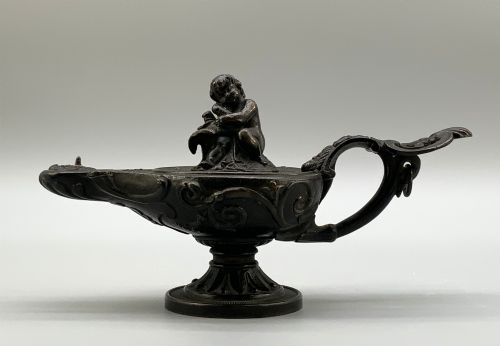
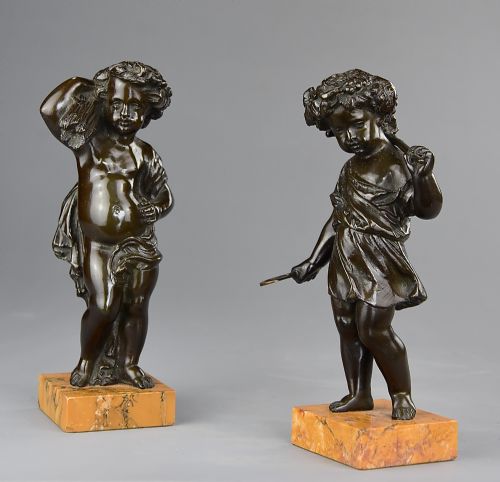
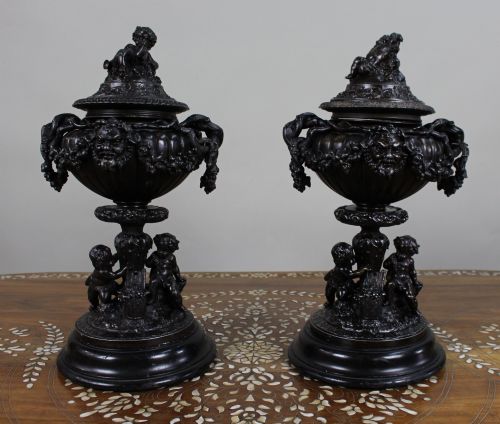
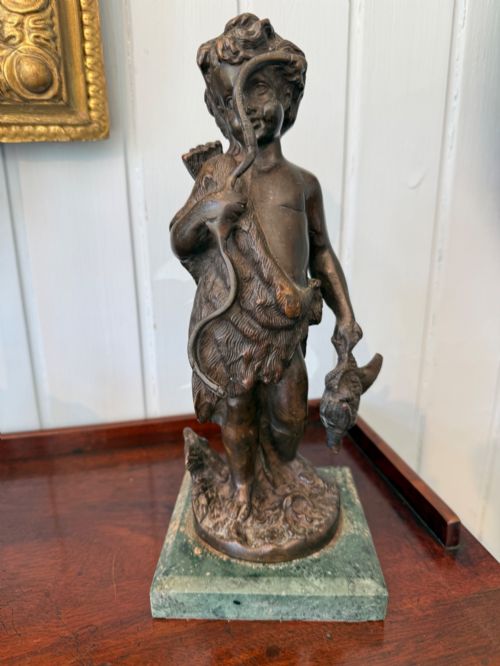
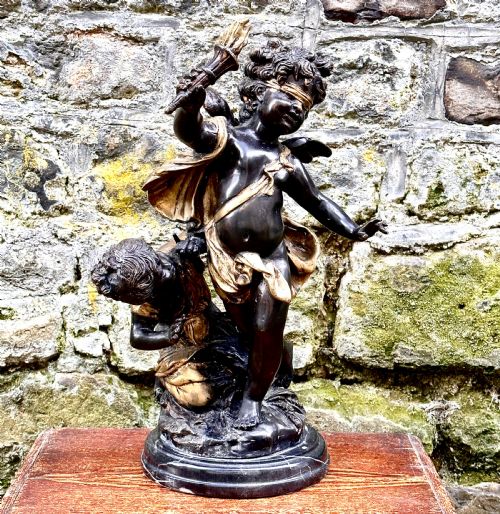
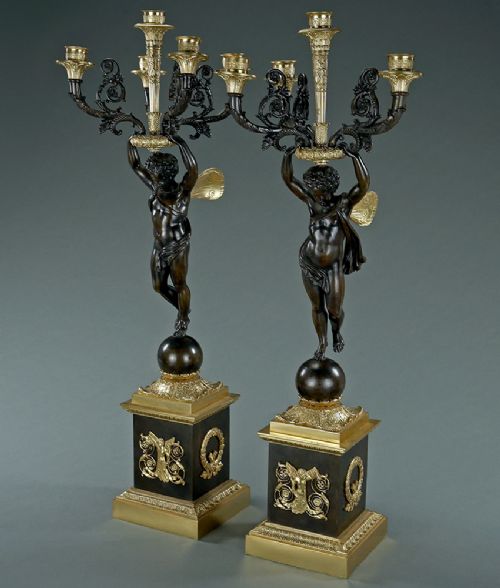
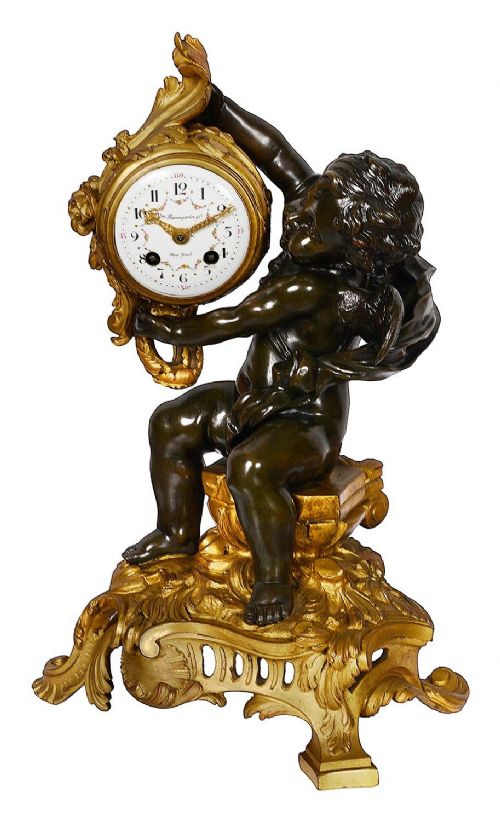
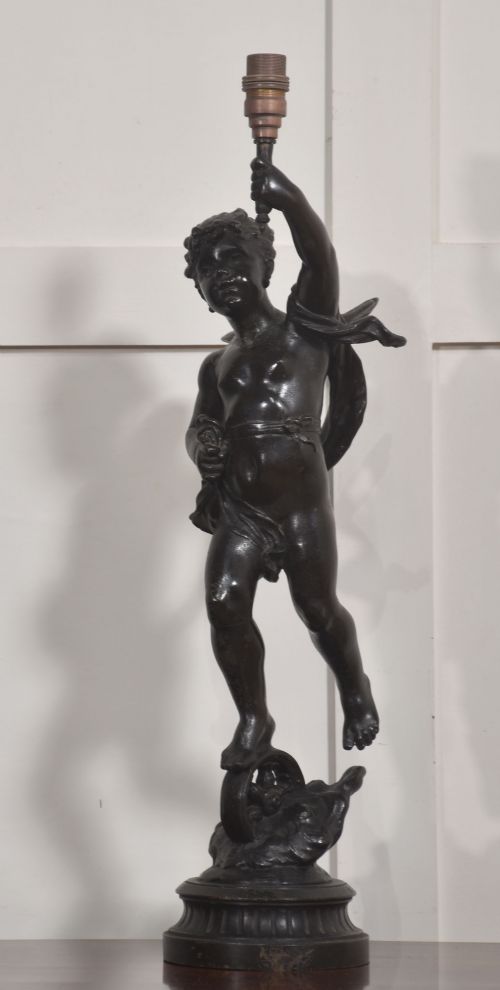
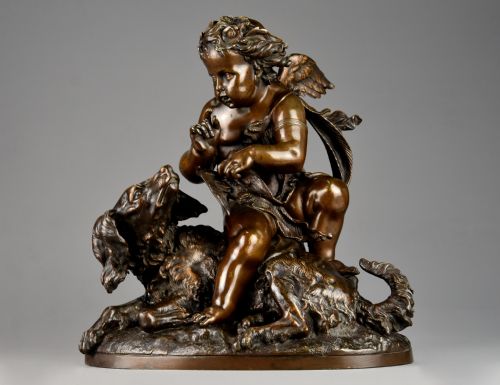
When searching for dark bronze putti, buyers encounter cast metal figures of winged infants, cherubs and cupids rendered in patinated bronze, often paired with marble bases or incorporated into functional objects.
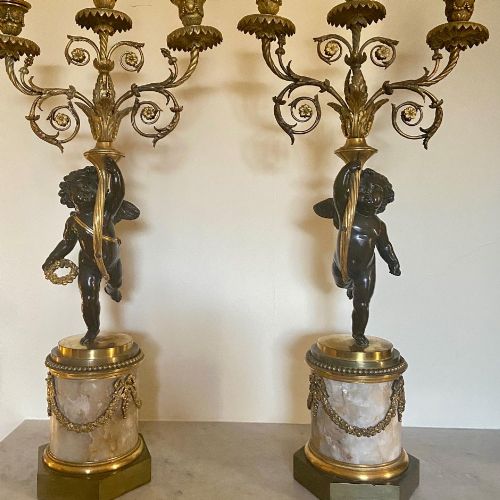
The selections span nineteenth-century French and Italian works, including candelabra, mantel clocks, table lamps and standalone sculptures influenced by neoclassical and Grand Tour aesthetics.
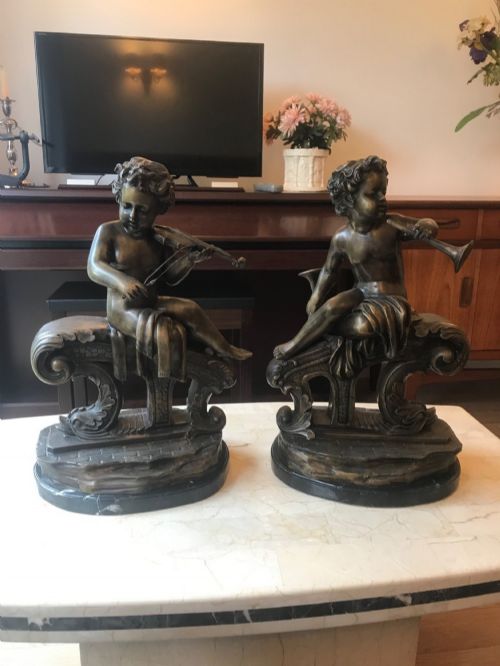
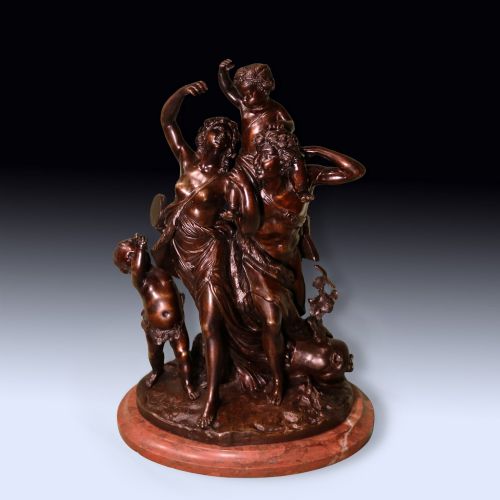
Many examples draw directly from classical motifs or the sculptural traditions of Claude Michel Clodion, depicting children playing musical instruments, harvesting grapes or engaged in allegorical pursuits.
How they were made
The pieces rely primarily on traditional metal casting techniques, utilising bronze, patinated bronze, or ormolu to shape the figures.
Many sculptures and decorative objects incorporate contrasting materials such as marble for bases, along with accents of gilt bronze and brass.
Surface finishes are achieved through chemical patination, creating dark tones that highlight the modelled details of hair, wings and drapery.
Listings feature materials including bronze, marble, patinated bronze, gilt bronze, ormolu, wood, enamel and brass.
What varies in quality
Quality differences emerge in the crispness of the chasing and the finesse of the metalwork after the initial casting process is complete.
The depth and nuance of the dark patination, alongside the integration of secondary materials like marble bases or ormolu mounts, distinguish standard production from finer output.
Artistic attribution also plays a role, with works modeled after known sculptors or signed by established foundries and artists commanding greater attention.
Claude Michael Clodion·Francois Redmond·K and O·Louis Auguste Moreau·Dumond
The Dark Bronze Putti Glossary
- Putto
- A plump, often winged infant depicted in classical art. The plural form is putti.
- Patinated bronze
- Bronze that has been treated with chemical solutions to alter its surface colour, typically producing dark brown or greenish tones.
- Grand Tour
- A cultural journey through Europe undertaken by young upper-class men in the eighteenth and nineteenth centuries, yielding souvenirs such as small bronzes.
- Ormolu
- Gilt bronze, where finely ground high-carat gold is applied to a bronze object using a mercury amalgamation technique.
- Neoclassical
- A style originating in the mid-eighteenth century inspired by the art and culture of classical antiquity.
Dark Bronze Putti: Frequently Asked Questions
What is the difference between a putto and a cherub?
A putto represents a mythological infant figure derived from classical art, often associated with love or wine.
A cherub originates from religious iconography, though the terms are frequently used interchangeably in nineteenth-century decorative arts.
How should I clean a dark bronze sculpture?
Dusting gently with a soft, dry cloth is usually sufficient to maintain the surface of patinated metal.
Harsh chemical cleaners or water should be avoided to protect the original dark finish and patination.
Were these figures always mounted on marble?
Many nineteenth-century bronzes and candelabra feature integrated or added marble bases to provide stability and visual contrast.
Other examples were cast as standalone figures or designed directly into functional objects like clocks and lamps without stone plinths.
How can I tell a Grand Tour piece apart?
Grand Tour bronzes were typically acquired in Italy during nineteenth-century travels, often reflecting classical antiquities seen in museums.
They frequently display distinct patination and are mounted on Italian marble bases.