

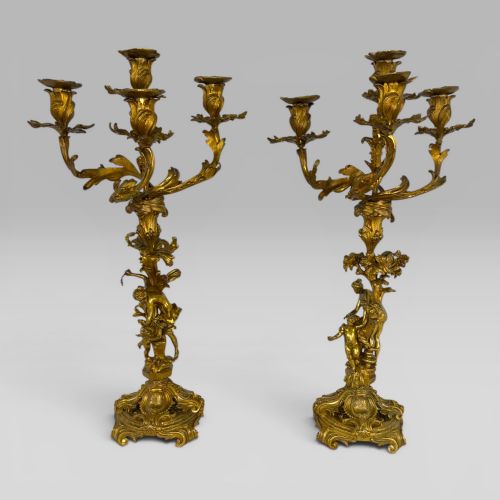
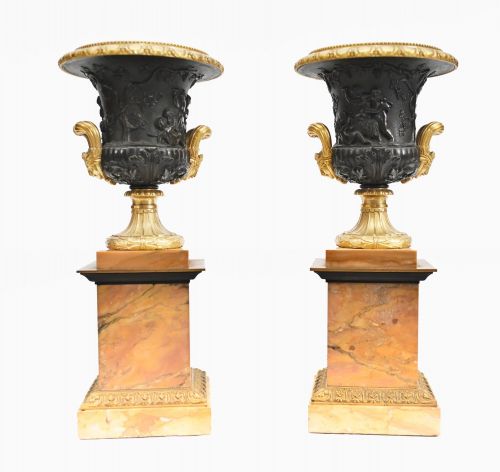
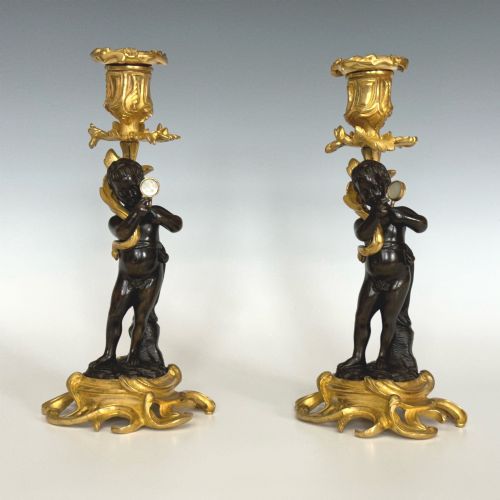
French Bronze Cherub Pair
When you search for a french bronze cherub pair, you uncover figural lighting, mantel ornaments and decorative figures cast in nineteenth-century workshops.
French Bronze Cherub Pair
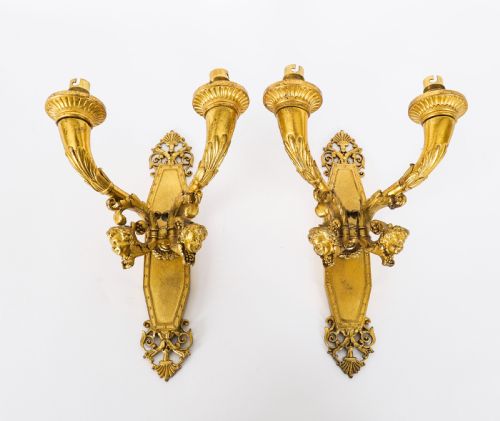
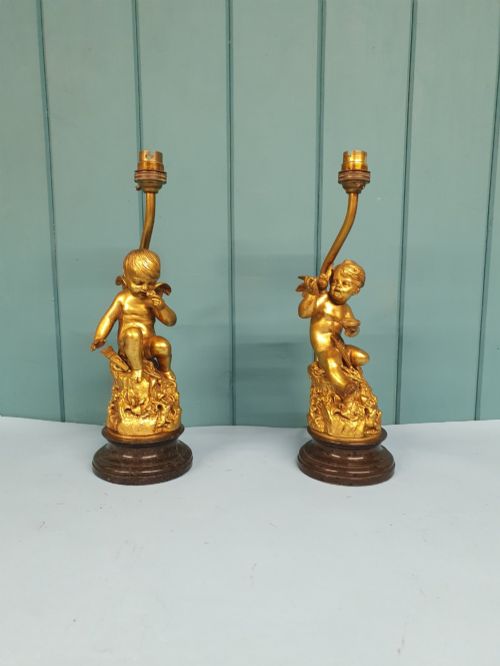
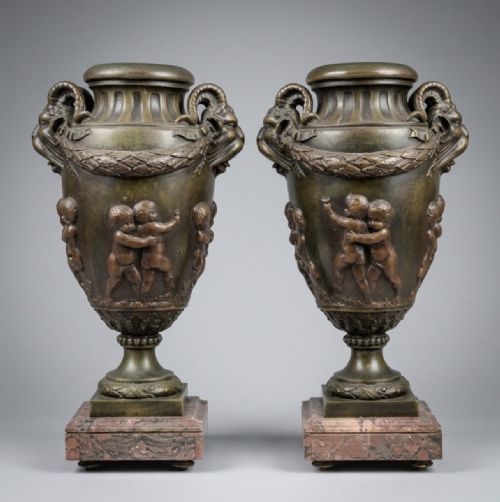
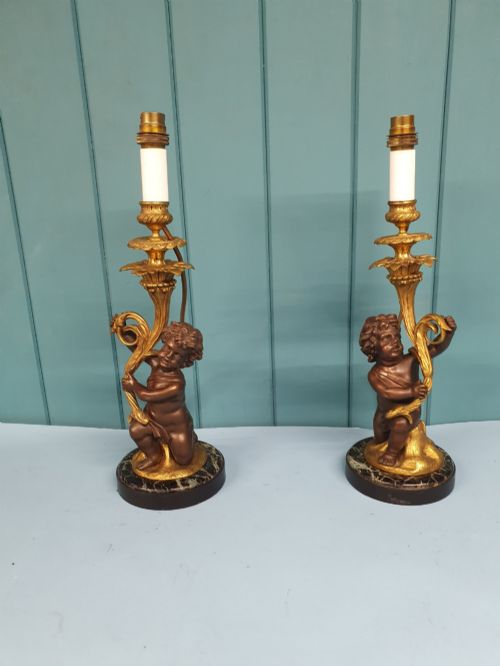
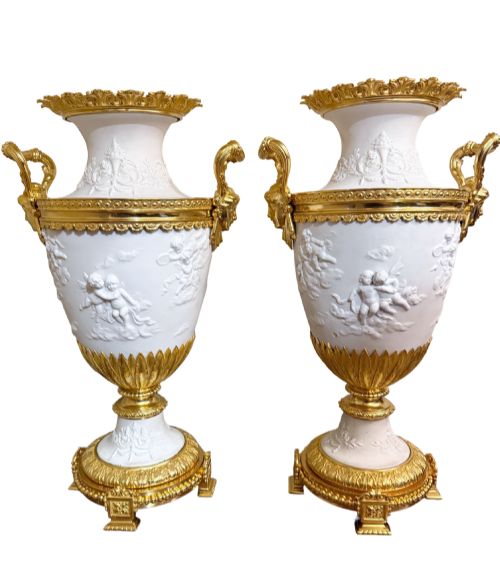
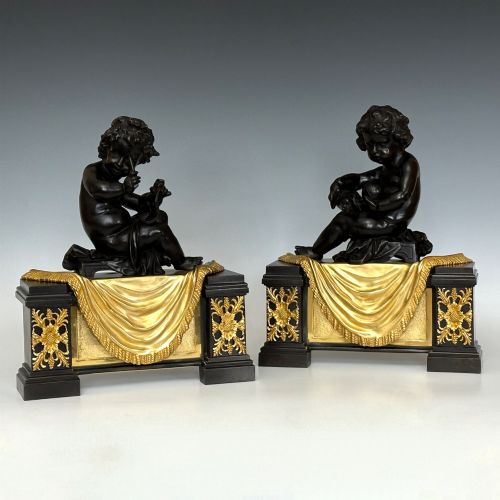
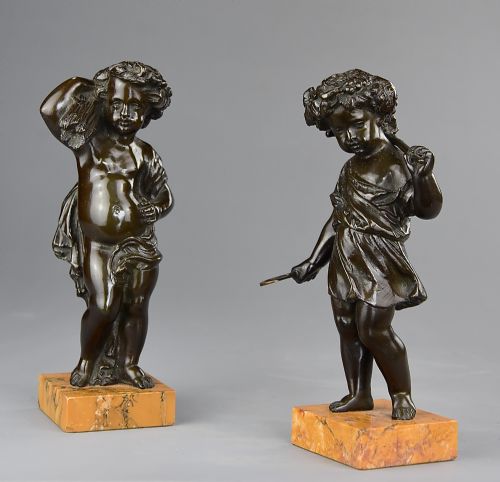
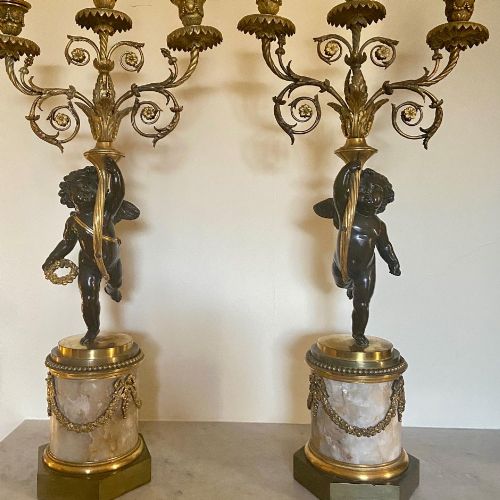
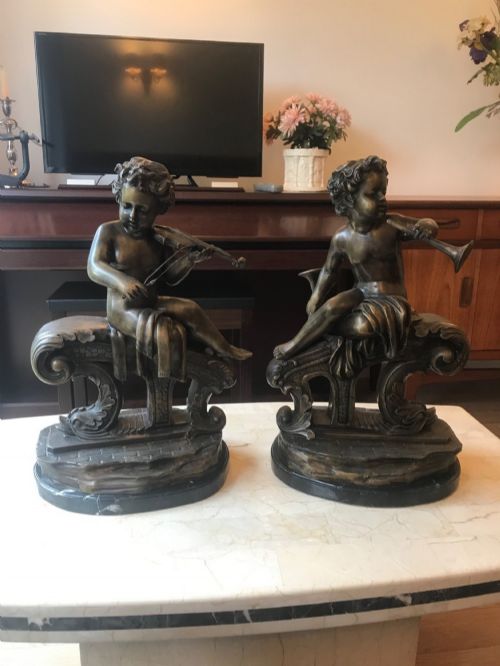
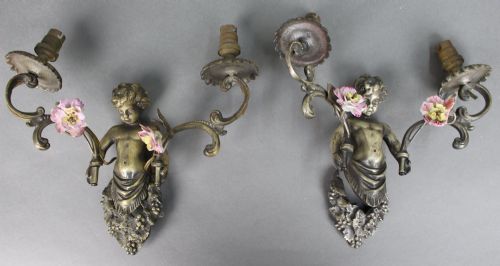
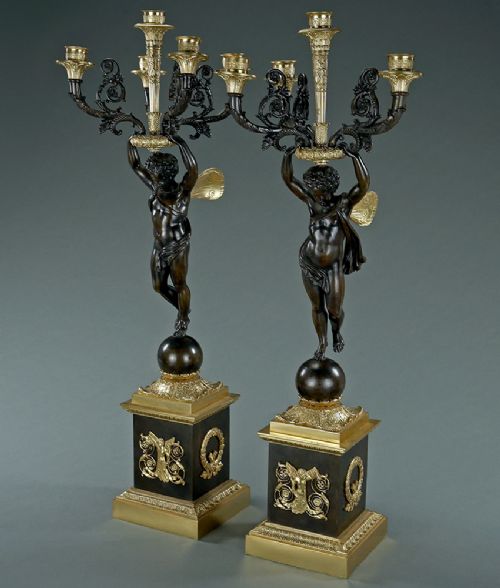
A french bronze cherub pair comprises matched figural castings representing winged infants, putti or allegorical children, originating primarily from nineteenth-century France. These decorative objects take the form of candelabra, wall sconces, candlesticks, chenets and mantel urns, frequently mounted on contrasting stone bases.
The aesthetic draws heavily on revived historical idioms, notably Louis XIV, Louis XVI, Empire and Rococo styles, echoing neoclassical motifs and theatrical compositions. Most examples encountered in this category date from the mid-to-late nineteenth century, reflecting a period of intense revivalism in Parisian foundries.
How they were made
The primary construction relies on lost-wax or sand casting in bronze, which is subsequently finished with patination, fire gilding or ormolu application. Molten metal flows into intricate moulds to capture the soft contours of infant limbs, drapery and foliate scrollwork.
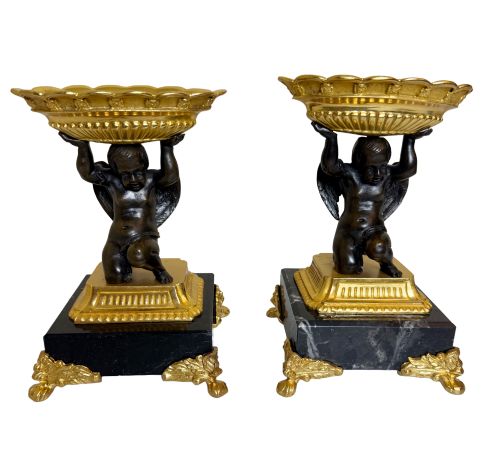
Many figures are paired with marble bases, porcelain elements or rock crystal components, secured through threaded metal rods and nuts. The surface treatment alternates between polished gilded highlights and dark, chemical patination to accentuate anatomical depth.
Listed forms include wall sconces, chenets, tazzas, ewers, and multi-branch candelabra.
What varies in quality
The distinction between ordinary production and superior craftsmanship lies in the crispness of the chasing and the depth of the subsequent tooling. Master artisans hand-chiseled the raw cast metal after cooling, sharpening hair strands, feather tips and facial expressions that might otherwise appear soft.
Quality is also determined by the weight and purity of the bronze, the richness of the fire-gilt ormolu, and the integration of secondary materials such as sculpted white marble or Sevres porcelain. Superior pairs display balanced symmetry, stable mounting and harmonious proportions between the figures and their functional supports.
Louis Kley·Claude Michael Clodion·Francois Redmond·Dumond
The French Bronze Cherub Pair Glossary
- Ormolu
- Finely ground high-carat gold applied to a bronze base through a mercury amalgamation technique, yielding a warm, durable metallic lustre.
- Putto
- A plump, naked male infant figure, frequently winged, derived from classical art and heavily utilised in Renaissance and revivalist decorative schemes.
- Chenet
- A decorative iron or bronze fire dog placed at the hearth to support burning logs, often fronted by figural ornamentation.
- Patination
- The chemical or natural alteration of a bronze surface over time, producing distinct brown, green or near-black tonal variations.
- Candelabra
- A branched candlestick designed to hold multiple tapers, often featuring central figural shafts or flanking putti.
French Bronze Cherub Pair: Frequently Asked Questions
How were these bronze cherubs used?
These figures served functional and decorative roles in nineteenth-century interiors, functioning as candelabra on dining tables, wall lights in salons, or fire dogs within formal hearths.
They provided ambient illumination and communicated classical erudition through allegorical themes of music, harvest and comedy.
How do I clean a bronze pair?
Dusting with a dry, soft bristle brush is generally sufficient to remove surface particulate without disturbing the underlying metallic finish.
Harsh chemical polishes, abrasive cloths and water must be avoided to prevent stripping historical patination or damaging fragile ormolu layers.
Are all winged figures cherubs?
Art historical terminology distinguishes between cherubs, putti and allegorical figures, though the market frequently groups them together under the generic term cherub.
Putti represent secular mythological infants derived from classical antiquity, whereas proper cherubs belong to celestial angelic hierarchies.
How can I tell nineteenth century pieces apart?
Differentiating periods relies on observing casting techniques, assembly screws, patination methods and stylistic shifts between Empire restraint and Rococo exuberance.
Earlier nineteenth-century castings often show heavier hand-chasing and Mercury gilding, while later examples incorporate distinct bronze alloys and machine-threaded components.