



British Maritime Artwork
British maritime artwork brings the storied coastal life, bustling rivers, and historical seascapes of Britain directly into domestic interiors through centuries of skilled observation.
British Maritime Artwork
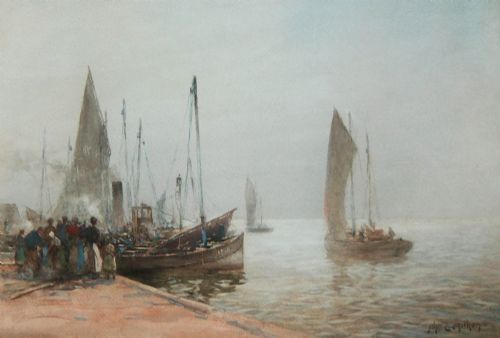
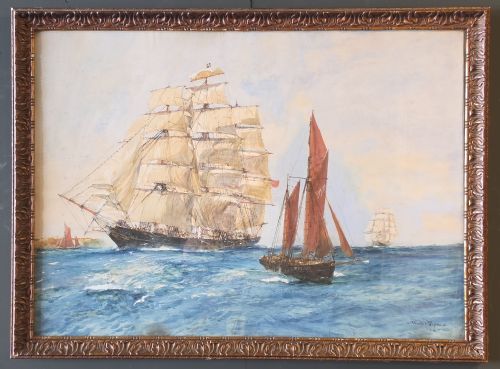
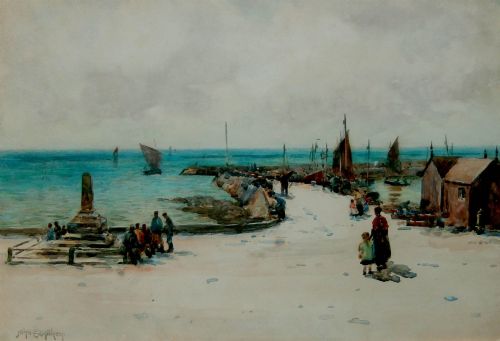
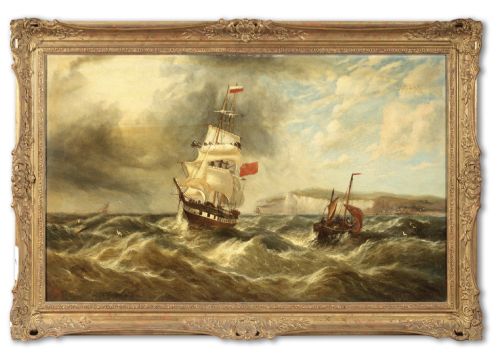
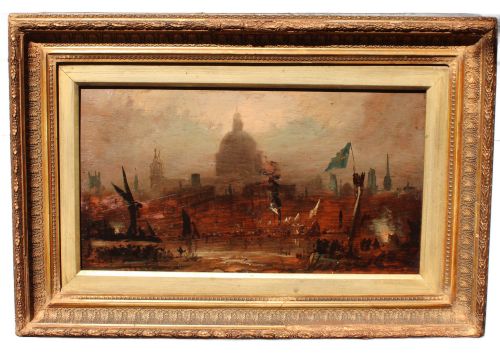
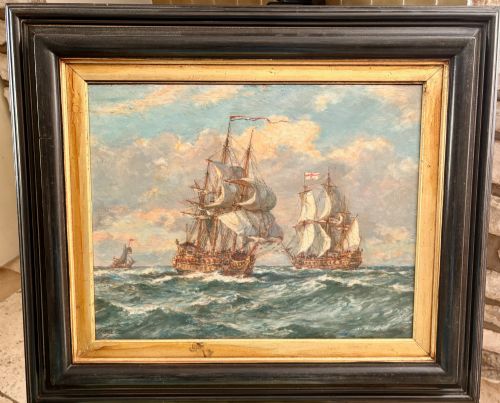
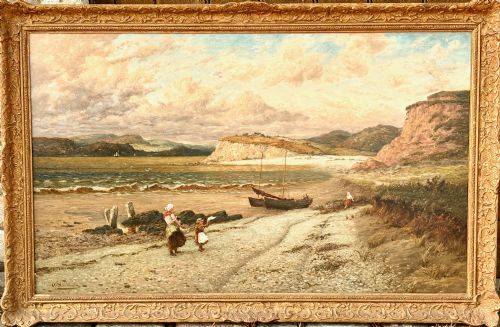
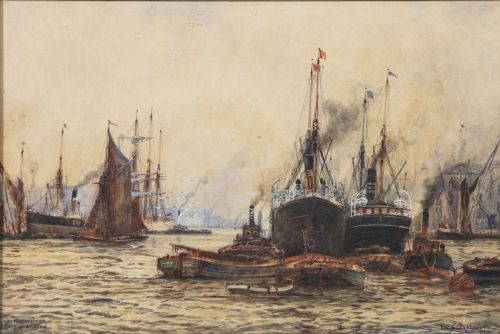
British maritime artwork encompasses paintings and watercolours depicting coastal scenes, harbours, ships, and river views produced across the nineteenth and twentieth centuries. Buyers search for these pieces to capture the distinct character of British maritime heritage, from quiet Cornish fishing ports to bustling London river traffic.
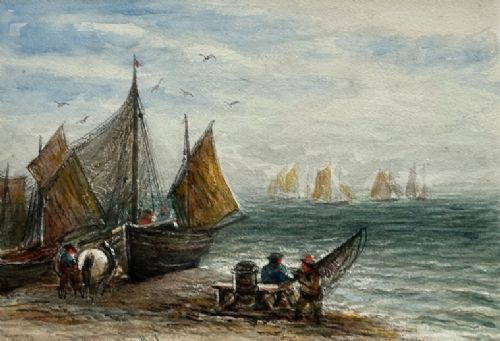
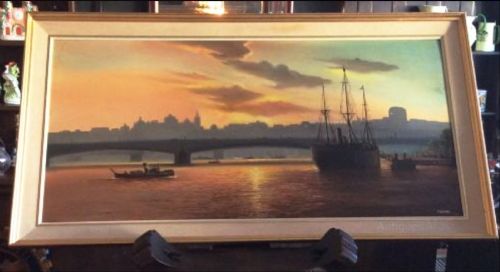
The selections available range widely in period and subject, spanning detailed Victorian watercolours of working vessels to impressionistic mid-century coastal landscapes. Works frequently record specific locations such as Whitby, Scarborough, St Ives, and the River Thames.
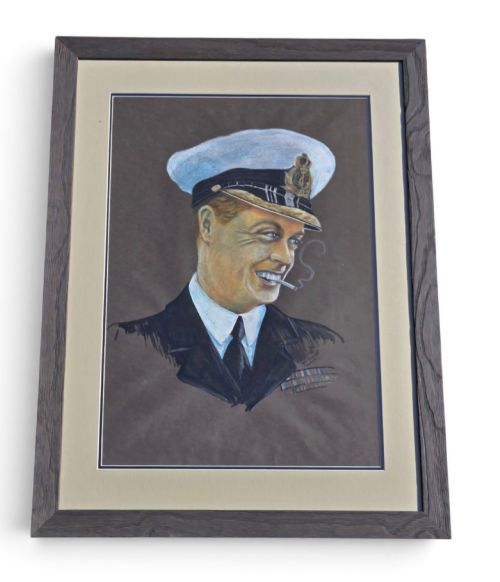
Framed watercolours on paper and oil paintings on canvas or board dominate the forms seen. These items serve as traditional wall art that reflects changing artistic interpretations of British coastal and naval life over generations.
How they were made
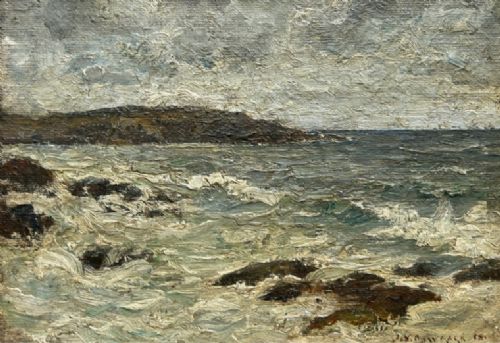
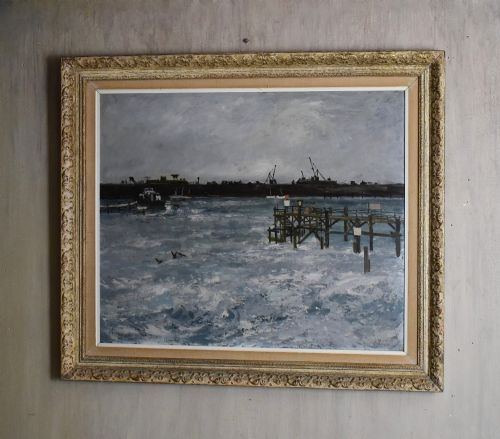
Artists primarily utilised oil on canvas or board, and watercolour pigment on paper, often supported by gilt wood framing. Watercolour application required swift, controlled washes to capture shifting light on coastal waters, while oil paints allowed for heavier impasto and deeper textures in rough seas.
Canvases stretched over wooden frames or rigid boards provided stable surfaces for complex compositions involving vessels, architecture, and expansive skies. Many works incorporated preparatory pencil sketches before layers of paint or pigment established the final atmosphere of the harbour or open sea.
British Maritime Artwork Retail Price Guide 2026
Typical asking prices for british maritime artwork among the pieces listed under this phrase on Sellingantiques today, from the lower quarter to the upper quarter. They describe what is for sale here now, not the wider market.
Several artists clearly preferred the smell of salt spray, capturing bustling fish markets and quiet harbours before breakfast.
What varies in quality
Quality rests upon the artist's ability to render light, movement, and atmospheric perspective convincingly across water and sky. Masterful handling of maritime architecture, rigging, and vessel proportions separates accomplished works from ordinary topographical records.
The integrity of the medium also distinguishes pieces, noting well-preserved pigment vibrancy in watercolours and stable canvas tension in oils. Signatures from recognised practitioners and strong provenance further elevate the standing of individual works.
James Orrock·John E. Aitken·Bernard Gribble·Frank William Scarsbrough·Francis Moltino·TB Hardy·John Wilson Carmichael·George Stanfield Walters
The British Maritime Artwork Glossary
- Watercolour
- A paint consisting of a solution of colour in water, widely used on paper for light and translucent marine sketches.
- Impasto
- The process or technique of laying on paint thickly so that it stands out from a surface, frequently seen in coastal oil paintings.
- Seascape
- A type of fine art painting that depicts the sea, shorelines, and marine vessels in various weather conditions.
- Gilt wood
- Wood that has been treated with gold leaf or a gold-coloured finish, standard for framing period paintings.
- Provenance
- The chronological history of the ownership and exhibition of a work of art, establishing its authenticity.
British Maritime Artwork: Frequently Asked Questions
What subjects do these artworks show?
The pieces primarily depict British coastal scenes, fishing boats, merchant ships, harbours, and river views such as the Thames.
They capture specific locations across Cornwall, Yorkshire, London, and international waters visited by British vessels.
How should I display a watercolour?
Watercolours require careful placement away from direct sunlight to prevent the fading of delicate pigments on paper.
Acid-free mounting and protective glass framing help preserve the paper and colours over many years.
How do I identify a 19th-century piece?
Nineteenth-century works often feature traditional Victorian maritime styles, detailed rigging, and period framing techniques.
Signatures, artist dates, and historical subject matter also assist in dating the canvas or paper accurately.
What is the difference between oil and watercolour?
Oil paintings utilise pigments bound in drying oils on canvas or board, offering rich textures and deep colour layering.
Watercolours use water-soluble pigments on paper, producing lighter, translucent effects suited to coastal light.