

Brass Mounted Writing Desk
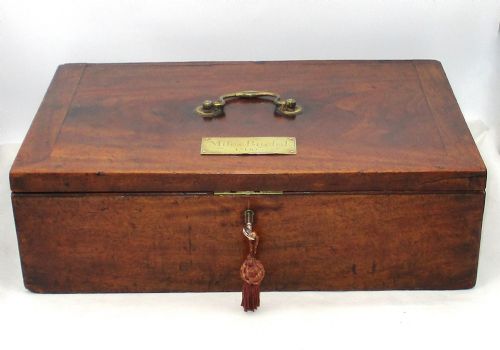
A brass mounted writing desk brings together rich timbers and metal details that served writers across the eighteenth and nineteenth centuries.
Brass Mounted Writing Desk
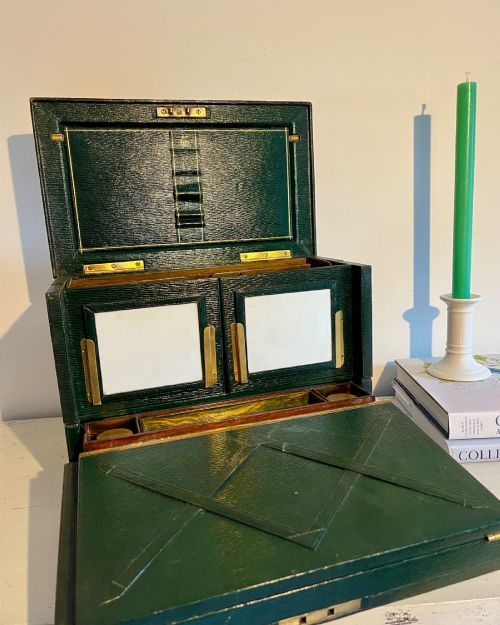
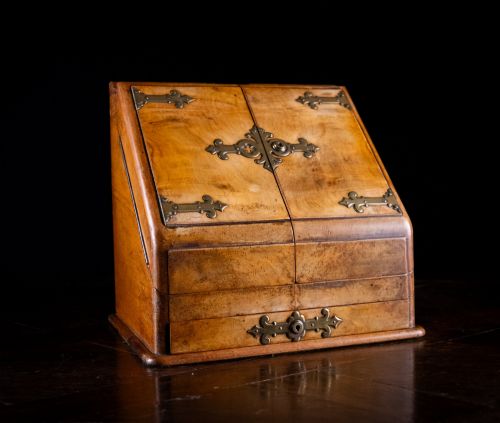
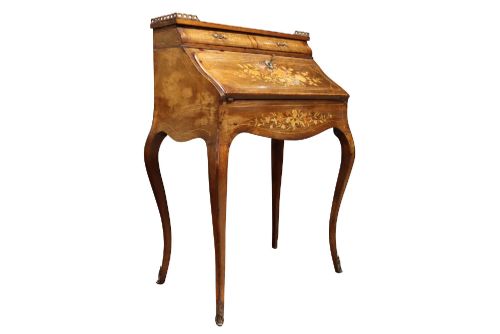
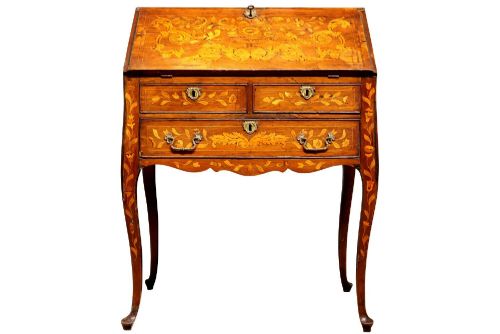
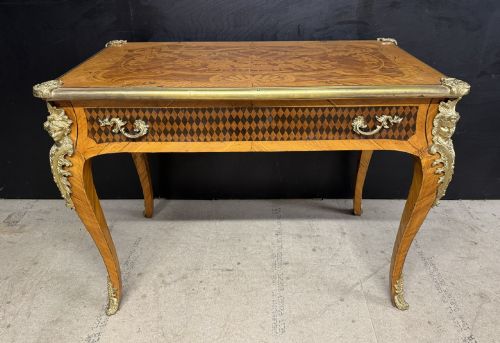
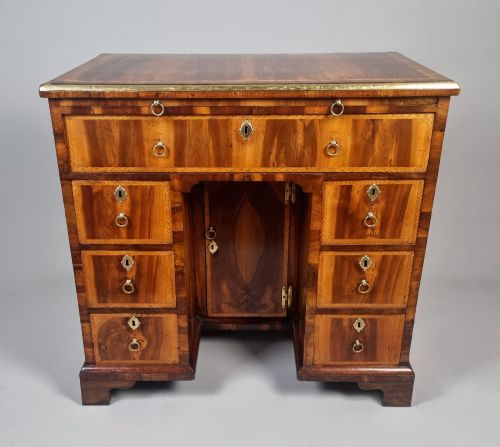
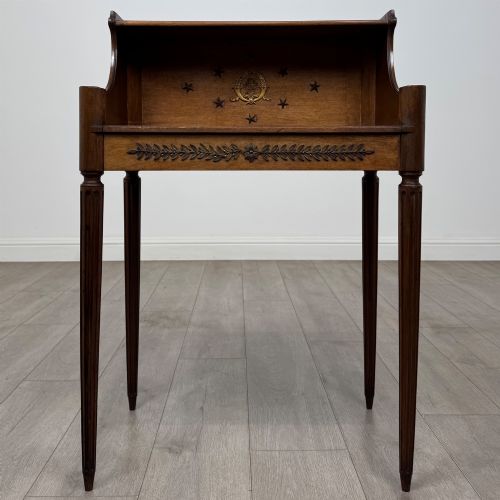
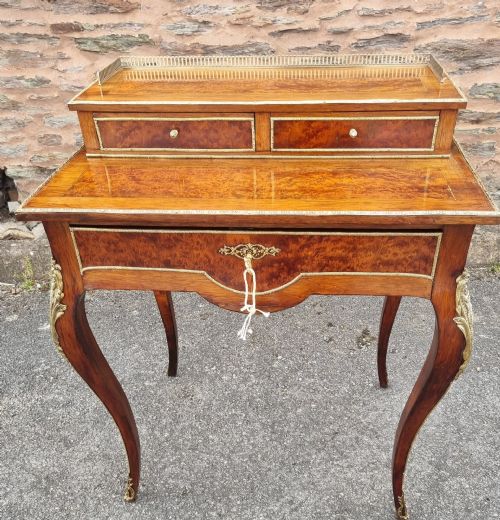
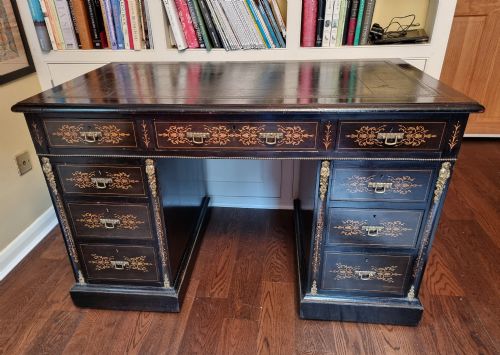
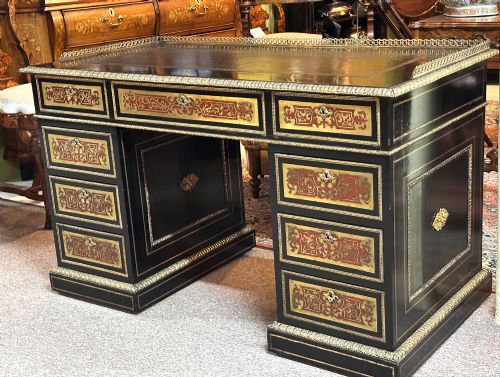
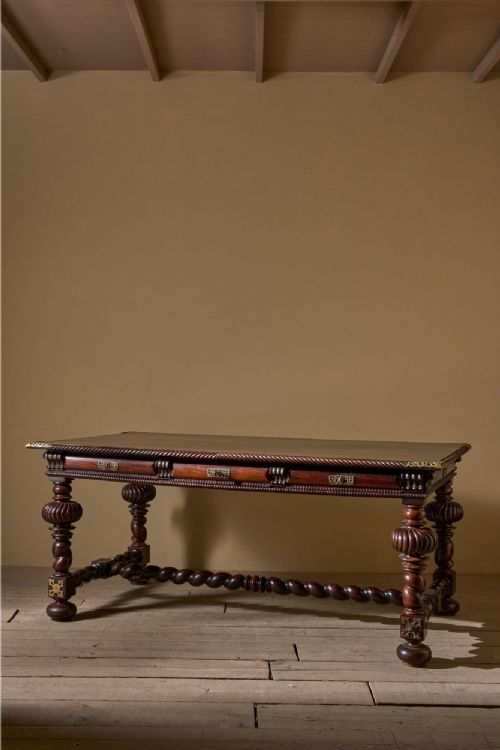
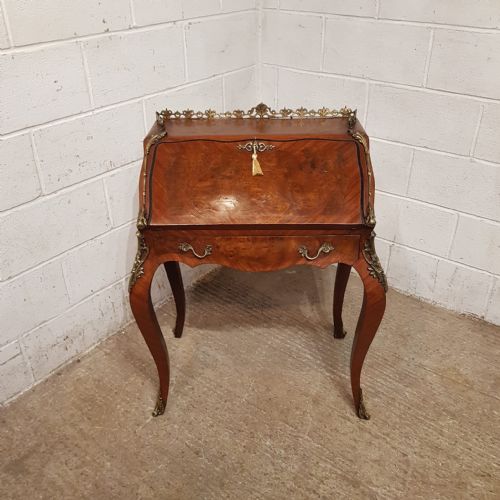
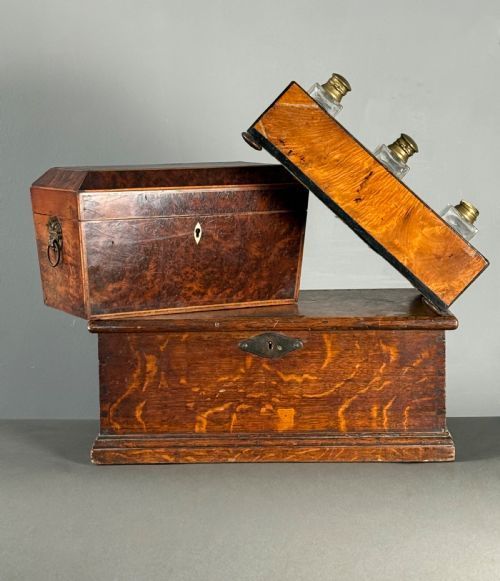
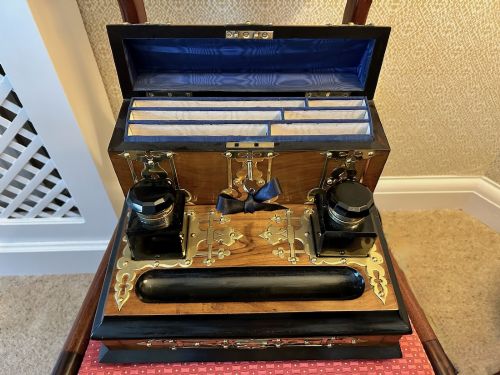
A brass mounted writing desk takes many forms across this selection, ranging from compact writing slopes and stationery cabinets to large pedestal tables and refined bureaus. These objects emerge from periods including the Georgian, Regency, and Victorian eras, alongside continental revival styles such as Louis XV and Napoleon III.
The most common examples on this page are nineteenth-century creations in walnut, mahogany, and rosewood, often fitted with compartments for correspondence and ink. Buyers seeking a brass mounted writing desk will encounter campaign pieces designed for travel alongside ornate French bonheur-du-jour tables intended for the parlour.
How they were made
Cabinetmakers constructed these pieces using dense hardwoods like mahogany, walnut, and rosewood, frequently incorporating exotic veneers such as amboyna, kingwood, and burr walnut. Brass mounts, escutcheons, and banding were cast or shaped to reinforce corners, frame leather writing surfaces, and accent drawer fronts.
In many continental and English workshops, brass work was combined with tortoiseshell, mother of pearl, or intricate marquetry inlay. Campaign pieces utilised flush brass fittings to withstand travel without snagging on packing crates or transport trunks.
Brass Mounted Writing Desk Retail Price Guide 2026
Typical asking prices for brass mounted writing desk among the pieces listed under this phrase on Sellingantiques today, from the lower quarter to the upper quarter. They describe what is for sale here now, not the wider market.
Many antique stationery boxes still retain faint traces of dried ink inside their original glass inkwells from letters written centuries ago.
What varies in quality
Quality rests upon the choice of timber and the precision of the brass mounts integrated into the carcase. Finer examples show careful selection of figured veneers that match symmetrically across drawers and folding slopes, while lesser pieces rely on plain timber.
The integration of the brass work separates standard production from superior craftsmanship. In better items, mounts sit flush with the wood surface and follow the contours of the desk precisely, secured by original fixings rather than modern replacements.
Edwards and Roberts·Gillows
The Brass Mounted Writing Desk Glossary
- Bureau plat
- A freestanding French writing table with a finished back and drawers beneath the top, often decorated with ormolu mounts and leather writing surfaces.
- Bonheur-du-jour
- A light ladies writing desk featuring a small cabinet or set of pigeonholes on top of the writing surface.
- Writing slope
- A portable box with a hinged sloping lid that opens to reveal a slanted surface for writing and storage compartments for paper and ink.
- Campaign desk
- Furniture built in sections or fitted with folding legs and flush brass handles, designed for easy dismantling and military travel.
- Ormolu
- Gilded bronze used for decorative mounts and accents on nineteenth-century furniture, particularly pieces influenced by French styles.
Brass Mounted Writing Desk: Frequently Asked Questions
What is a campaign writing desk?
A campaign desk is built for portability, featuring sturdy timbers and recessed brass hardware to prevent damage during transport.
These pieces often dismantle or fold, making them practical for military officers and travellers who required a reliable workspace away from home.
How do I care for the leather top?
The leather inset on these desks requires gentle cleaning with a slightly damp cloth, avoiding harsh chemical sprays or excessive moisture.
Applying a specialist leather balm periodically keeps the surface supple and preserves the gold tooling often found along the borders.
How do I distinguish Regency from Victorian desks?
Regency pieces generally display cleaner classical proportions, rosewood veneers, and restrained brass inlay inspired by ancient Greek and Roman designs.
Victorian examples tend to be heavier, utilising burr walnut or oak with more elaborate carving and extensive brass mounts reflecting revival tastes.
Were these desks used for daily correspondence?
These desks served as the central station for writing letters, managing household accounts, and storing important documents before the telephone.
Compartments, inkwells, and stationery boxes were arranged to keep writing implements organised and accessible for daily use.