
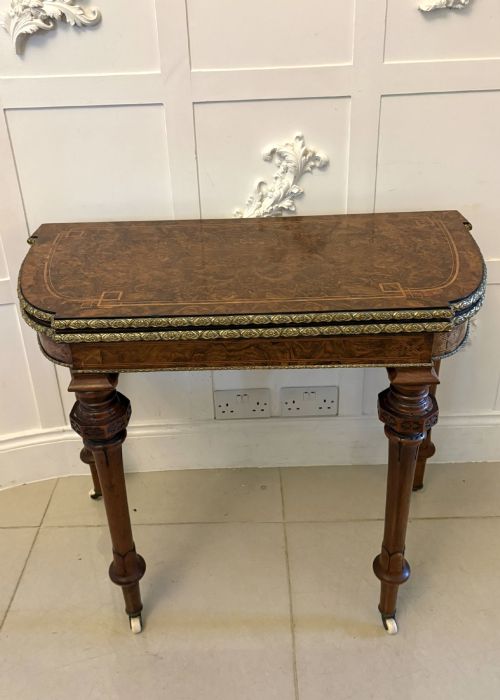
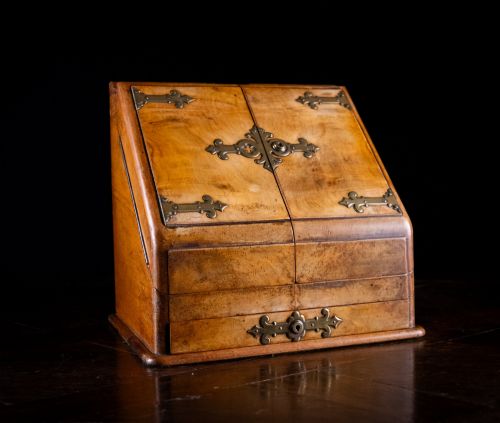
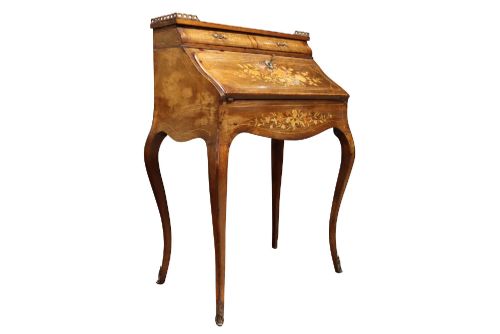
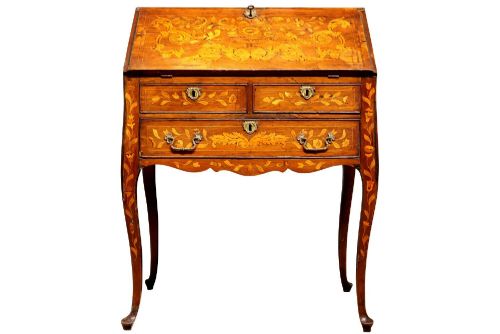


Brass Mounted Walnut Desk
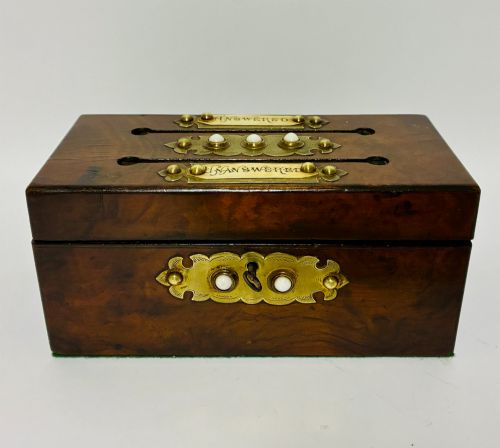
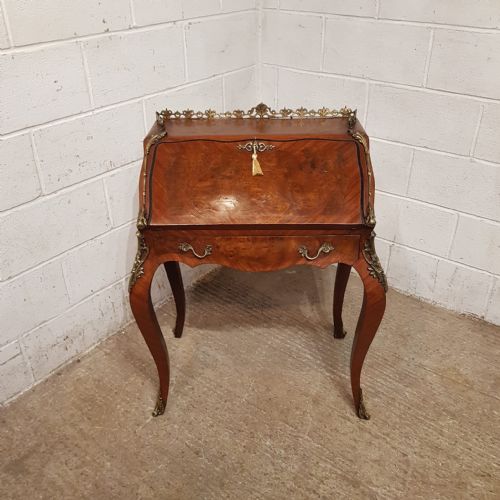
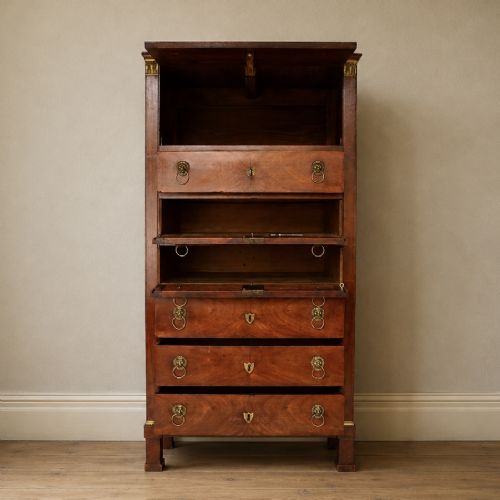
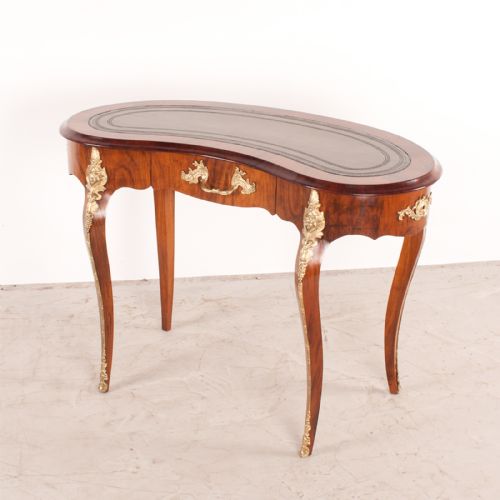
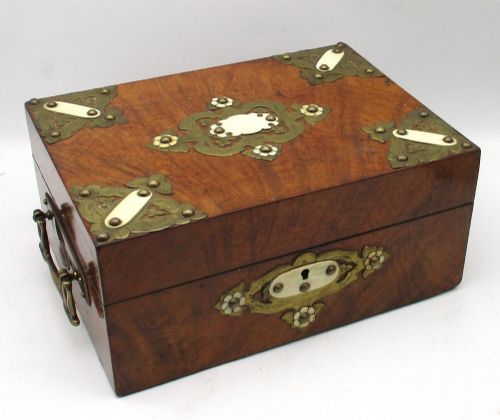
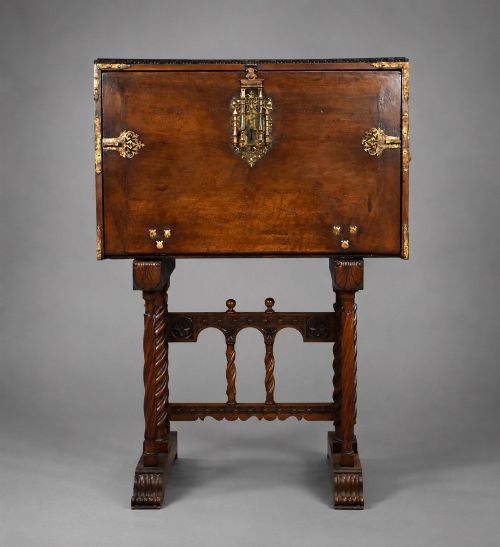
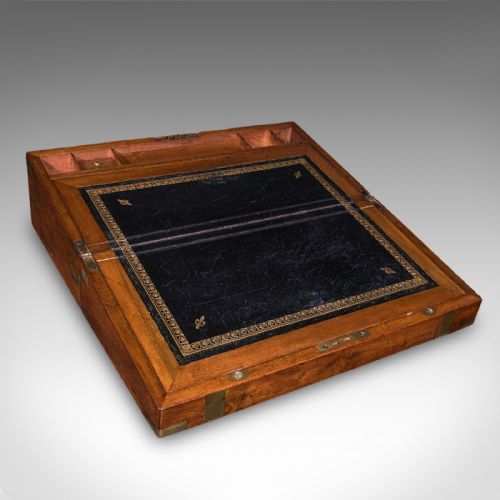
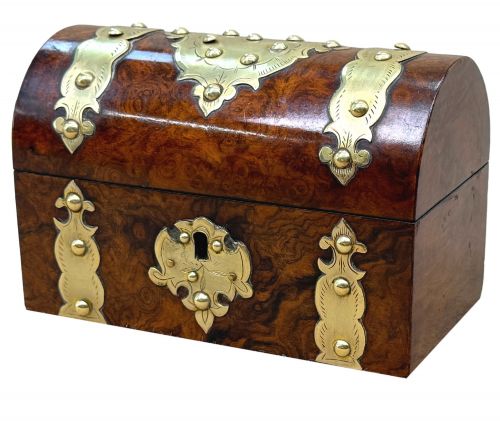
A brass mounted walnut desk brings together rich timber and bright metal hardware, offering a practical writing surface with distinct period character.
Brass Mounted Walnut Desk
How they were made
Craftsmen utilised solid walnut and decorative burr walnut veneers applied over secondary woods to create deep, figured surfaces on these writing pieces. Marquetry inlay, kingwood banding, and glass or leather inserts frequently supplemented the timber construction.
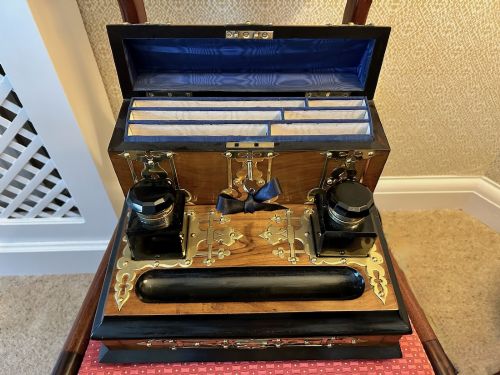
Cast and polished brass hardware, alongside gilded ormolu mounts, secured corners, hinges, and locking mechanisms to protect correspondence and small items. Makers incorporated fitted compartments, sliding bookends, and slope mechanisms using traditional joinery and brass fastenings.
Listings feature walnut and burr walnut items spanning the eighteenth, nineteenth, and early twentieth centuries, incorporating brass, leather, and glass materials.
What varies in quality
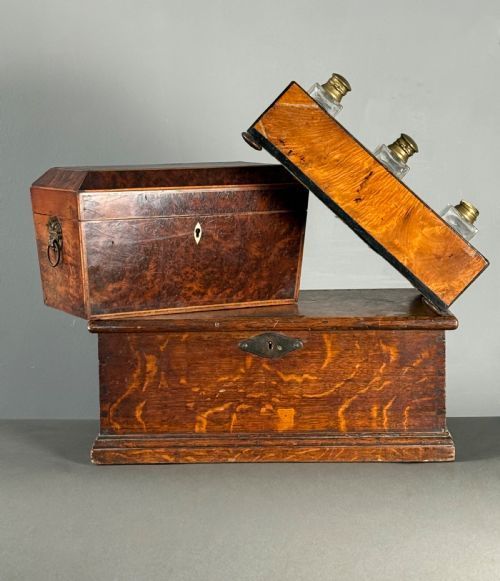
The choice of walnut veneer dictates visual depth, with highly figured burr patterns demanding greater skill in selection and matching across the writing surface or box lid. Superior examples display seamless grain continuity and meticulous placement of marquetry or parquetry details.
Hardware execution marks the difference between standard production and top-tier items, where heavy, finely chased brass mounts and robust locks integrate cleanly into the timber. The precision of internal fittings and the crispness of brass banding reveal the original maker's investment of time.
The Brass Mounted Walnut Desk Glossary
- Burr walnut
- A figured timber harvested from walnut tree growths, displaying complex swirling grain patterns. This decorative veneer appears frequently on Victorian boxes and desks.
- Ormolu
- Gilded bronze mounts cast in ornamental shapes and fixed to furniture and boxes. It provides metallic contrast against dark walnut surfaces.
- Marquetry
- Decorative wood veneer arranged in pictorial or geometric patterns using various coloured timbers. It decorates many French style desks and tables.
- Writing slope
- A portable box with an angled lid that folds flat to form a writing surface, often lined with leather. Interiors typically include inkwell recesses and stationery slots.
- Stationery box
- A tabletop desk accessory designed to hold paper and envelopes upright in tiered slots. Victorian versions often feature glazed doors or dome tops with brass mounts.
Brass Mounted Walnut Desk: Frequently Asked Questions
What is a brass mounted walnut desk?
A brass mounted walnut desk is a writing surface or related accessory constructed from walnut timber and accented with brass handles, hinges, or decorative corners. These pieces date largely from the nineteenth century and incorporate fitted interiors for correspondence.
They range from compact portable writing slopes and stationery boxes to full-sized writing tables. The combination of dark wood and bright metal defines their aesthetic appeal.
How do I date a walnut desk?
Dating relies on examining construction methods, wood types, hardware styles, and design influences. Pieces from the Victorian era often feature burr walnut veneers alongside machine-made brass mounts and patent locks.
Earlier eighteenth-century examples display different joinery techniques and restrained brasswork compared to ornate nineteenth-century revival styles. Comparing internal fittings against known period examples helps narrow the decade.
How were these desks used?
These desks and boxes served the heavy correspondence needs of households before widespread telecommunications. Owners stored inkwells, blotting paper, pens, and writing paper within specialised compartments.
Portable writing slopes allowed individuals to write letters while travelling or away from a primary library table. Stationery boxes kept writing materials organised and ready for daily use in a study.
How do I care for walnut and brass?
Walnut timber benefits from periodic waxing to nourish the grain and prevent the veneer from drying out. Avoid placing these items in direct sunlight or near heat sources to protect the polished finish.
Brass mounts can be cleaned gently with a dry or very slightly damp cloth to remove dust without disturbing the surrounding wood. Harsh metal polishes should be kept away from the timber surface.