


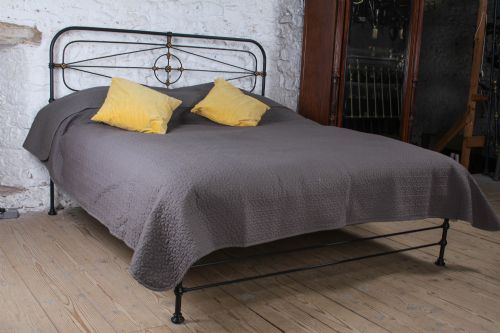
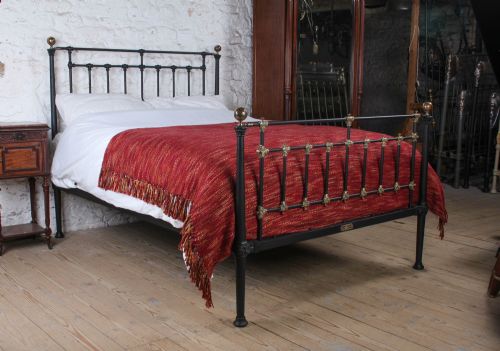
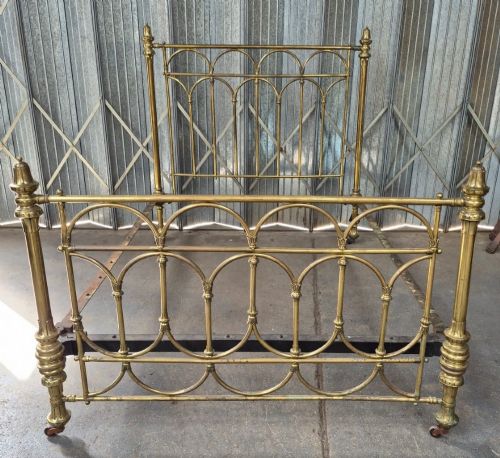
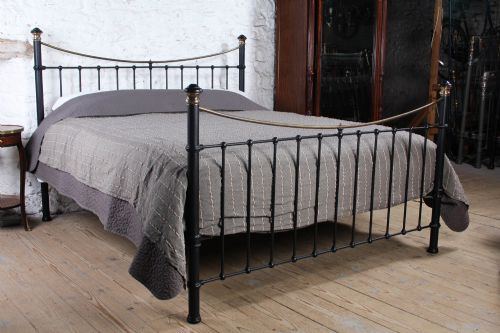
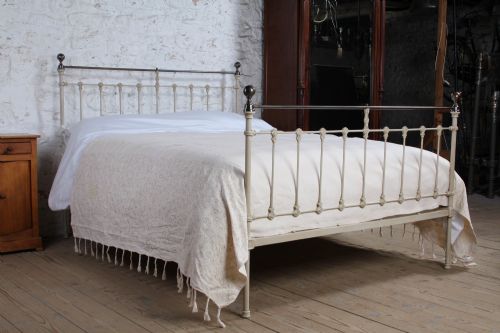

Brass Metal King Bed
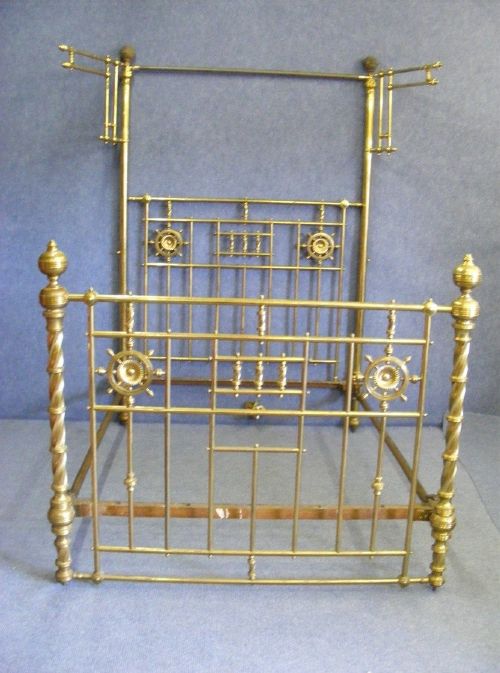
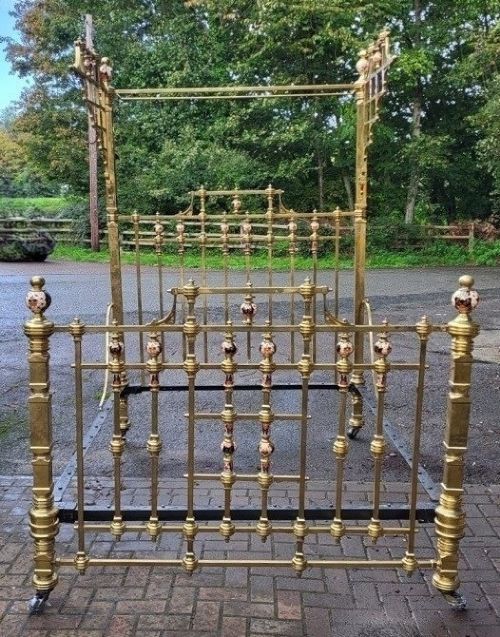
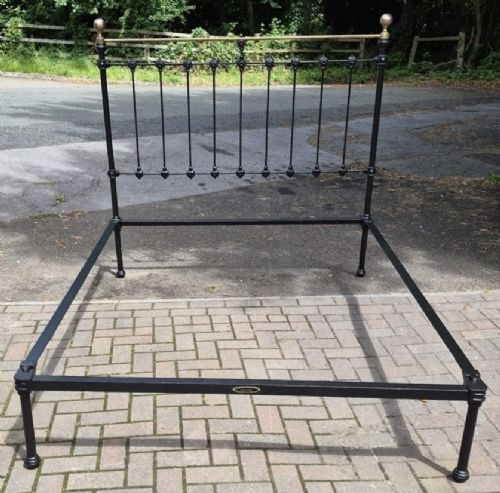
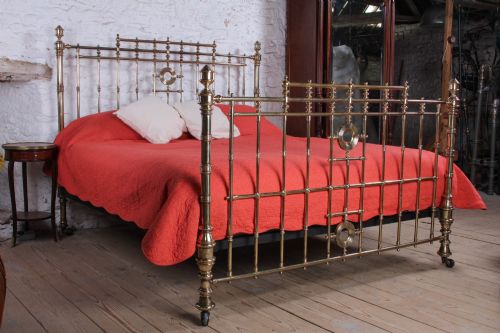
A brass metal king bed brings substantial period presence to a bedroom, pairing polished metalwork with robust nineteenth-century iron frames.
Brass Metal King Bed
A brass metal king bed encompasses grand nineteenth-century and early twentieth-century sleeping frames designed for larger proportions. These pieces appear across Victorian, Edwardian, and French styles, spanning periods from 1870 to 1910.
Buyers on this page most commonly encounter robust bedsteads combining brass elements with cast iron or wrought iron frameworks. Forms range from half tester canopies and classic straight rails to low end and French hospital styles.
Origins include English workshops alongside French and Irish makers, incorporating decorative movements such as Gothic Revival, Arts and Crafts, and Aesthetic Movement designs.
Materials and Construction
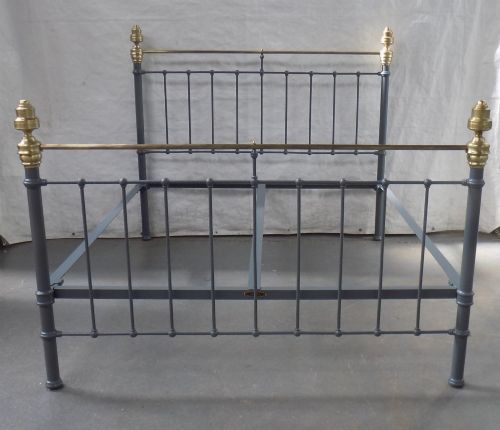
Construction relies heavily on structural cast iron and wrought iron for strength, paired with gleaming brass tubing, finials, and decorative castings. Metal components are frequently joined with substantial dovetail joints or securely threaded bolts.
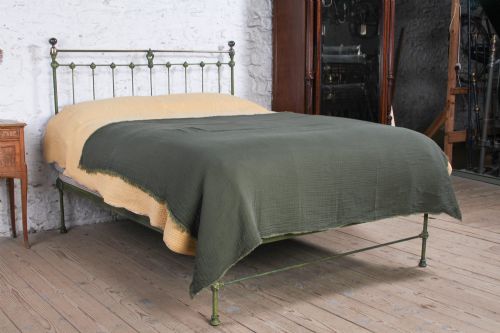
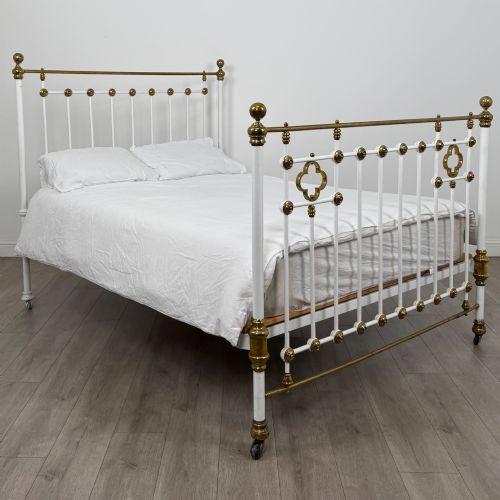
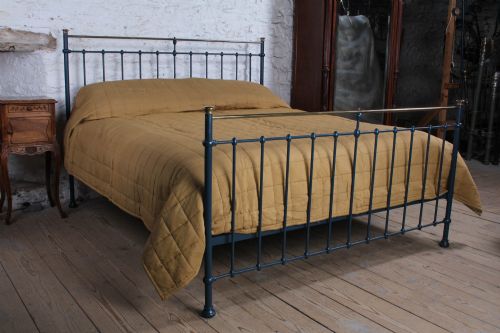
Surface finishes include polished or unlacquered brass, alongside painted iron frames finished in ivory, cream, black, or japanned lacquer. Certain examples incorporate ceramic details or maple elements to accent the primary metal structure.
Several hospital style frames offer a cheerful remedy for anyone weary of conventional bedposts.
Distinguishing Quality and Detail
Quality reveals itself in the weight and complexity of the brass castings, the crispness of decorative chasing, and the structural integrity of the heavy iron side rails. Superior examples display substantial gauge brass tubing rather than thin plated sheathing.
Design ambition separates standard frames from exhibition pieces, with finer beds featuring tapered posts, elaborate spindles, half tester canopies, or documented maker marks from notable firms.
Winfield·Maple and Co·James Shoolbread and Co
The Brass Metal King Bed Glossary
- Half Tester
- A wall-mounted or bed-attached canopy that extends only partway over the head of the bedstead. This architectural element traditionally held draped fabric to shield sleepers from drafts.
- Dip Rail
- A headboard or footboard top rail that curves downward toward the centre. This configuration creates a softer silhouette against the wall.
- Castings
- Decorative metal ornaments poured in moulds and fixed to the frame corners or joints. These elements provide both structural reinforcement and visual detail.
- Japanned Lacquer
- A heavy, dark resinous finish applied to iron surfaces to mimic Asian lacquerware. It offers a durable and glossy protective coating.
- Finial
- A decorative terminal ornament screwed onto the top of bed posts. They anchor the vertical lines of the metal framework.
Brass Metal King Bed: Frequently Asked Questions
Will modern mattresses fit antique king size beds?
Period bed frames often vary slightly from standard modern metric dimensions due to nineteenth-century sizing conventions. Careful measurement of the interior side rails ensures proper mattress support.
Custom mattress makers can also supply bespoke dimensions to fit historic iron and brass frames securely without altering the antique structure.
How are antique metal beds assembled?
Most pieces utilise heavy iron side rails that slot directly into tapered corner brackets on the headboard and footboard. Tightening the wedge or bolt fixtures squares the frame correctly.
Wooden slats or modern base platforms then drop onto internal ledges to support the mattress evenly across the span.
How do I care for polished brass?
Regular dusting with a dry microfibre cloth prevents dust accumulation on intricate castings and tubular rails. Avoid harsh abrasive cleaners that strip historic patination from the metal.
Applying a specialist metal polish sparingly maintains the reflective sheen on unlacquered brass surfaces over time.