



Brass Maritime Clock
A brass maritime clock brings the precise engineering of the sea into a room, offering functional timekeeping encased in heavy metal housing.
Brass Maritime Clock
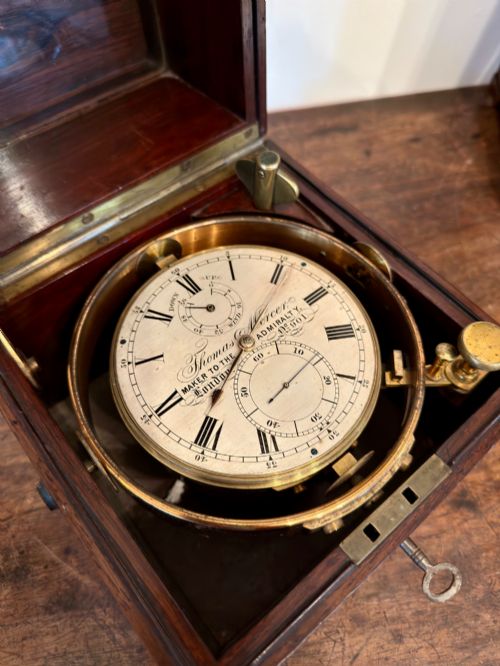
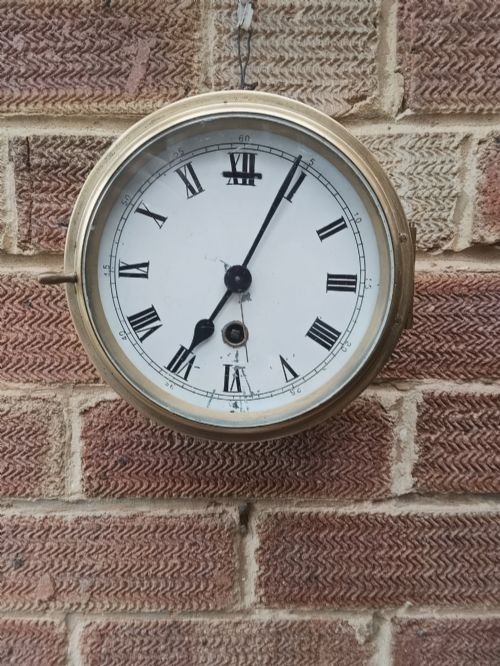
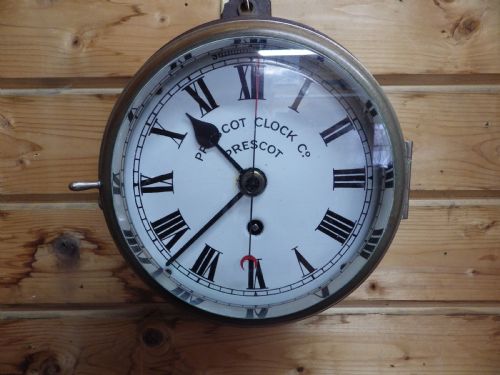
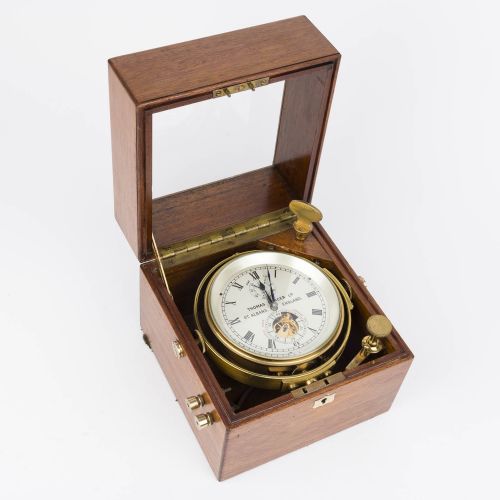
A brass maritime clock is an instrument built for utility aboard a vessel, ranging from bulkhead timepieces to delicate marine chronometers. When searching for a brass maritime clock, collectors encounter forms designed for mounting on walls, resting on desks, or housing within heavy mantel clock sets.
The pieces seen here span the nineteenth and twentieth centuries, including Victorian designs, Edwardian examples, and mid-century instruments. Wall clocks and heavy bulkhead clocks dominate the selection, alongside specialised marine chronometers and desk timepieces.
Makers and retailers from London, Liverpool, and further afield produced these items for nautical use, government service, and domestic display. The range extends from simple engine room clocks to complex fusee movements and automata.
Materials and Construction
Heavy brass forms the primary housing for these clocks, chosen for its resistance to corrosive marine environments and its durability. Enamel dials, often featuring bold numerals, sit behind thick glass covers to protect the movement from moisture and salt air.
Internal mechanics frequently rely on chain fusee movements or specialised escapements designed to maintain accuracy despite the motion of a ship. Secondary materials like mahogany, silvered metal, steel, and wood appear in cases, bezels, and backing boards.
Some nineteenth-century makers hid tiny automated ships beneath glass domes to rock gently as the clock ticked away the hours.
Factors That Distinguish Quality
The sophistication of the internal movement dictates the standing of a piece, with chain fusee mechanisms and precision marine chronometers representing the highest levels of horological skill. Heavier brass castings and robust case construction indicate instruments built for rigorous service at sea rather than lighter domestic copies.
The clarity and legibility of the enamel dial, alongside the crispness of maker signatures or institutional markings from entities like the Air Ministry, affect the character of the clock. Intricate details such as animated ship automata or specialised maritime complications elevate individual pieces above standard bulkhead models.
Mercer of London·Thomas Mercer·Litherland Davies Of Liverpool·Prescot Clock Co·Kelvin White Hutton London·James McCabe·John Sly Of Weymouth·Gay Vicarino·Pascall Atkey Of Cowes·Schatz Of Germany·Smiths Empire·Jaeger Le Coultre
The Brass Maritime Clock Glossary
- Fusee
- A conical pulley used in mechanical clocks to maintain an even pull on the gear train as the mainspring unwinds. This mechanism ensures consistent timekeeping across the power reserve.
- Bulkhead clock
- A sturdy timepiece designed to be fastened directly to the wall of a ship cabin or bridge. These clocks feature heavy brass bezels and secure latching mechanisms.
- Marine chronometer
- A highly accurate portable timekeeper used at sea for determining longitude through celestial navigation. These instruments typically rest in gimbaled wooden boxes.
- Enamel dial
- A clock face made by fusing powdered glass to a metal substrate at high temperatures. This creates a hard, glossy surface that resists fading.
- Silvered metal
- A base metal treated with a silver solution to create a reflective, metallic finish on clock dials and chapter rings. It provides high contrast against dark numerals.
Brass Maritime Clock: Frequently Asked Questions
What is a brass maritime clock?
A brass maritime clock is a heavy-cased timepiece originally engineered for use on ships, utilising corrosion-resistant metals and secure mountings to withstand constant motion.
These instruments range from simple engine room timepieces to highly complex marine chronometers and bulkhead clocks made by notable makers.
How do you mount a bulkhead clock?
Bulkhead clocks typically feature a hinged brass bezel that swings open to reveal screw holes in the back flange, allowing the case to be secured directly to a wall.
This design enabled sailors to access the mounting screws while keeping the movement safely enclosed behind glass.
What is a fusee movement?
A fusee movement uses a conical gear and chain system to equalize the diminishing power of the mainspring as it runs down.
This traditional mechanical feature provides steady torque to the escapement, improving the accuracy of nineteenth-century clocks.
How are marine chronometers different?
Marine chronometers are specialised, highly accurate timepieces built to withstand the rolling of a ship without losing precision.
They often sit within gimbaled boxes and served a critical role in navigation before electronic systems existed.
Where were these clocks used?
These clocks served aboard merchant vessels, naval ships, lighthouses, and official government stations where reliable timekeeping was essential.
Some examples also found their way into domestic interiors as decorative pieces reflecting nautical themes.