

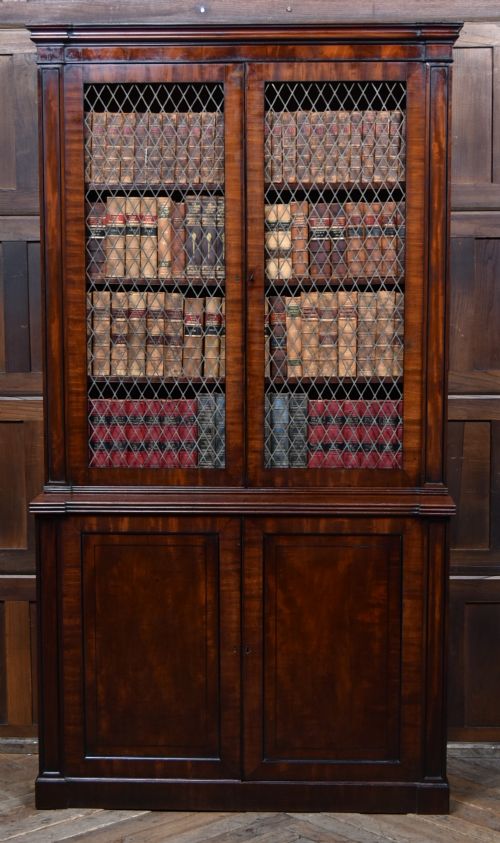
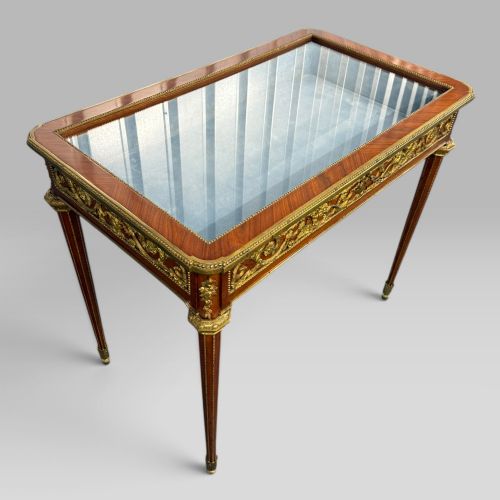
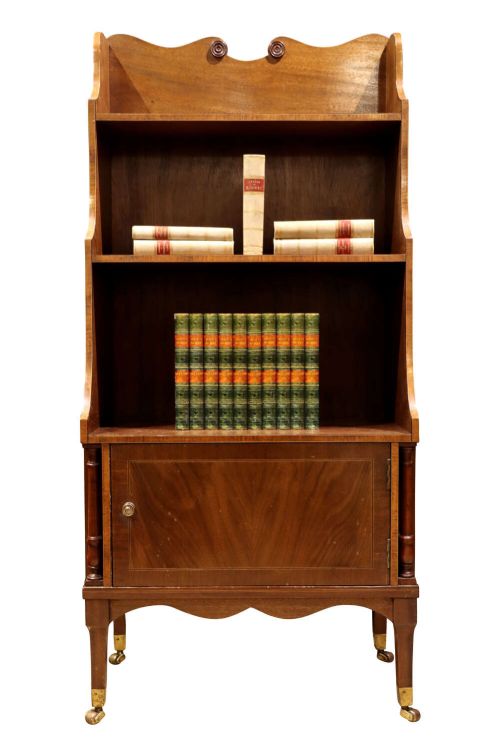
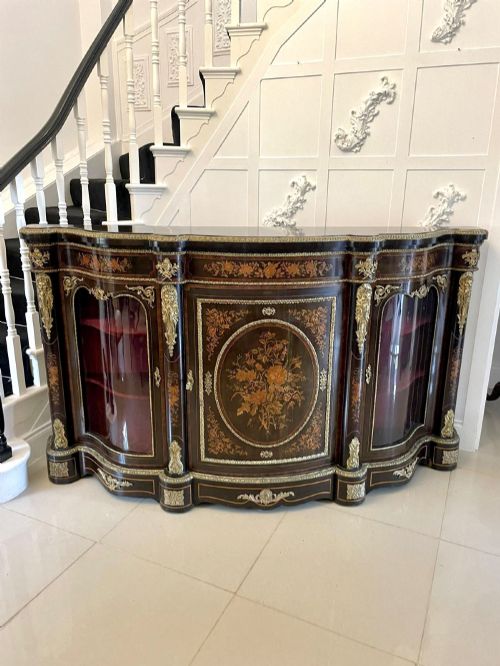
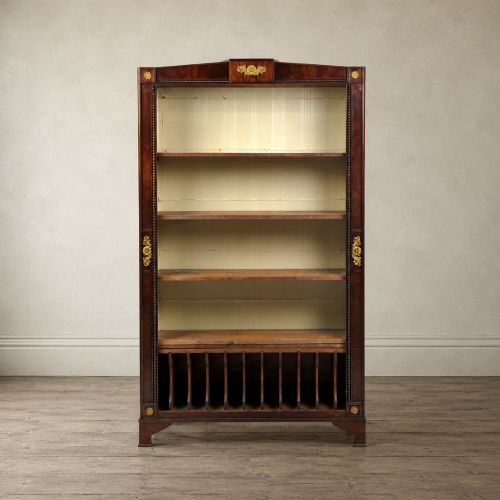
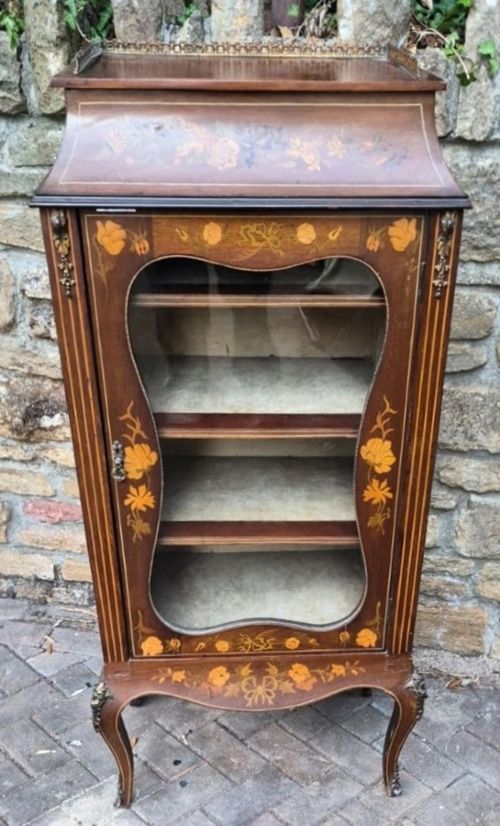
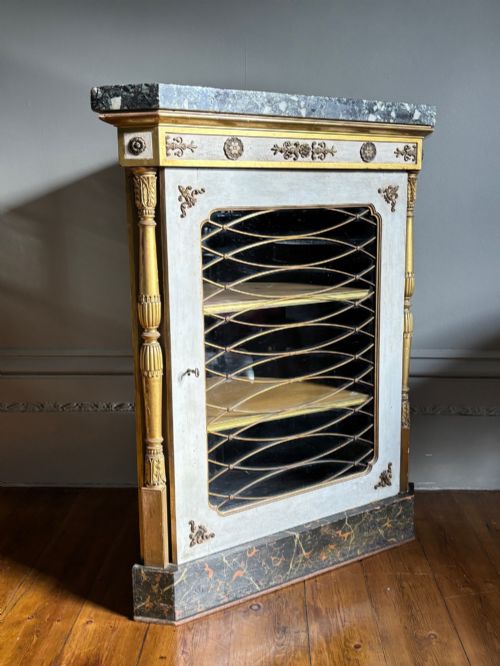
Brass Display Cabinet
When you select a brass display cabinet, you invite a piece of historical craftsmanship into your home to showcase cherished items through glass and metal.
Brass Display Cabinet
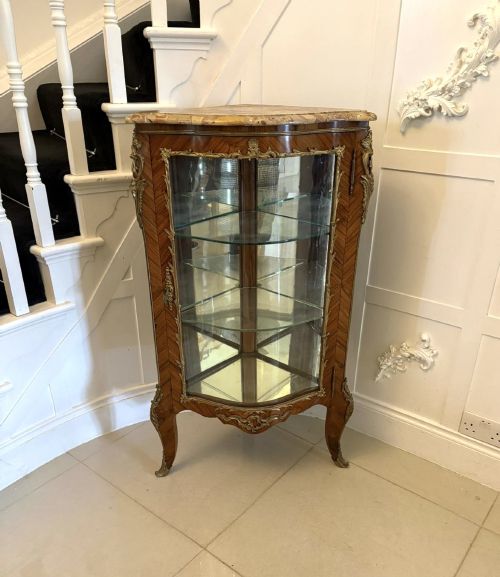
A brass display cabinet combines glazed wooden casework with metal mounts, galleries, or framing to highlight precious objects.
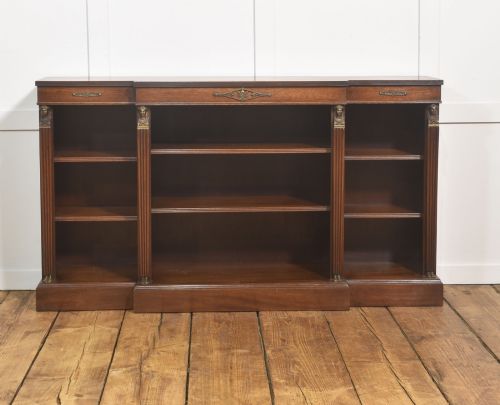
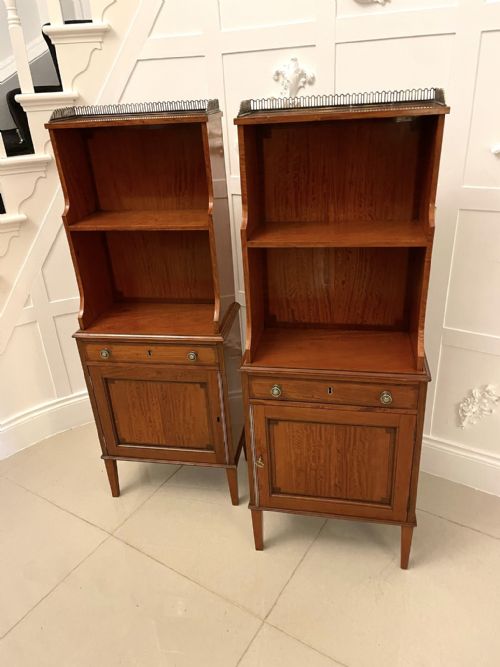
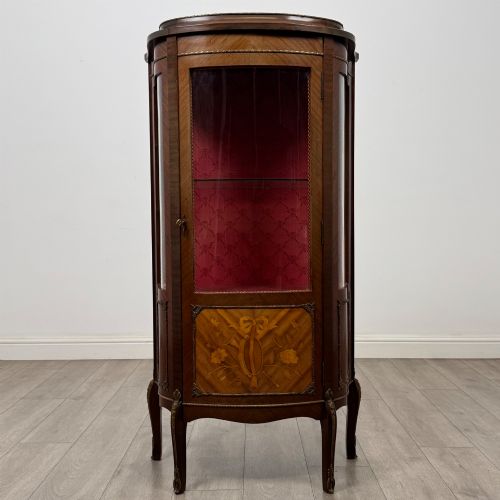
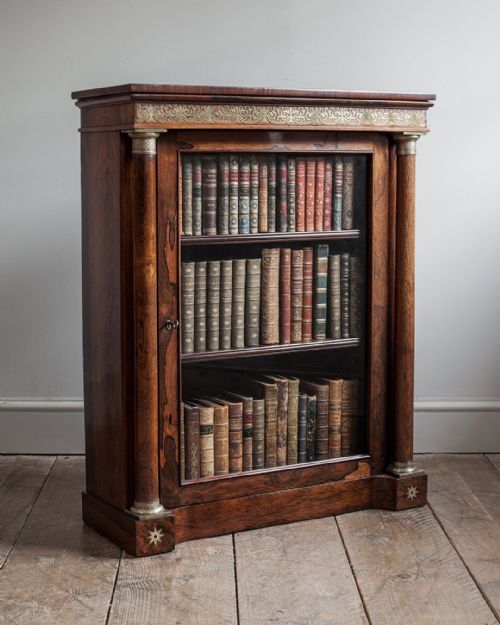
The selections on this page span from Regency and Victorian periods through to the Edwardian era and the twentieth century, encompassing French vitrines, English pier cabinets, and shop display cases.
Forms vary from narrow wall-hanging cupboards and corner units to substantial freestanding bookcases and side cabinets.
How They Were Made
Cabinet makers utilised primary timbers such as mahogany, rosewood, walnut, kingwood, and ebonised wood, often enhanced with marquetry or delicate brass inlay.
Structural embellishments relied on cast or chased ormolu and brass mounts, alongside glazed doors and mirrored or fabric-lined interiors.
Materials recur across distinct styles, pairing mahogany and rosewood with intricate brass inlay and ormolu mounts.
What Varies in Quality
Excellence lies in the crispness of the brass castings, the precision of the timber veneers, and the integrity of the original glass panels.
Finer examples demonstrate harmonious proportions, sophisticated marquetry work, and retained original hardware such as working locks and brass castors.
François Linke·Gillows·Collinson and Lock·Siegel Paris
The Brass Display Cabinet Glossary
- Ormolu
- Gilded bronze or brass mounts applied to furniture. This technique added ornate decorative detail to French and English cabinetry.
- Vitrine
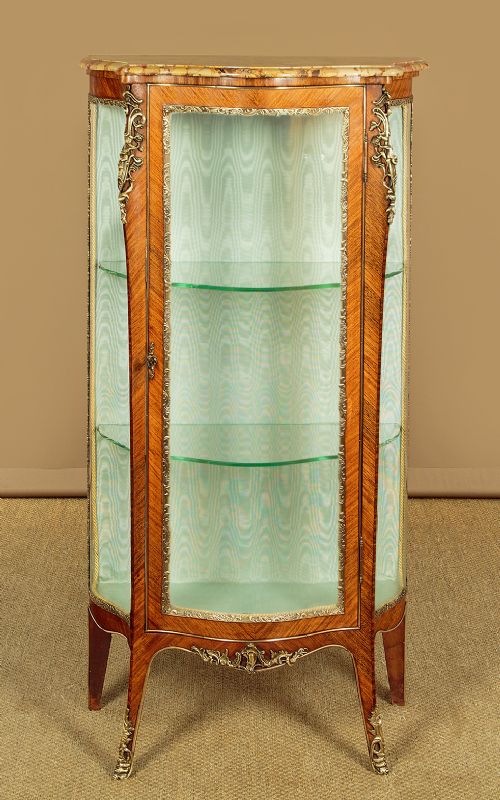
- A glass-fronted cabinet designed for displaying fine porcelain, curiosities, or books. These pieces often feature glazed sides to maximise light penetration.
- Pier Cabinet
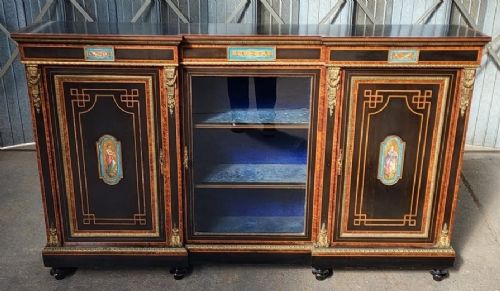
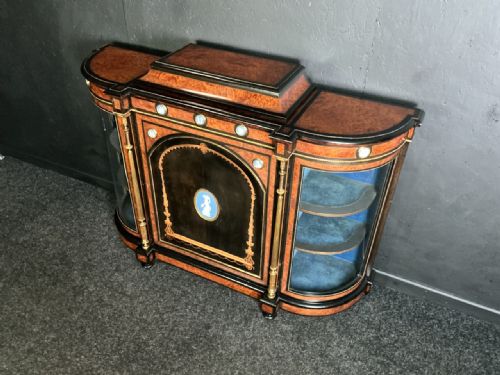
- A low, freestanding cabinet designed to fit the wall space between windows. Victorian examples frequently incorporate brass inlays and mirrored backs.
- Marquetry
- Decorative veneer patterns formed by fitting together small pieces of wood, shell, or ivory. Craftsmen used this technique to create intricate floral designs on cabinet doors.
- Gallery
- A raised decorative rail running along the top edge of a cabinet or table. This feature was often cast in brass to prevent items from sliding off marble tops.
Brass Display Cabinet: Frequently Asked Questions
What is a brass display cabinet?
A brass display cabinet is a piece of antique or vintage furniture featuring glass panels for viewing contents, accented with brass mounts, handles, or inlay.
These pieces range from intimate tabletop vitrines and wall-hanging units to large freestanding bookcases and side cabinets designed for domestic or commercial use.
How do I style one at home?
These cabinets provide a secure and dust-free environment to exhibit collections of ceramics, glassware, books, or small curiosities. Internal fabric linings and glass shelves help reflect light onto the objects inside.
Consider placing a narrow pier cabinet in a hallway or using a larger mahogany vitrine as a focal point in a drawing room.
How do I tell Victorian from Edwardian pieces?
Victorian cabinets often utilise rich timbers like rosewood and walnut, frequently featuring heavy ormolu mounts, ebonised finishes, and elaborate marquetry. They date from the mid to late nineteenth century.
Edwardian pieces tend to display lighter mahogany or satinwood construction with more restrained neoclassical or Edwardian inlay work, reflecting the tastes of the early twentieth century.
What is the difference between a vitrine and a pier cabinet?
A vitrine is primarily designed for all-round visibility with extensive glass panels on the front and sides, intended for ornaments and porcelain.
A pier cabinet is typically a narrower, rectangular freestanding unit built to occupy the specific wall space between architectural openings, often combining display shelves with enclosed lower storage.