








Vintage Advertising Cabinet
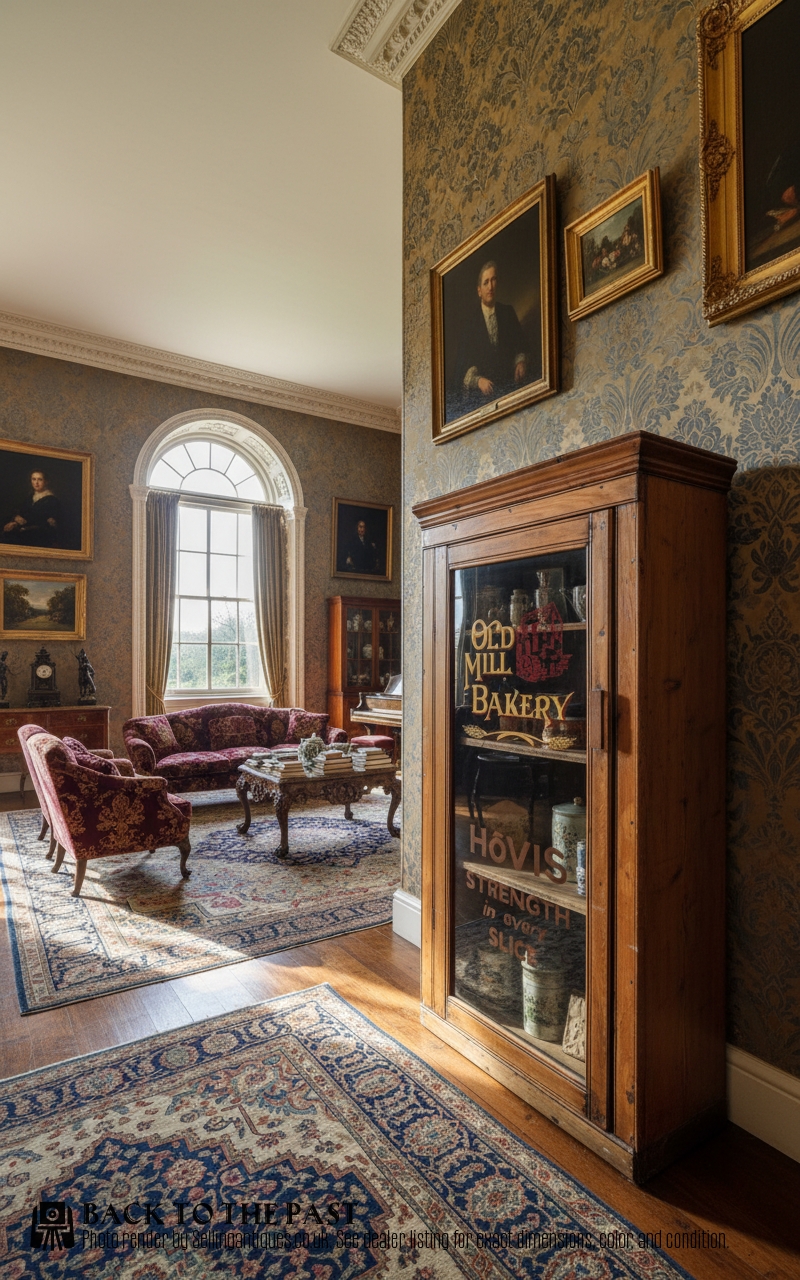
A vintage advertising cabinet brings shop floor history into a room, offering glazed display space tied to iconic names in confectionery, tobacco and trade.
Vintage Advertising Cabinet
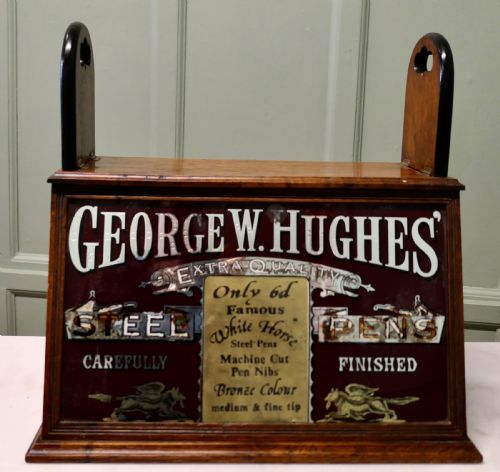
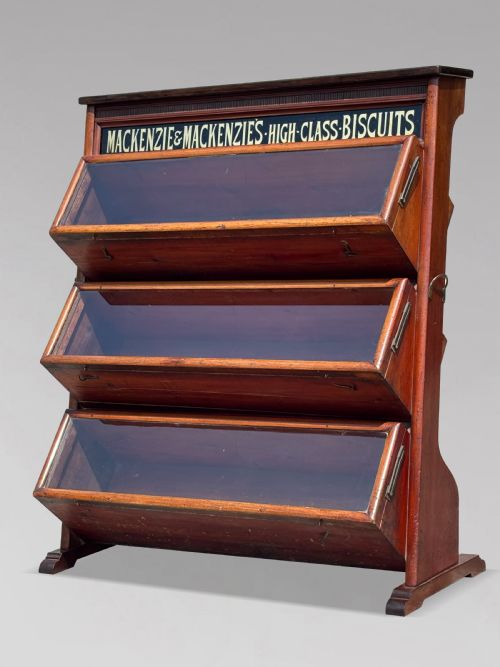
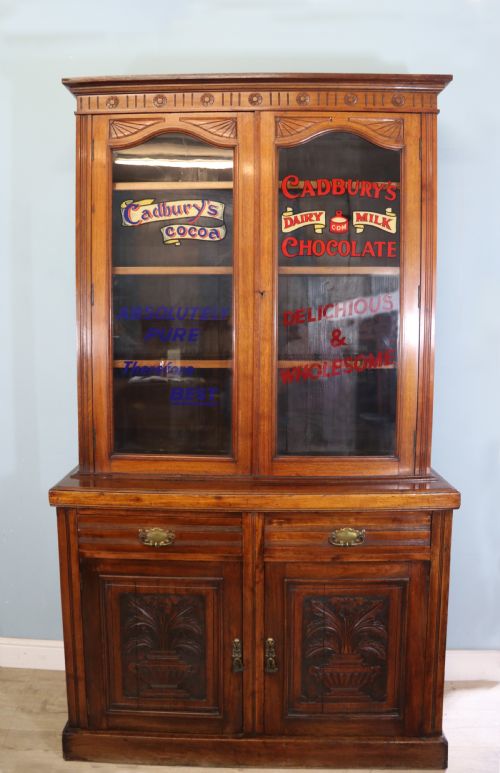
A vintage advertising cabinet serves as a countertop or wall-mounted shopfitting piece designed to showcase retail goods like chocolate, cigars, and sewing cottons.
The pieces on this page span from the Victorian and Edwardian eras into the 1930s interwar commercial period, taking forms such as display cabinets, corner cupboards, desktop boxes, and haberdashery units.
Buyers encounter solid mahogany, oak, American walnut, cedar, and pine constructions, frequently featuring glass panels and hand sign-written trade lettering.
How they were made
Cabinet makers utilised hardwoods including mahogany, oak, cedar, and American walnut alongside softer pine to construct robust retail shopfittings.
Glazing panels framed in wood or metal allowed goods to be viewed safely on the counter, while brass hardware secured doors and lids.
Sign-writing applied directly to wood or glass surfaces communicated brand names such as Fry's, Cadbury's, and Rowntree's.
Vintage Advertising Cabinet Retail Price Guide 2026
Typical asking prices for vintage advertising cabinet among the pieces listed under this phrase on Sellingantiques today, from the lower quarter to the upper quarter. They describe what is for sale here now, not the wider market.
Materials recorded across the inventory include mahogany, oak, American walnut, cedar, pine, brass, and glass.
What varies in quality
The calibre of a vintage advertising cabinet rests on the integrity of its timber frame, the clarity of its original or period hand sign-writing, and the survival of its glazed panels.
Pieces built from solid hardwoods like mahogany and American walnut sit at a different level from simpler pine iterations.
The distinction between factory-original brand lettering and later hand sign-written decoration influences the character and historical weight of the piece.
Mackenzie's Biscuits·Fry's Chocolate·Ermen and Roby·H. Upmann·Cadbury's Cocoa·Wills Capstan·Venus Pencil
The Vintage Advertising Cabinet Glossary
- Sign-written
- Lettering painted by hand onto wood or glass surfaces to display commercial branding or product names.
- Haberdashery cabinet
- A multi-drawer shopfitting unit originally utilised for storing and displaying sewing accessories, textiles, and haberdashery goods.
- Vitrine
- A glass-fronted display cabinet or showcase designed specifically for presenting delicate objects and curiosities.
- Countertop display
- A smaller scale shop cabinet intended to sit upon a retail counter to entice customers at the point of sale.
- Shopfitting
- Fixtures and furniture built specifically for commercial retail premises during the nineteenth and twentieth centuries.
Vintage Advertising Cabinet: Frequently Asked Questions
Where were these cabinets used?
These cabinets stood upon counters and hung on walls inside nineteenth and twentieth-century retail shops, tobacconists, and tea rooms.
Merchants utilised them to keep valuable or delicate merchandise visible yet secure from handling by customers.
How do I date a cabinet?
Dating relies on timber choices, construction techniques, and stylistic markers associated with Victorian, Edwardian, and 1930s commercial design.
Lettering styles and specific brand histories also provide reliable clues to the decade of manufacture.
Are the brand signs original?
Some cabinets preserve their original factory branding, while others feature later hand sign-written decoration applied during the commercial lifespan of the piece.
Both categories reflect genuine retail history and trade practices of the era.
How do I clean the wood and glass?
Maintain timber surfaces with appropriate wax or polish suited to hardwoods like mahogany, oak, and walnut.
Clean glass panels gently to preserve any fragile sign-written lettering applied to the surface.