

Bowfront Dining Credenza
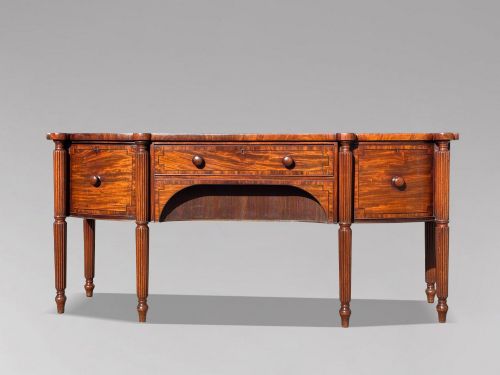
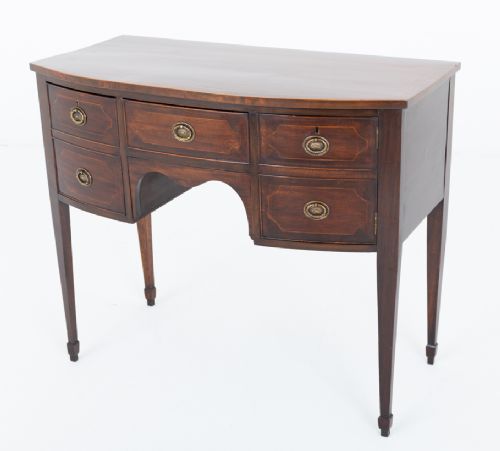
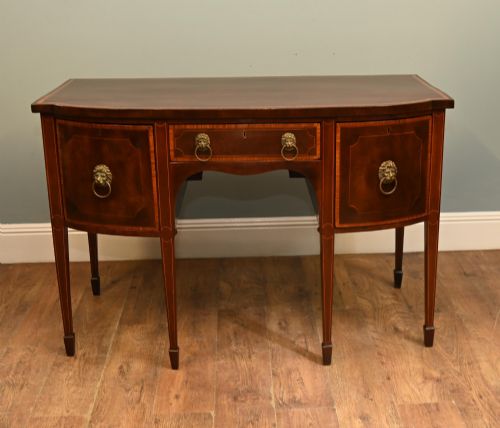
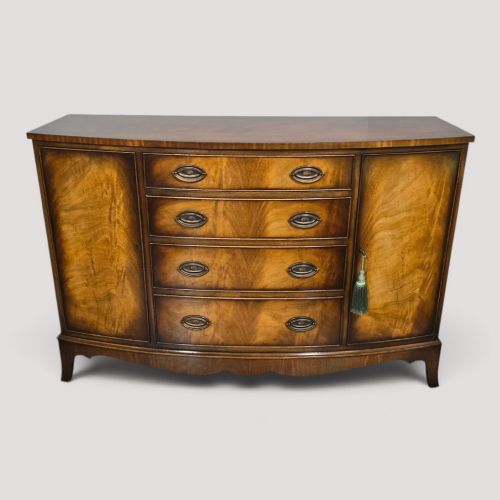
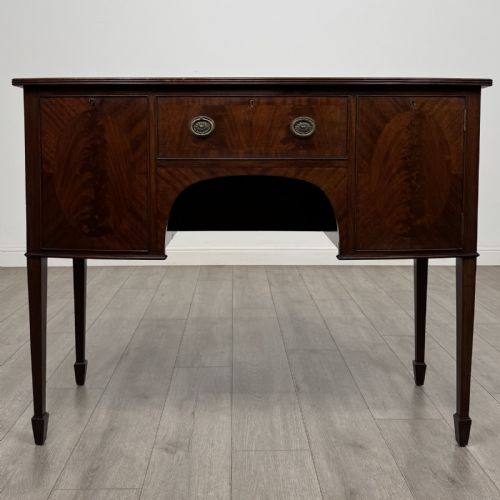
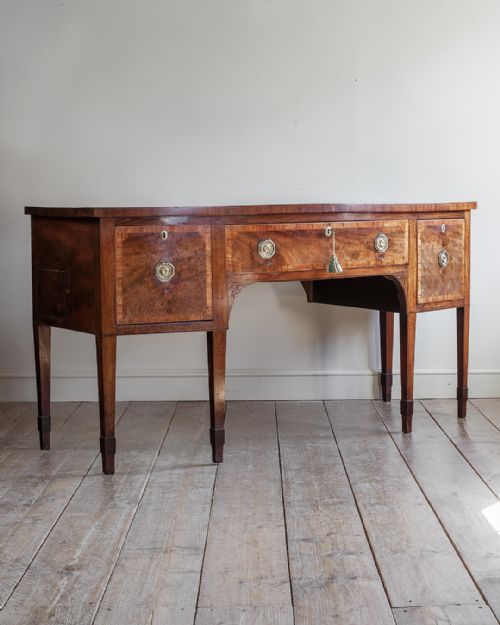
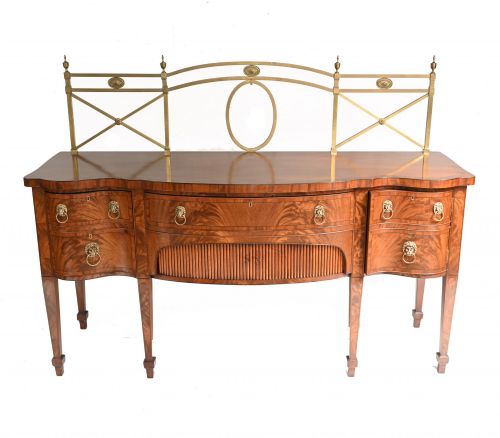
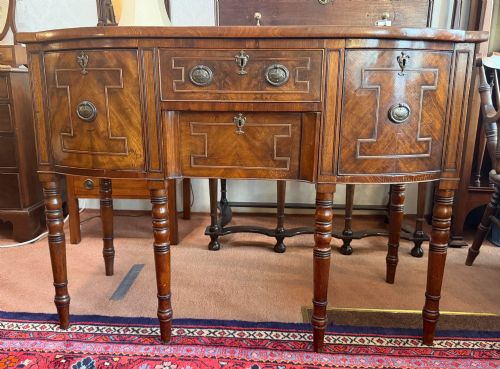
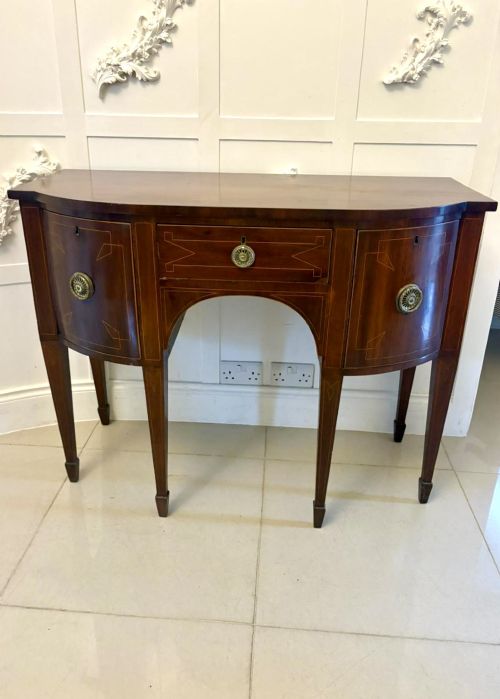
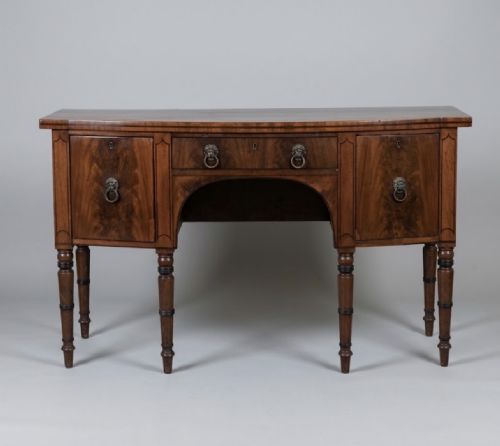
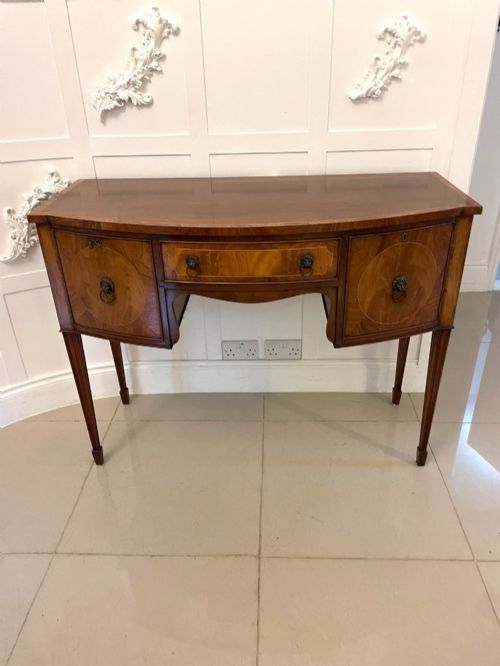
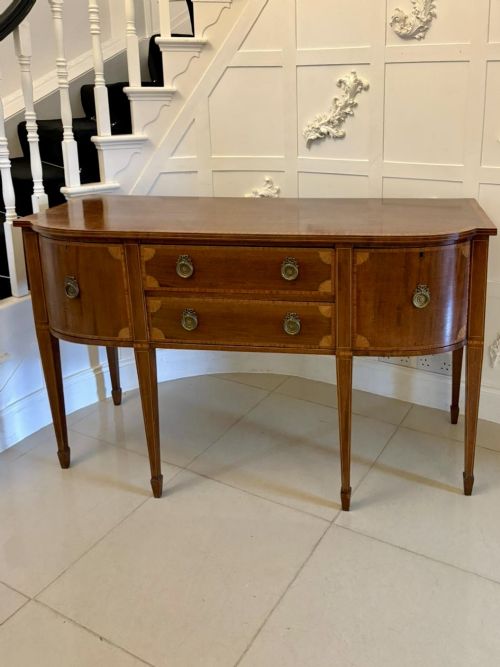
A bowfront dining credenza provides substantial scale and curved storage, bringing classic dining room utility and refined proportions to period interiors.
Bowfront Dining Credenza
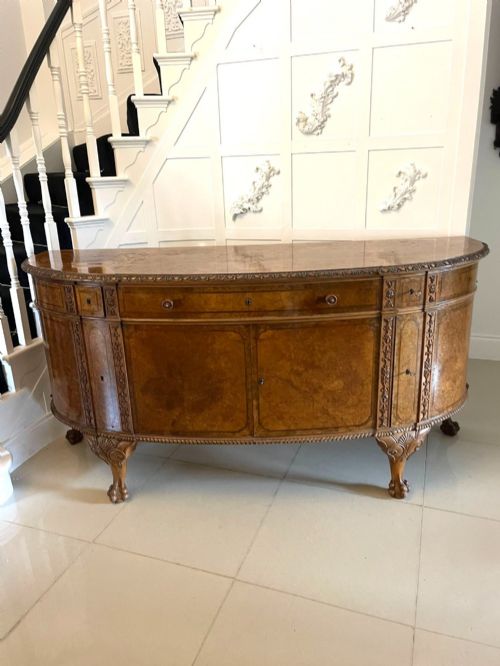
You are most likely to meet mahogany examples on this page, alongside satinwood and burr walnut variants influenced by Sheraton and Hepplewhite designs. The scale ranges from compact small sideboards suitable for modest rooms to large pedestals and breakfront cupboards intended for grander settings. Surviving examples demonstrate how dining furniture evolved from simple serving surfaces into elaborate architectural cabinets.
Materials and construction methods
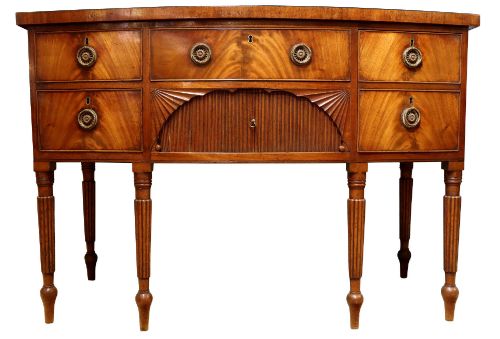
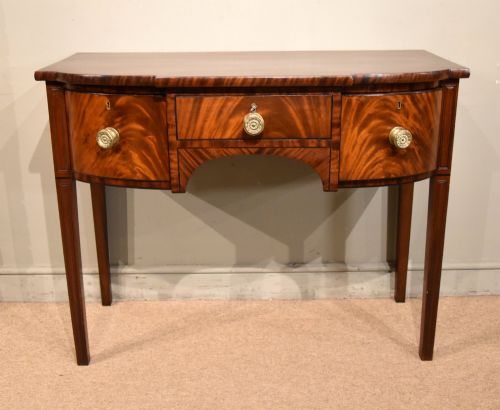
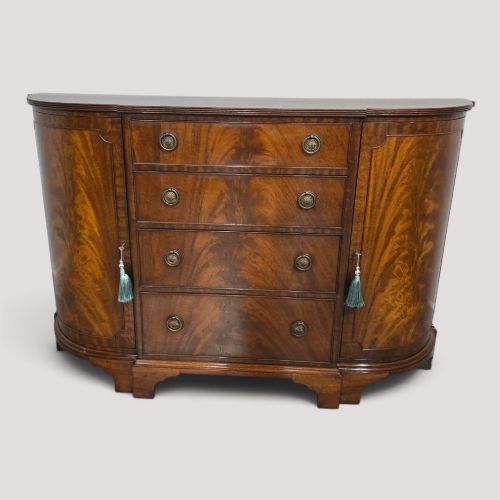
Cabinet makers utilised solid mahogany and applied flame mahogany veneers over secondary timbers to achieve rich figuring across the curved drawer fronts. Finer workshops incorporated contrasting elements such as boxwood inlay, satinwood crossbanding, and delicate marquetry panels to accentuate the structural lines.
Structural integrity relied on traditional joinery, sturdy carcase construction, and well-fitted drawer dividers that followed the sweeping radius of the bowfront. Brass hardware, including original drop handles and escutcheons, was fitted to complete the functional design of each cabinet.
Bowfront Dining Credenza Retail Price Guide 2026
Typical asking prices for bowfront dining credenza among the pieces listed under this phrase on Sellingantiques today, from the lower quarter to the upper quarter. They describe what is for sale here now, not the wider market.
Cabinet makers carefully matched the flame mahogany grain so the wooden waves ripple seamlessly across multiple curving drawers.
Factors determining the grade of a piece
The choice of timber grain fundamentally separates the standard production from the exceptional piece, with matched flame mahogany veneers and symmetrical figuring commanding attention. Precision in the inlay work and the sharpness of hand-carved details indicate the level of craftsmanship invested in the workshop.
Proportion and the handling of the curved radius dictate the visual success of the cabinet, ensuring the drawers and cupboards operate smoothly within the complex geometry. Preservation of original surfaces and authentic brass fittings further distinguishes superior examples from later alterations.
The Bowfront Dining Credenza Glossary
- Bowfront
- A curved cabinet front that swells outward in the centre, softening the linear angles of a dining room.
- Crossbanding
- A narrow strip of veneer applied perpendicularly to the surrounding grain along the border of a top or drawer front.
- Flame mahogany
- Timber sliced to reveal a distinctive, flamy wave pattern in the grain, highly prized for decorative furniture fronts.
- Marquetry
- Elaborate decorative patterns formed by fitting together small pieces of coloured wood veneers.
- Pedestal sideboard
- A form comprising central serving space flanked by heavy columnar pedestals or cupboards.
Bowfront Dining Credenza: Frequently Asked Questions
What is a bowfront dining credenza?
A bowfront dining credenza is a large storage cabinet featuring a rounded, projecting front elevation designed to serve food and store dining room tableware.
These pieces function primarily as sideboards, buffets, or server cabinets within traditional dining spaces.
How do I date a mahogany sideboard?
Dating relies on examining the construction style, timber selection, secondary woods, and decorative motifs like inlay or crossbanding.
Georgian and Regency pieces display hand-cut joinery and simpler proportions, whereas Edwardian revivals often utilise brighter veneers and machine-cut elements.
Where were these cabinets placed?
They were traditionally positioned against the dining room wall to hold silver, linen, and dishes during large meals.
Today, they serve similar functional roles in dining rooms or act as statement storage pieces in spacious living areas.
What is Sheraton style?
Sheraton style refers to the neoclassical furniture designs popularised in the late 18th Century by Thomas Sheraton.
Pieces in this style feature straight tapered legs, delicate satinwood inlay, and balanced geometric proportions.