
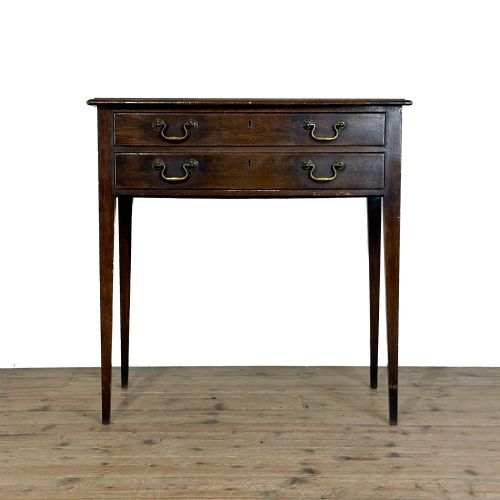
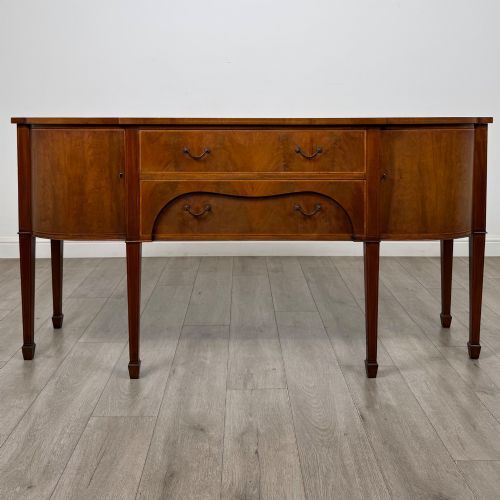
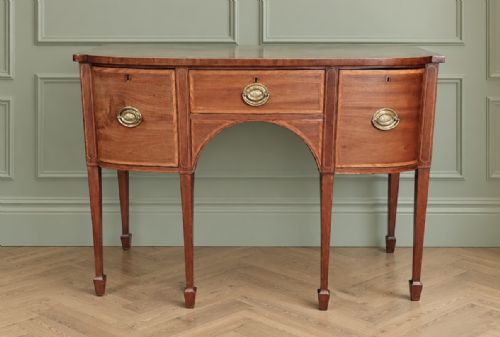
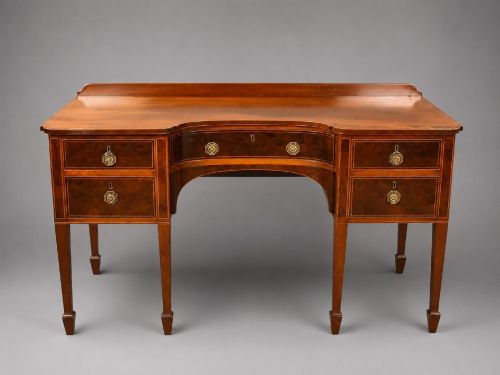


Tapered Leg Server
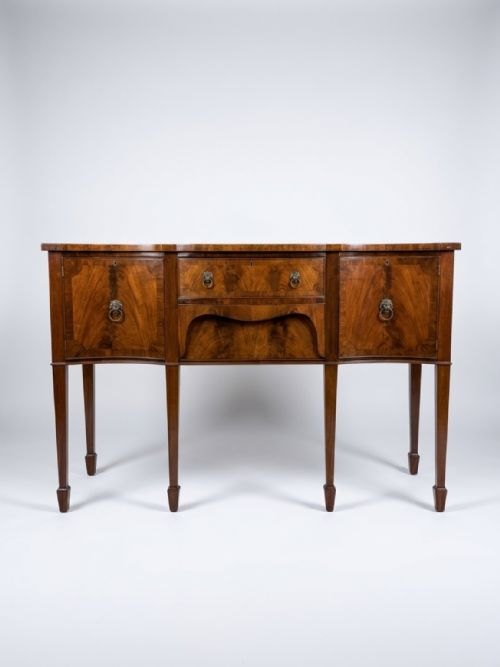
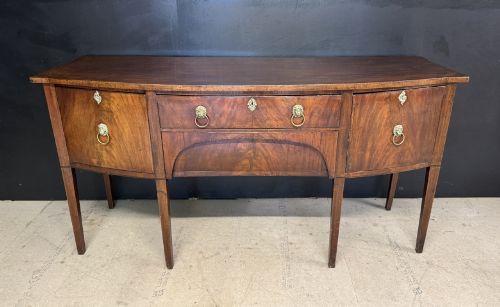
When you search for a tapered leg server, you are looking at formal dining furniture designed to hold silver and porcelain during meals.

Tapered Leg Server
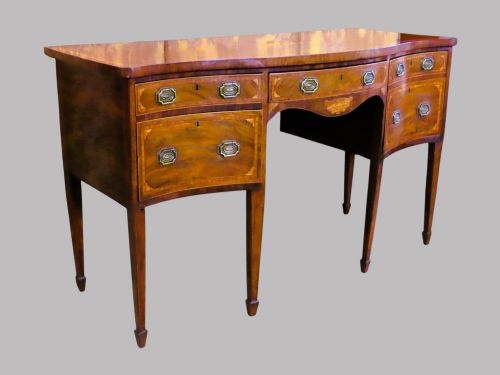
A tapered leg server is part of a tradition of dining room storage that includes sideboards, side tables, and serving tables. The pieces on this page span several eras, notably the Georgian, Regency, and Edwardian periods.
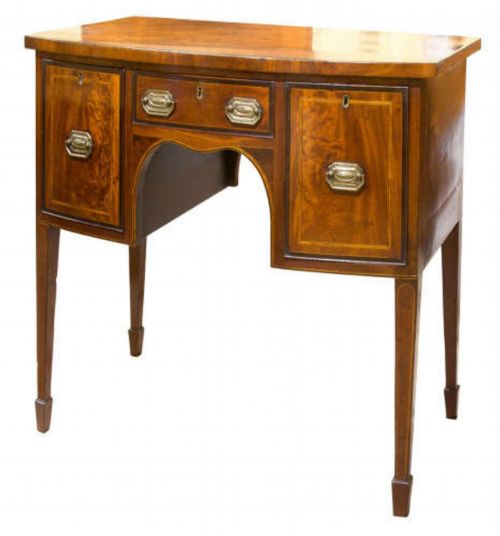
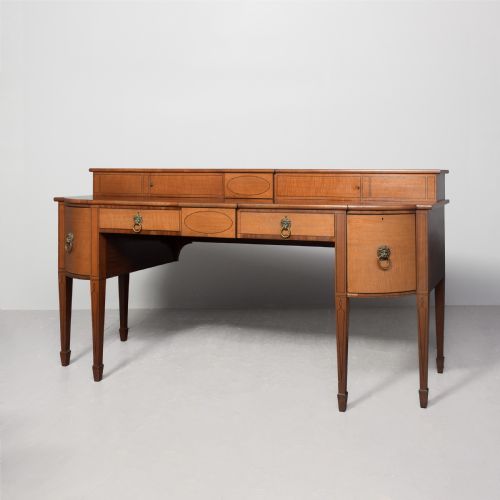
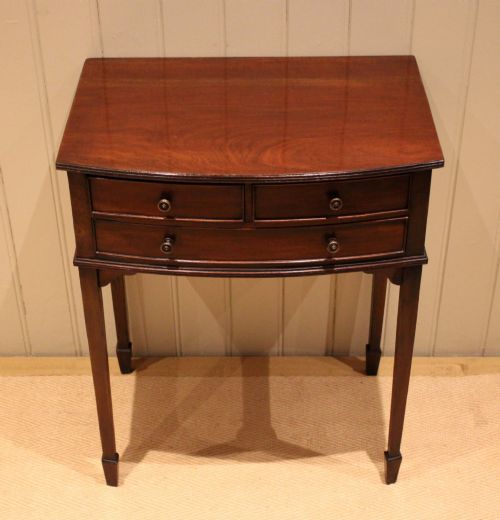
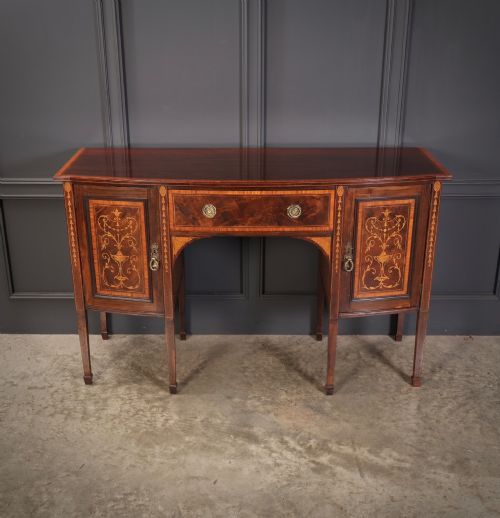
Most examples you will meet take the form of mahogany sideboards or side tables with straight or bow fronts. They range from large Scottish stage-back pieces to smaller side servers.
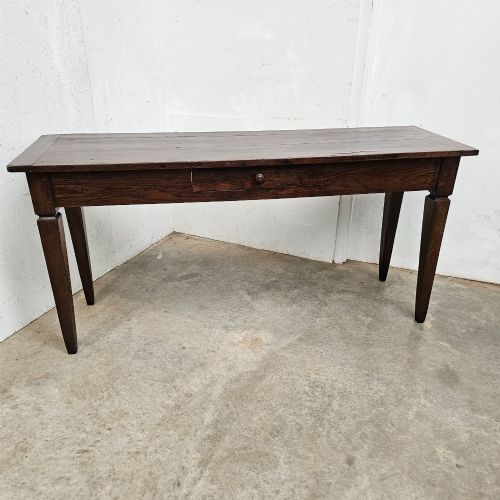
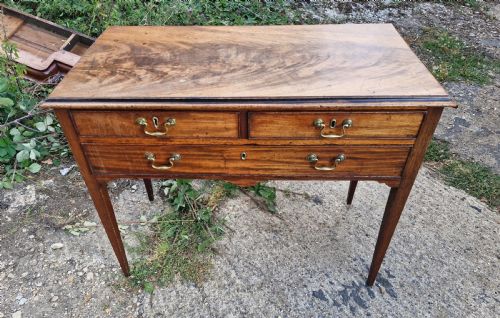
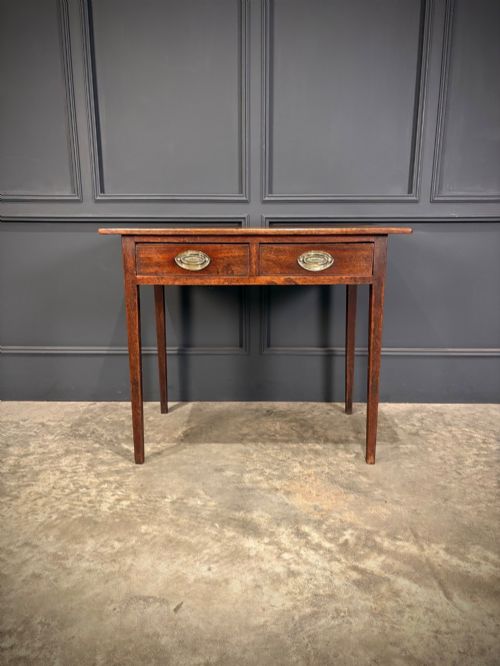
Makers working in the 18th century and the Sheraton Revival period produced many of these server designs. You will also find console tables and lowboy side tables serving the same functional role.
How they were made
The primary wood across these pieces is mahogany, often selected as flame veneer or figured timber. Cabinet makers combined this solid wood and veneer base with contrasting timbers.
Decoration relied on inlay and banding using satinwood, boxwood, and purpleheart. Brass fittings such as handles and escutcheons completed the construction.
Tapered Leg Server Retail Price Guide 2026
Typical asking prices for tapered leg server among the pieces listed under this phrase on Sellingantiques today, from the lower quarter to the upper quarter. They describe what is for sale here now, not the wider market.
Listings feature mahogany, oak, and satinwood, spanning the Georgian, Regency, Victorian, and Edwardian periods.
What varies in quality
Quality rests on the selection of timber figures, such as flame mahogany or highly figured grain, matched across the drawer fronts and top. The crispness of the boxwood and satinwood inlay also separates standard production from finer examples.
Proportion and scale dictate the success of the piece, particularly in bow-front and serpentine forms. Well-executed corner details and robust internal drawer construction indicate a higher standard of cabinet-making.
The Tapered Leg Server Glossary
- Bow front
- A convex curved front that swells outward in the centre. This shape softens the profile of a dining room server.
- Serpentine
- A front configuration with a convex centre flanked by concave ends. It requires considerable skill from the cabinet maker.
- Crossbanding
- A narrow strip of veneer applied to the border of a top or drawer front so the grain runs at right angles to the main surface. It frames the central timber panel.
- Lowboy
- A small low table with drawers, often used as a side table or dressing table. Examples in oak and mahogany appear within this dining furniture category.
Tapered Leg Server: Frequently Asked Questions
What is a tapered leg server used for?
These tables and sideboards served as auxiliary surfaces in the dining room. They held serving dishes, silverware, and decanters during large meals.
Today they function well in hallways, living rooms, or dining spaces as display and storage furniture.
How do I identify a Georgian piece?
Georgian furniture dates from the 18th and early 19th centuries, marked by classical proportions and solid mahogany construction. Look for hand-cut dovetails in the drawers and traditional timber ageing.
Later Edwardian and Sheraton Revival pieces often mimic these 18th-century styles with lighter inlay work and different secondary woods.
What is the difference between a sideboard and a serving table?
Sideboards usually incorporate multiple drawers and cupboards for extensive dining storage. Serving tables are generally more open and focused on surface area for food and drink presentation.
Both forms share similar leg designs and timber choices within the listings.
Where should I place a server at home?
A server works best against a clear wall in a dining room, hallway, or living area where its depth does not obstruct traffic. The flat top supports lamps, books, or decorative objects.
Ensure you measure the wall space and consider the curved projection of bow-front or serpentine models.