
Georgian Inlay Sideboard
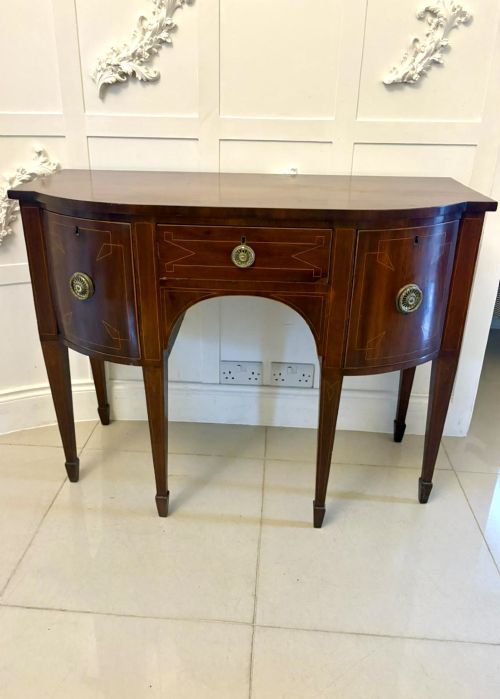
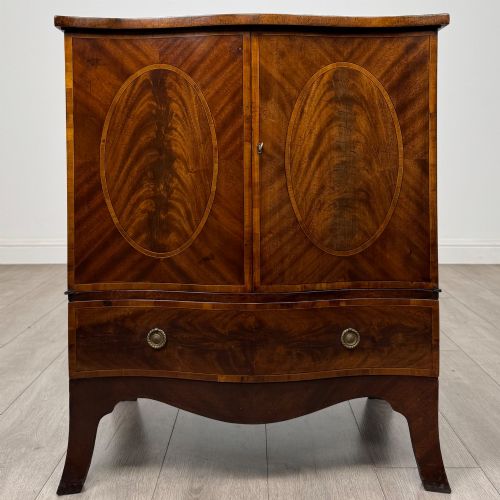
A georgian inlay sideboard brings warmth and architectural presence to a dining room, combining functional storage with delicate decorative stringing.
Georgian Inlay Sideboard
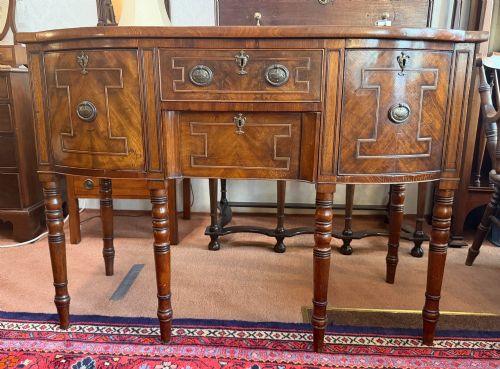
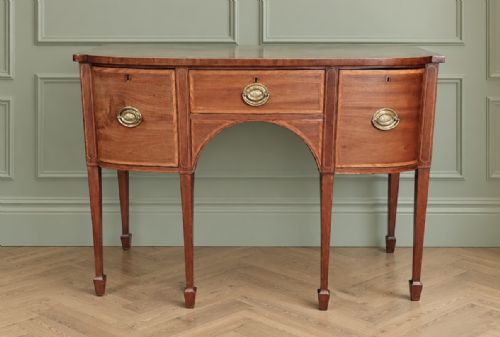
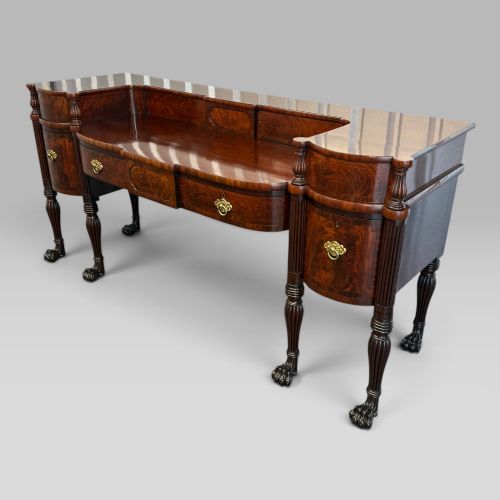
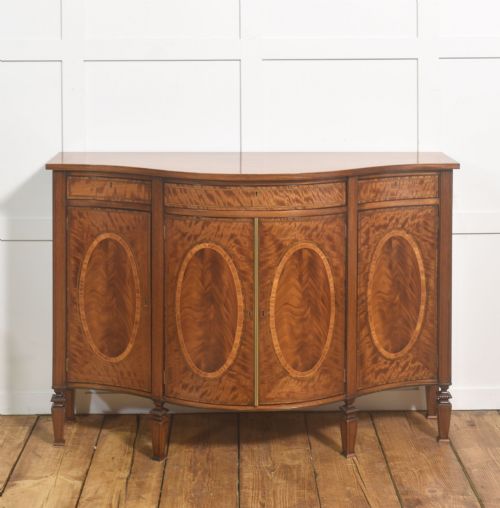
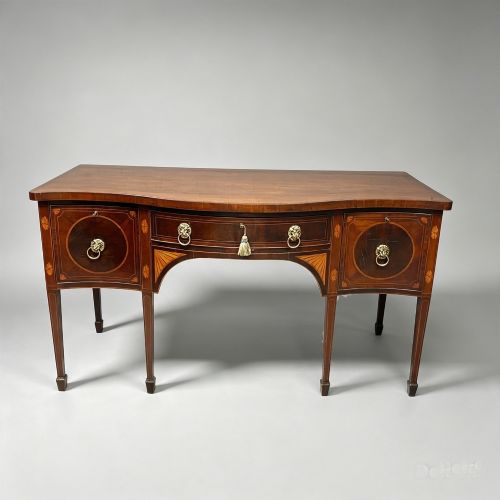
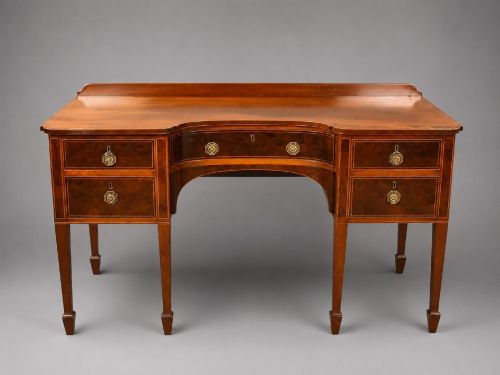
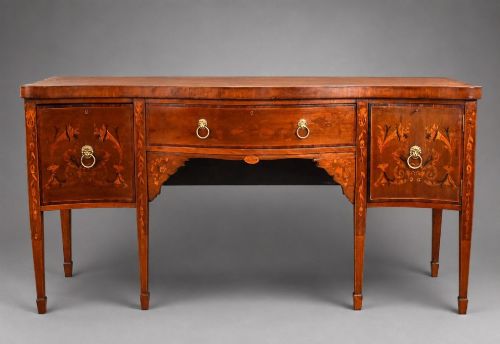
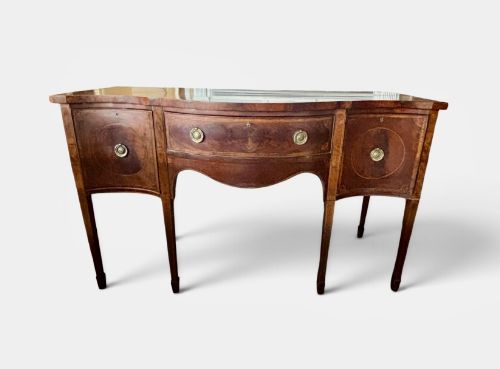
A georgian inlay sideboard is a formal dining room serving piece designed for storage and display, originating primarily in the eighteenth and nineteenth centuries. These items range from compact bow-front examples to substantial serpentine and stage-back configurations.
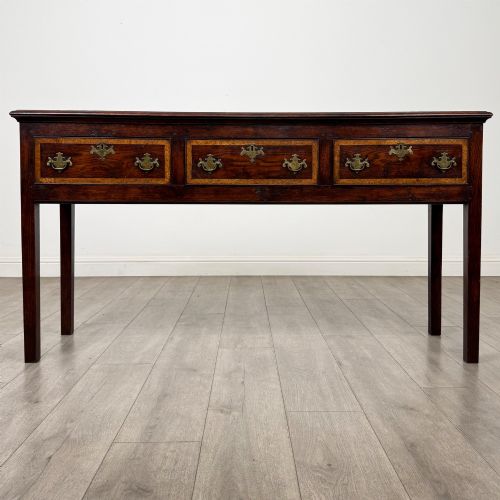
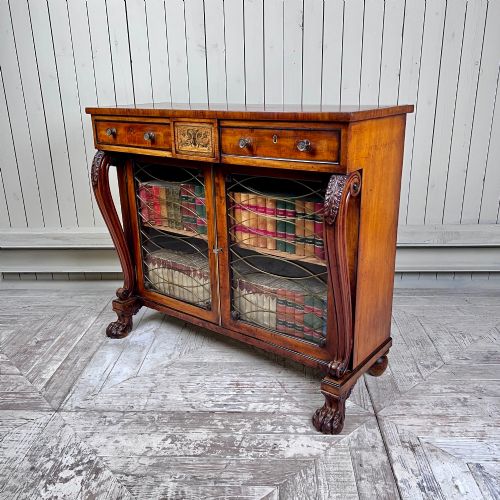
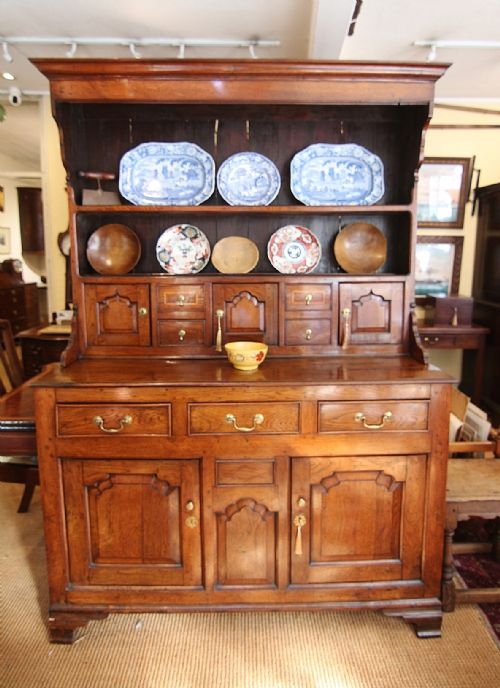
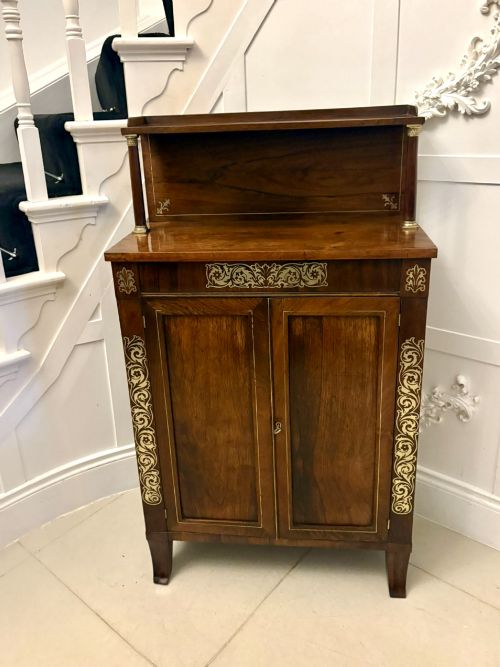
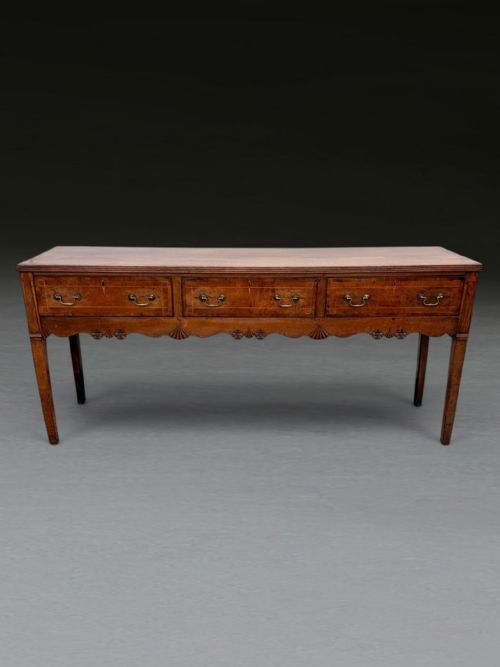
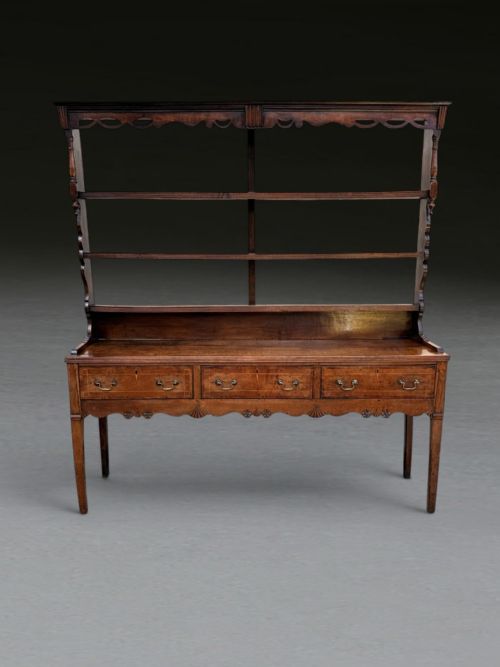
The pieces appearing most frequently on this page date from the Georgian, Regency, and Edwardian periods, including later Sheraton Revival interpretations. Alongside standard sideboards, the selection encompasses related forms such as side cabinets, chiffoniers, and dresser bases.
Construction materials vary significantly across eras, moving from native oak in country workshops to figured mahogany with exotic wood veneers in urban cabinet-makers' shops. Formats span straight-fronted carcases, sweeping bow-fronts, and undulating serpentine shapes.
How they were made
Cabinet-makers built the carcase principally from solid mahogany or oak, applying selected veneers of flame mahogany, satinwood, and walnut to the drawer fronts and doors. This structural approach provided both stability and a dramatic figured surface for the exterior.
Decorative detail relies on contrasting stringing and banding executed in boxwood, ebony, and rosewood, sometimes complemented by brass handles, feet, and gallery rails. Inlaid motifs frequently incorporate fan patterns, bellflowers, and geometric borders.
Listings feature mahogany, oak, satinwood, and rosewood alongside brass fittings and boxwood inlay across Georgian, Regency, and Edwardian periods.
What varies in quality
The refinement of the timber selection dictates the visual impact, separating standard production carcases from pieces featuring heavily figured flame mahogany or finely figured satinwood veneers. Superior examples display careful grain matching across multiple drawers and doors.
The crispness and complexity of the inlay work distinguish finer workshops, where boxwood and ebony stringing remains precise and unblemished. Integrated details such as original brass fittings, lion paw feet, and well-executed serpentine fronts further elevate the standing of a piece.
The Georgian Inlay Sideboard Glossary
- Bow-front
- A cabinet front that curves outward in a convex shape. This profile softens the rectangular lines of a dining room and was popular during the Georgian and Sheraton Revival periods.
- Serpentine
- A shaped furniture front featuring a central convex curve flanked by concave sweeps. It requires advanced carpentry skill to construct and inlay.
- Stringing
- Thin lines of contrasting wood inlay used to outline drawers, legs, and tabletops. Boxwood and ebony are typical contrasting species for this linear decoration.
- Banding
- A border of contrasting veneer applied around the perimeter of a drawer front or tabletop. It frames the central timber figure.
- Chiffonier
- A compact sideboard or low cabinet equipped with drawers and shelves, developed during the Regency period. It serves a similar function to a traditional sideboard on a smaller scale.
Georgian Inlay Sideboard: Frequently Asked Questions
What is a georgian inlay sideboard used for?
These pieces function as serving surfaces and storage units in dining rooms, traditionally holding cutlery, linen, and serving dishes.
Today, they serve equally well as side cabinets in living spaces or hallways, offering generous cupboard capacity beneath a broad top surface.
How do I date a sideboard?
Dating relies on examining the secondary timbers, construction methods, and handling of the inlay work. Georgian and Regency examples show period-specific cabinet-making techniques, whereas Edwardian Sheraton Revival pieces often display machine-cut veneers and lighter internal framing.
The overall proportion and style of the brass hardware also provide reliable clues to the exact decade of manufacture.
Where should I place a sideboard?
A sideboard requires a substantial wall space in a dining room, hallway, or spacious reception room to balance its visual weight. Because many pieces feature finished backs or refined mahogany sides, they can occupy prominent positions visible from multiple angles.
Ensure adequate clearance around the front for opening cabinet doors and pulling out drawers.
Are these sideboards solid wood?
Most examples combine solid structural timbers like oak or mahogany for the frame with decorative wood veneers applied to the drawer fronts and top. This traditional method prevented warping while allowing cabinet-makers to display highly figured grains.
Inlay work is typically let directly into these veneered or solid surfaces.