



Brass Handle Serving Table
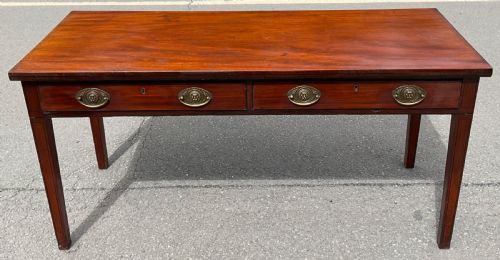
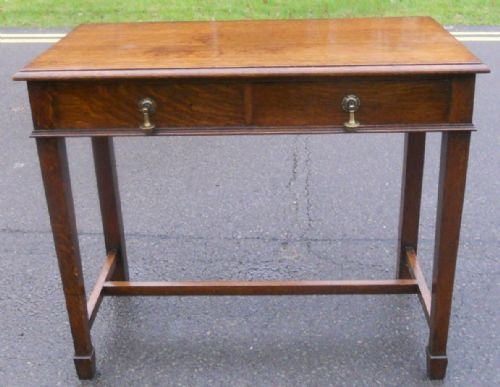
These brass handle serving table examples are solid wood dining room pieces built for service, offering period proportions and useful surface space.
Brass Handle Serving Table
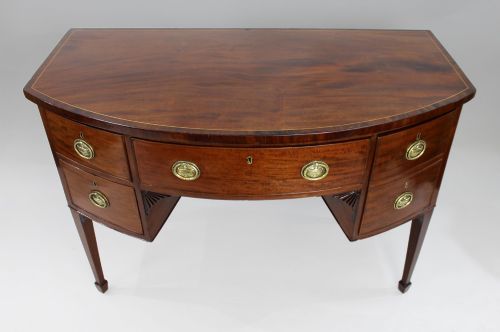
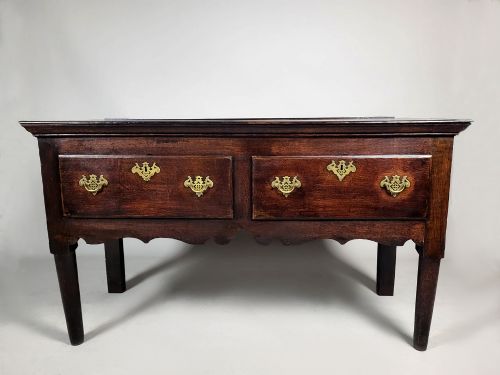
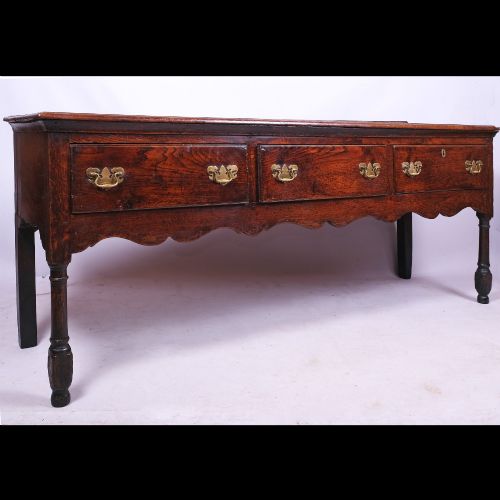
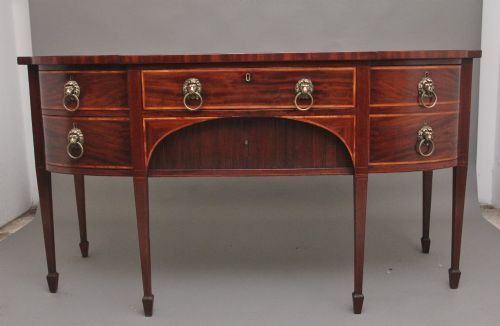
A brass handle serving table combines the utility of a dining room surface with functional storage hardware. Buyers searching for a brass handle serving table will encounter diverse forms spanning the Georgian, Regency, and Edwardian periods.
Alongside larger furniture, smaller items such as wooden trays with brass handles appear in the inventory. These variations provide options ranging from substantial dining room sideboards to portable serving pieces.
Materials and construction
Construction relies heavily on mahogany and oak timbers, frequently enhanced with boxwood and satinwood inlay or mixed wood veneers. Cabinet makers shaped these woods into bow front and rectangular forms suited to period interiors.
Metal hardware plays a defining structural and decorative role, with brass handles fitted to drawers and serving surfaces. Marquetry and wood inlay techniques also add surface detail to specific tables and trays.
Brass Handle Serving Table Retail Price Guide 2026
Typical asking prices for brass handle serving table among the pieces listed under this phrase on Sellingantiques today, from the lower quarter to the upper quarter. They describe what is for sale here now, not the wider market.
Current listings span the Georgian, Regency, and Edwardian periods, utilising mahogany, oak, satinwood, and boxwood.
Assessing quality
Quality in these pieces rests upon the selection of timber and the precision of the cabinet work. Fine examples display careful grain matching in the mahogany or oak, alongside well-executed inlay work.
The integration of the brass hardware relative to the woodwork indicates the standard of manufacture. Superior items maintain integrity in their structural joints and decorative veneers over centuries of use.
The Brass Handle Serving Table Glossary
- Bow front
- A cabinet or table front that curves outward in a convex shape. This stylistic choice softens the corners of dining room furniture.
- Inlay
- A technique where contrasting woods such as boxwood and satinwood are inserted into recesses in the primary timber. It creates decorative patterns across the surface.
- Dresser base
- A low wooden storage unit with drawers or cupboards, often used in dining spaces. It serves a similar practical function to a sideboard.
- Side table
- A small table designed to stand against a wall. These pieces provide additional surface space without the bulk of a full sideboard.
Brass Handle Serving Table: Frequently Asked Questions
What is a brass handle serving table used for?
These tables provide a sturdy surface for presenting food and drink during dining occasions. They also offer drawer storage for serving accessories.
Historically, they stood in dining rooms and halls to assist household staff during meals. Today, they function similarly while acting as decorative focal points.
How do I date a mahogany serving table?
Dating relies on observing the timber species, construction methods, and stylistic cues present in the piece. Georgian and Regency examples exhibit specific proportions and cabinet-making techniques.
Changes in hardware mounting and secondary woods also help establish the period of manufacture. Comparing the piece to documented examples from the same era clarifies its age.
Where should I place a serving table?
A serving table fits well against a dining room wall where it can provide accessible surface area. Hallways and large living spaces also accommodate these narrow tables effectively.
Ensure the room has sufficient clearance around the piece for movement and drawer access. Their shallow depth allows them to sit comfortably in transit areas.
What is the difference between an oak and a mahogany table?
Oak furniture tends to present an earlier, robust aesthetic associated with seventeenth and eighteenth-century country houses. Mahogany offers a finer grain and a darker reddish-brown tone favoured in formal Georgian and Regency rooms.
Both timbers provide durability, but their visual impact on an interior differs significantly. Oak brings visible grain texture, whereas mahogany provides a smoother, polished surface.