

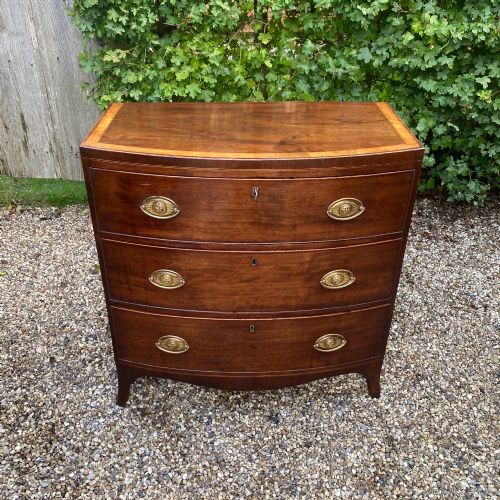
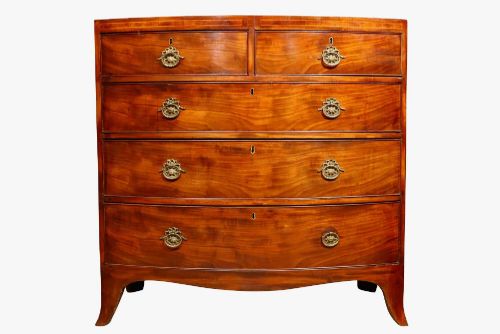
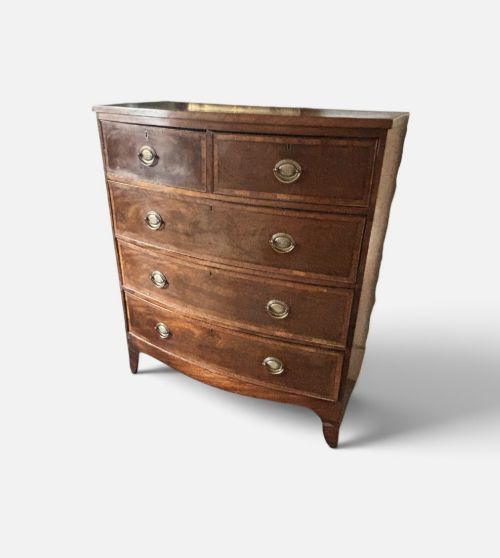
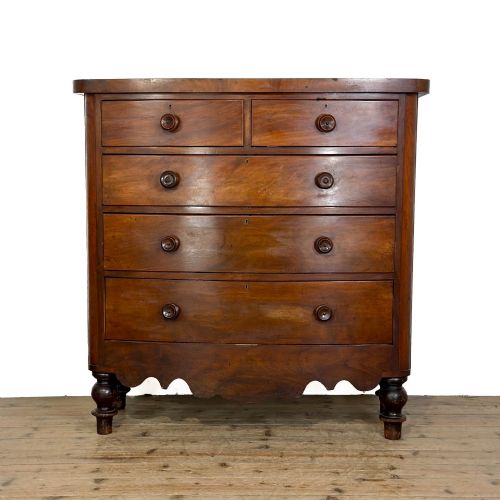
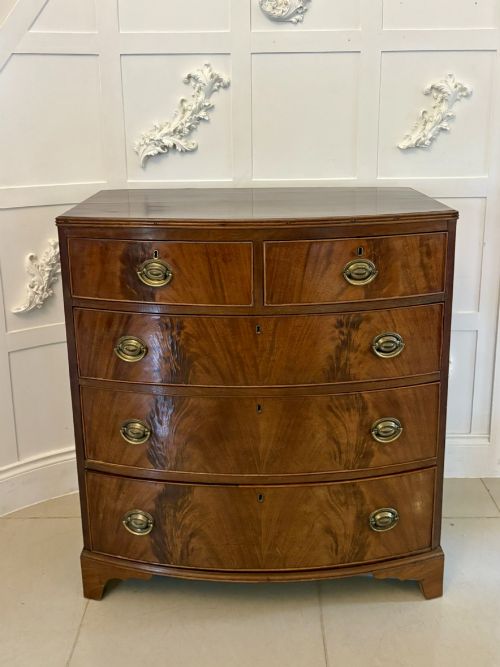
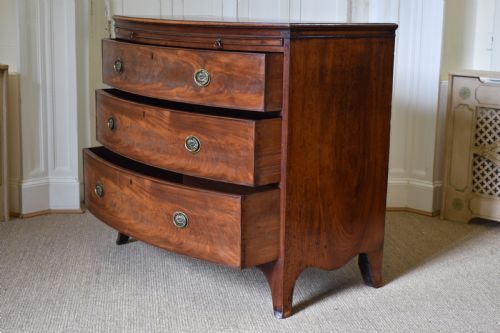
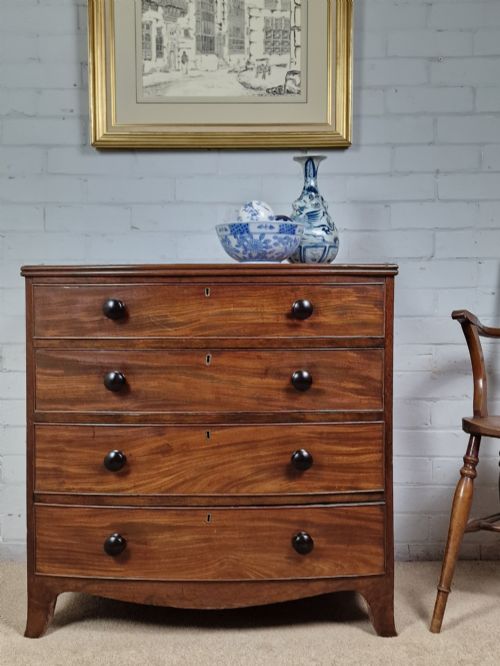
Bow Fronted Commode
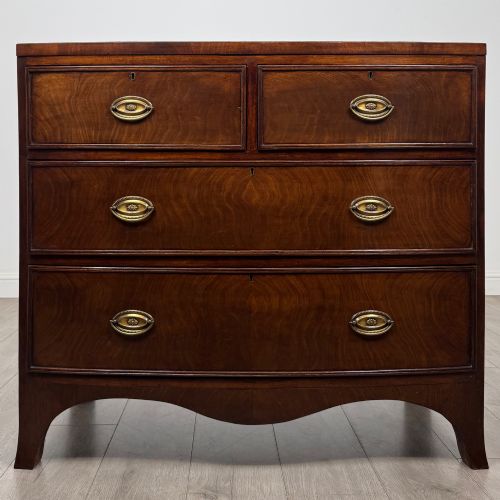
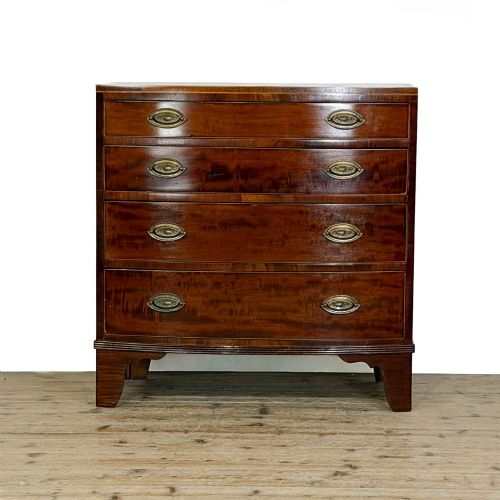
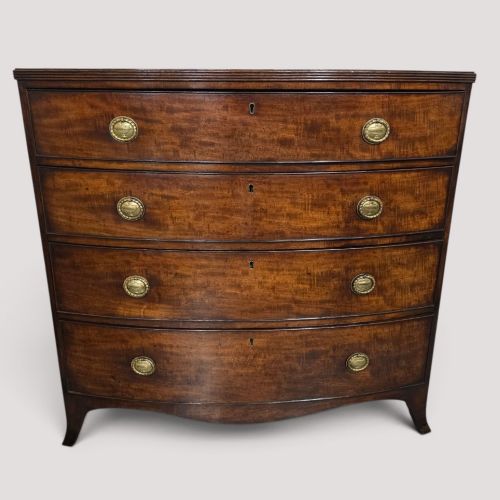
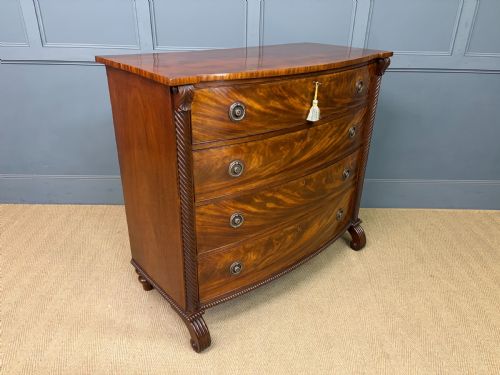
These bow fronted commode pieces combine curved drawer fronts with traditional cabinet forms, offering practical storage through Georgian, Regency and Victorian periods.
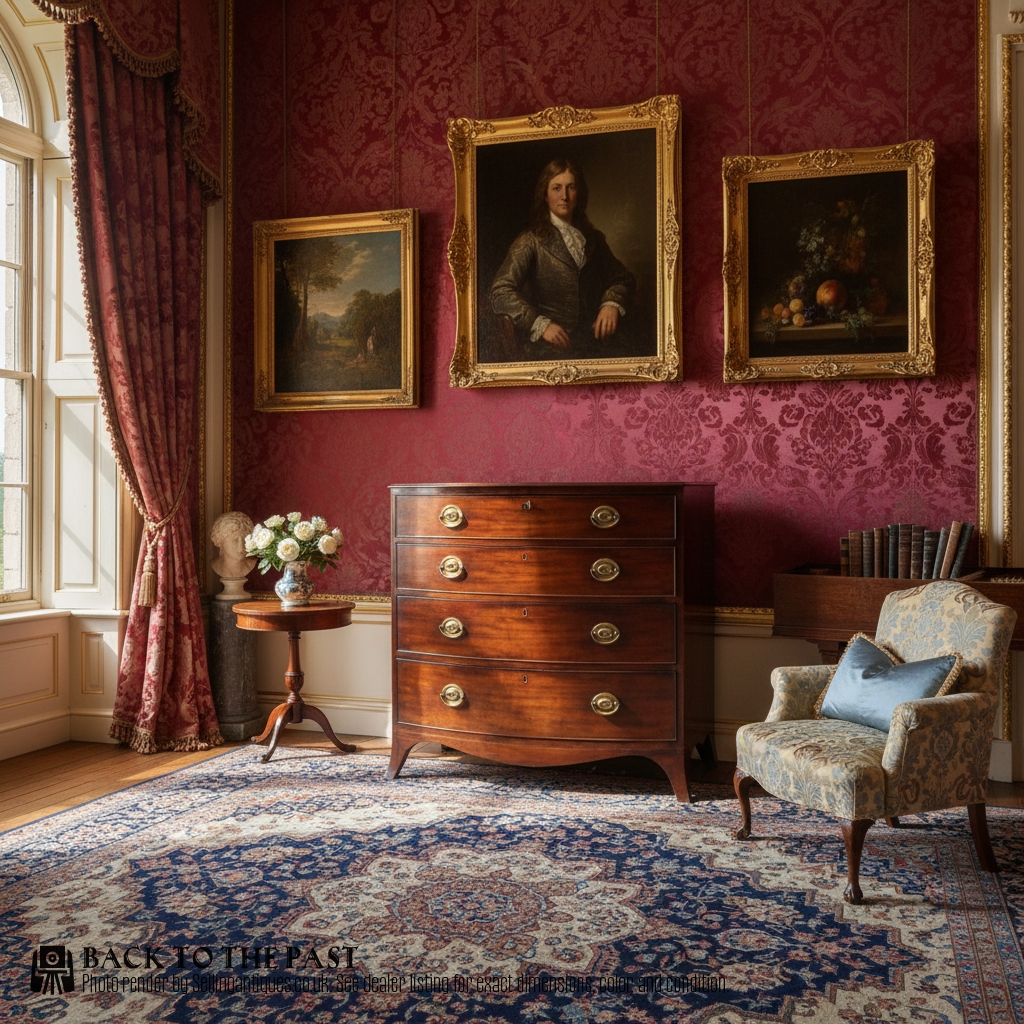
Bow Fronted Commode
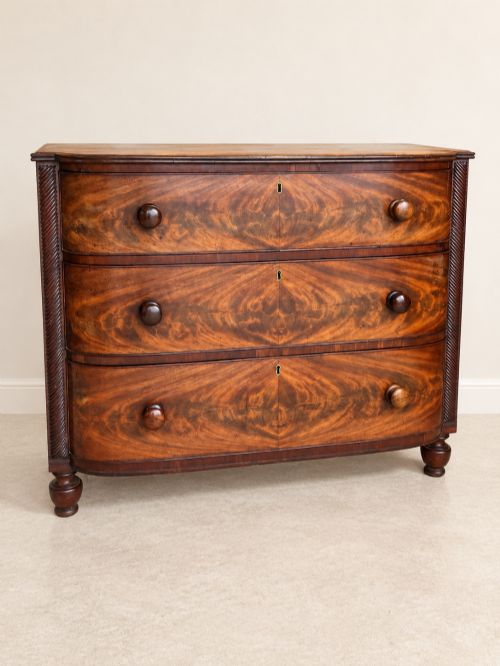
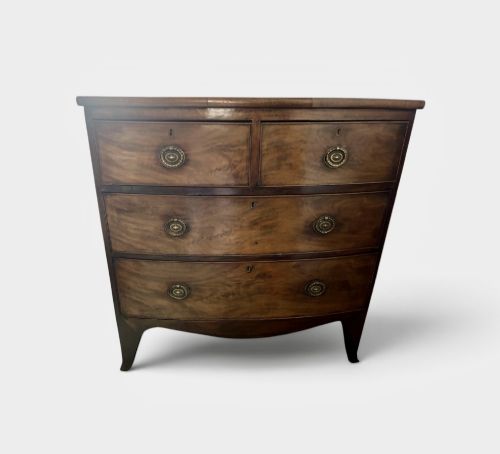
A bow fronted commode provides deep storage behind a rounded central facade, appearing across Georgian, Regency and Victorian periods. The form functions primarily as a chest of drawers or bedside cabinet.
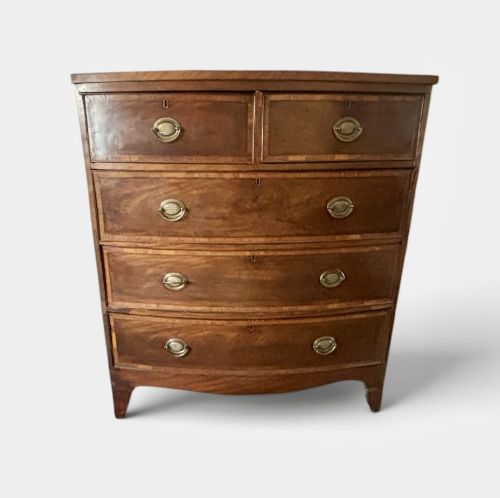
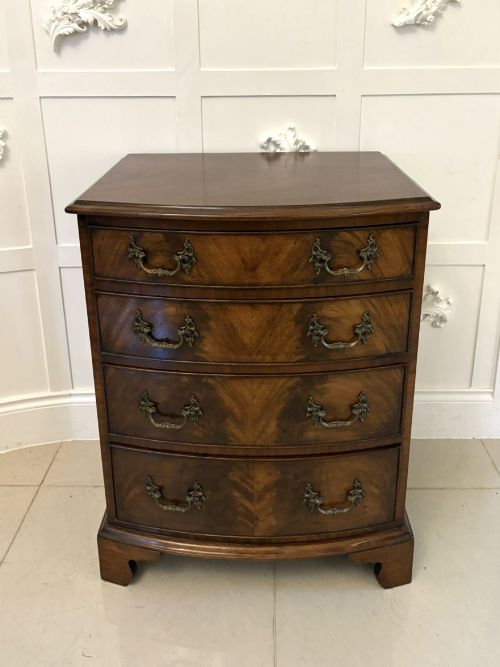
Mahogany dominates the selection, frequently joined by satinwood banding, flame mahogany veneers and walnut. Most examples stand on short bracket feet or slender legs suited to domestic chambers.
Makers adapted the curved front for diverse proportions, ranging from small bedside units to large four-drawer chests and miniature furniture. French and Dutch stylistic influences also appear alongside British cabinet work.
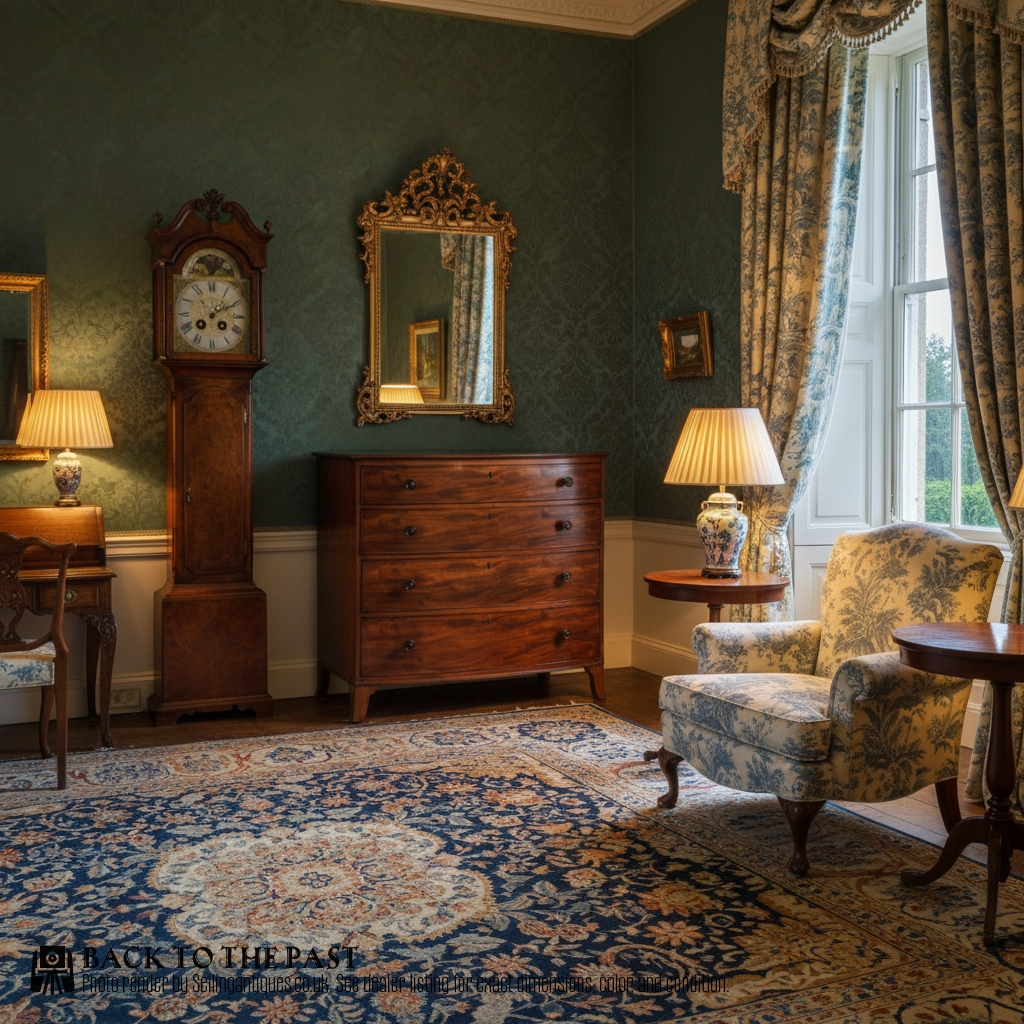
Quality Variations in Construction
The selection of timber grain heavily influences visual impact, with figured mahogany and flame veneers setting apart superior pieces from plain variants. Grain matching across successive drawer fronts demonstrates cabinet-making skill.
Refinement in secondary timbers, drawer linings and original brass hardware distinguishes high workshop standards from standard domestic production. Sharp execution of satinwood stringing and crossbanding indicates careful manufacture.
Bow Fronted Commode Retail Price Guide 2026
Typical asking prices for bow fronted commode among the pieces listed under this phrase on Sellingantiques today, from the lower quarter to the upper quarter. They describe what is for sale here now, not the wider market.
Miniature versions served as apprentice display pieces or delicate cabinet samples.
The Bow Fronted Commode Glossary
- Bow front
- A convex curved cabinet front that projects outward in a smooth sweep. This shape softens room corners and expands interior drawer capacity.
- Commode
- A low cabinet or chest of drawers used for bedroom or parlour storage. The term covers both traditional bedside units and larger drawer chests.
- Crossbanding
- A strip of veneer laid perpendicular to the surrounding grain along the edges of a top or drawer. It creates a framed border effect using contrasting timber.
- Flame mahogany
- A veneer cut from the branch forks of the mahogany tree, displaying undulating flame-like patterns. Cabinet makers prized this figure for principal drawer fronts.
- Satinwood
- A durable hardwood with a golden yellow sheen used for decorative stringing and banding. It provides a bright contrast against darker mahogany surfaces.
Bow Fronted Commode: Frequently Asked Questions
What is a bow fronted commode?
A bow fronted commode is a cabinet or chest featuring a convex curved front that provides both decorative presence and deep drawer capacity. These pieces date primarily from the Georgian, Regency and Victorian eras.
Cabinet makers produced them in various timbers, with mahogany and satinwood predominating across bedroom and parlour furniture.
Where were they used in the home?
These pieces served chiefly in bedrooms and dressing rooms for storing linen, garments and personal items. Smaller variants functioned beside beds as compact storage cabinets.
Their finished backs and polished timber surfaces also allowed placement along hallway and drawing room walls.
How do I identify a Georgian piece?
Georgian examples typically display dense mahogany timbers, hand-cut dovetails on drawer sides and bracket feet. Crossbanding in satinwood and fine stringing often decorate the top and drawer edges.
Proportions remain balanced, relying on timber grain rather than heavy carving for visual texture.
How do I care for mahogany veneer?
Keep mahogany furniture away from direct sunlight and heat sources to prevent timber shrinkage and veneer lifting. Dust regularly with a soft, dry cloth.
Apply traditional wax polish occasionally to nourish the wood and maintain the polished patina without building up heavy residue.