



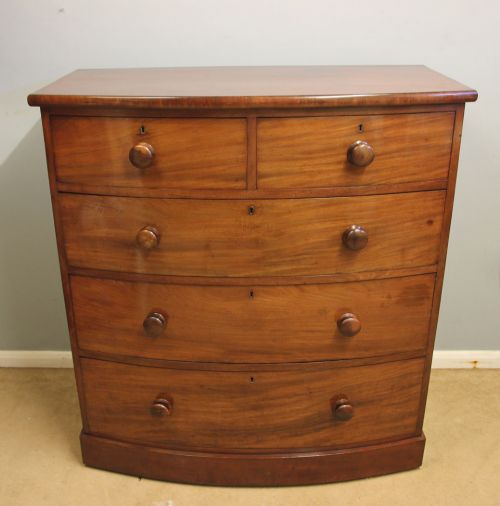

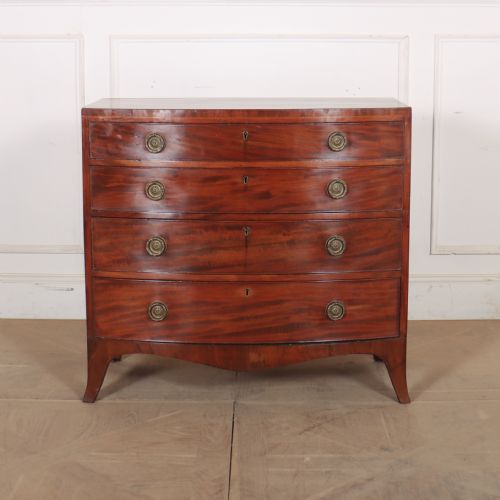

Edwardian Bowfront Chest
An Edwardian bowfront chest brings curved fronts and fitted storage together, offering a practical antique for modern rooms.
Edwardian Bowfront Chest
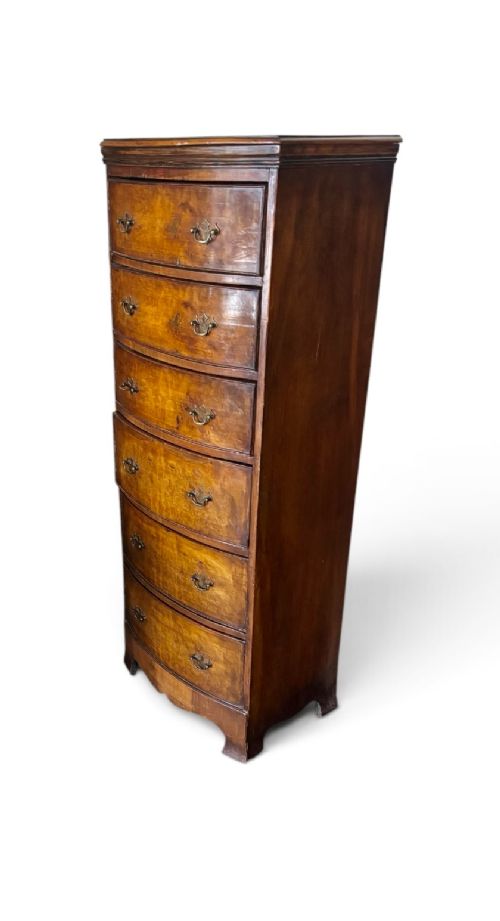
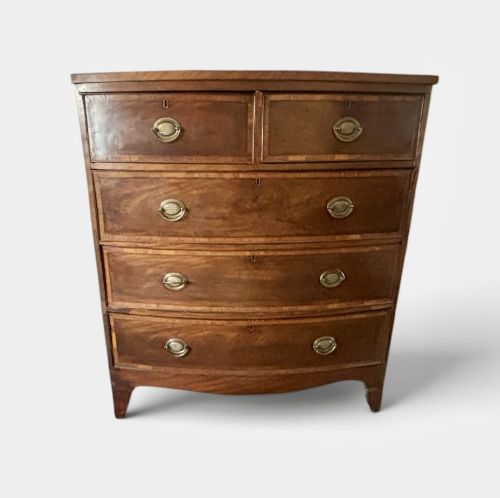
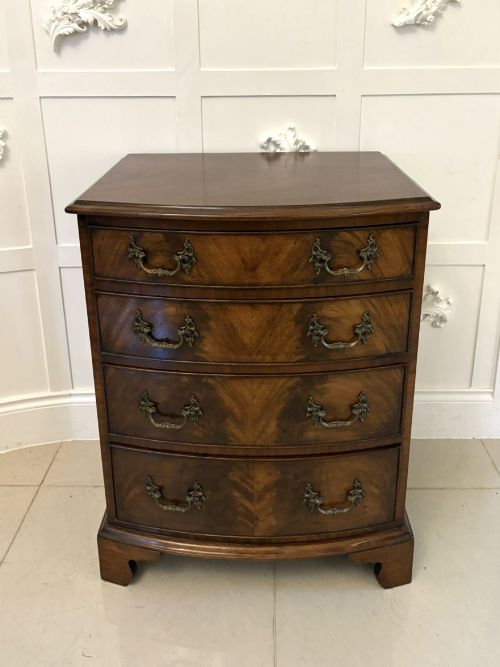
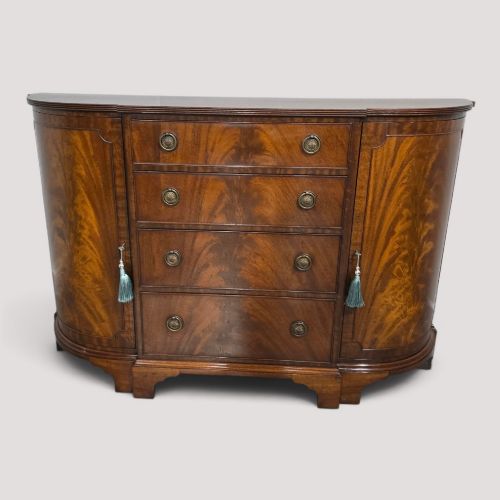
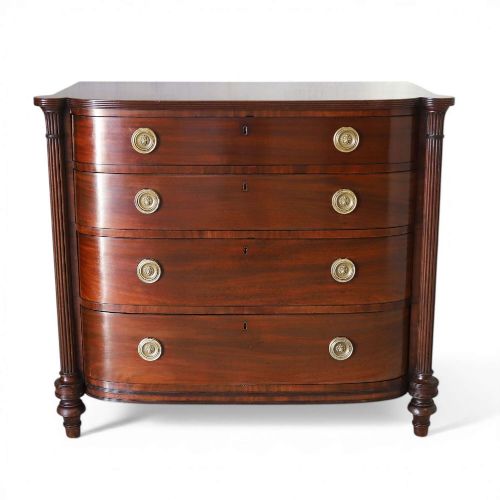
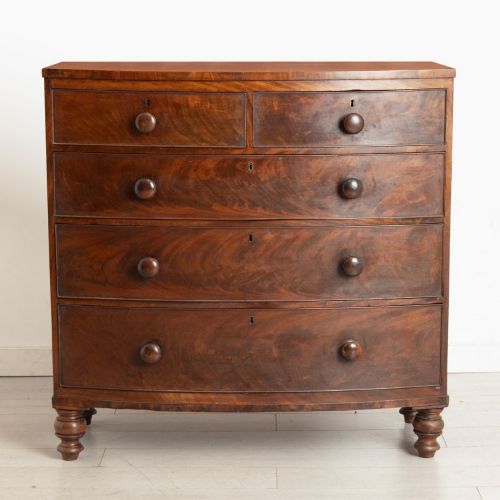
An edwardian bowfront chest is a case piece designed with a convex, curved front and multiple horizontal drawers for storage. Buyers searching for an edwardian bowfront chest encounter pieces originating from the Edwardian period alongside earlier examples from the Georgian, Regency, and Victorian eras.
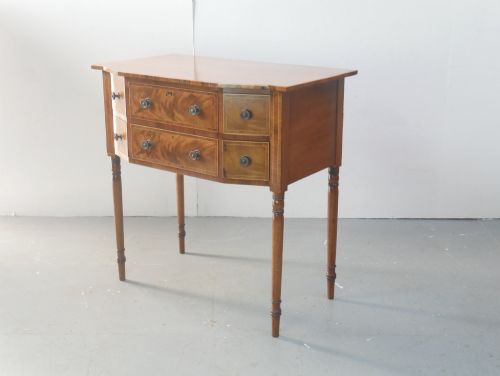
The form appears in various proportions, ranging from full-sized chests of four or five graduated drawers to smaller bedside cabinets, tallboys, and miniature apprentice pieces. Mahogany remains the most common primary wood, frequently paired with satinwood banding or flame mahogany veneer.
While many pieces date specifically to the early twentieth century, the inventory spans nineteenth-century revivals and earlier periods that established the curved silhouette. These variations give buyers a choice between compact bedroom furniture and larger statement pieces.
How they were made
Cabinet makers constructed these pieces using solid timbers and decorative veneers applied to secondary woods. Mahogany dominates the construction, often enhanced with flame mahogany veneer or satinwood banding to create contrast on the drawer fronts and top surfaces.
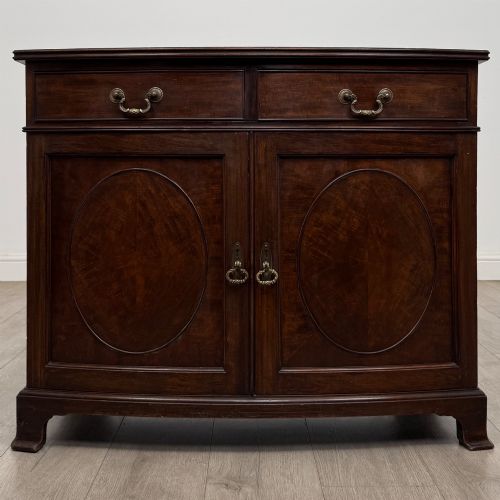
Working timber into a convex curve required specialist joinery techniques, particularly when shaping drawer fronts and the corresponding carcase framework. Brass hardware, including drop handles and escutcheons, completed the construction.
Listings feature woods including mahogany, satinwood, walnut, oak, and burr walnut alongside flame mahogany veneer.
What varies in quality
Quality in these pieces rests upon the selection of timber and the precision of the curved joinery. Figured woods like burr walnut or flame mahogany display distinct grain patterns that elevate the visual weight of the piece.
Proportion and execution of inlay work also separate standard examples from finer ones. Well-proportioned small scales and crisp satinwood stringing indicate deliberate craftsmanship by cabinet makers.
Edwards and Roberts
The Edwardian Bowfront Chest Glossary
- Bow front
- A convex, outwardly curved front elevation characteristic of these chests. This shaping softens the rectangular profile of traditional furniture.
- Flame mahogany
- A veneer cut from timber where the grain resembles flickering flames. It provides a highly decorative surface figure.
- Graduated drawers
- A sequence of drawers that decrease in depth from bottom to top. This arrangement creates visual balance on the chest facade.
- Satinwood banding
- A narrow strip of light-colored exotic wood inlaid around the edges of drawer fronts or tops. It offers subtle contrast against darker primary timbers.
- Tallboy
- A tall chest of drawers made in two stacked sections. This form maximises vertical storage capacity within a compact footprint.
Edwardian Bowfront Chest: Frequently Asked Questions
Where should I place an edwardian bowfront chest?
These chests work well in bedrooms, hallways, or living rooms where floor space is limited. Their curved fronts allow for easier movement around them in tighter areas.
The shallow depth of many examples makes them suitable as alternative sideboards or large bedside tables. They provide functional surface space while adding character to a room.
How do I tell an Edwardian chest from a Georgian one?
Edwardian examples often feature lighter timber selections, machine-sawn internal components, and simpler inlay styles. Georgian pieces generally display heavier construction methods and deeper drawer linings.
Cabinet construction details underneath and inside the drawers help reveal the manufacturing period. Examining the secondary woods provides further clues to the date of origin.
Are small bowfront chests original?
Smaller variants include compact bedroom chests, bedside cabinets, and miniature apprentice pieces made to demonstrate skill. Many were produced specifically for smaller domestic spaces.
Proportions should look natural rather than altered. Makers scaled down the traditional form to meet specific spatial demands during the period.
What maintenance do mahogany and walnut surfaces need?
Keep wooden surfaces away from direct sunlight and heat sources to prevent timber from drying out. Regular dusting with a soft cloth maintains the finish.
Apply traditional wax polish sparingly when the wood appears dry. Avoid using modern silicone sprays that can damage antique polishes over time.