

Vintage Bow Fronted Chest
A vintage bow fronted chest brings curved proportion and practical storage to a room, spanning periods from the Georgian era to the early twentieth century.
Vintage Bow Fronted Chest
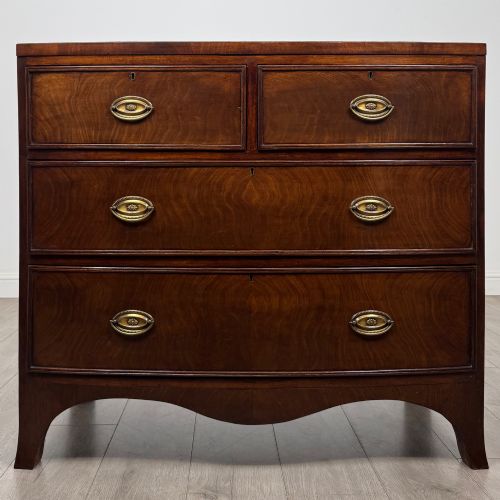
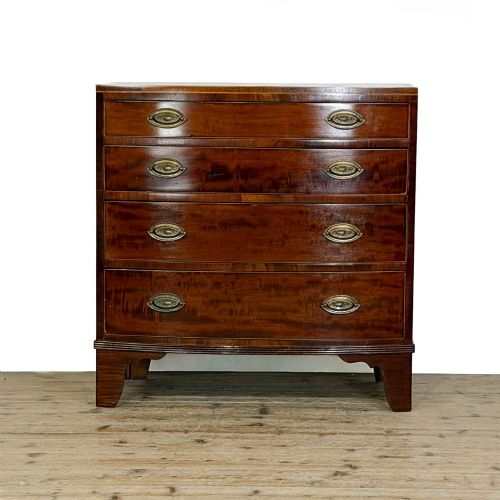
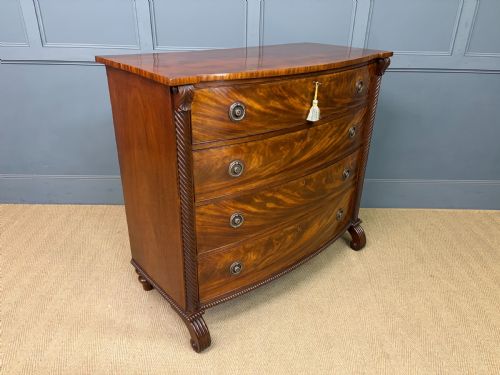
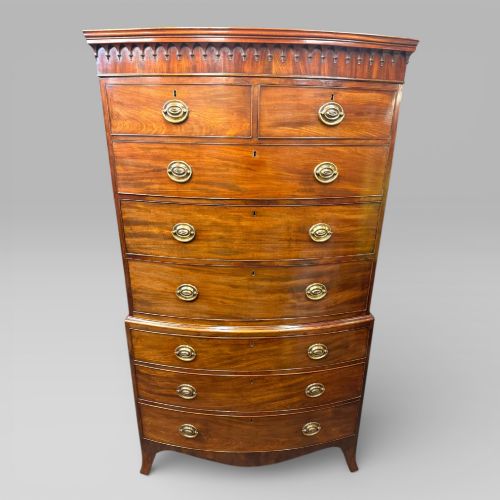
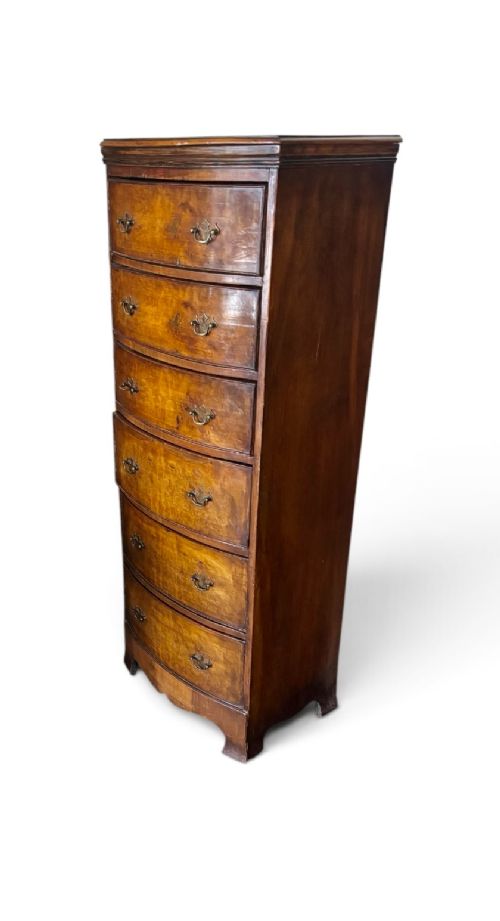
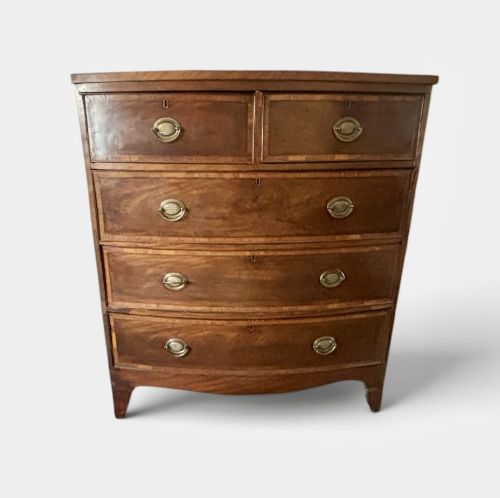
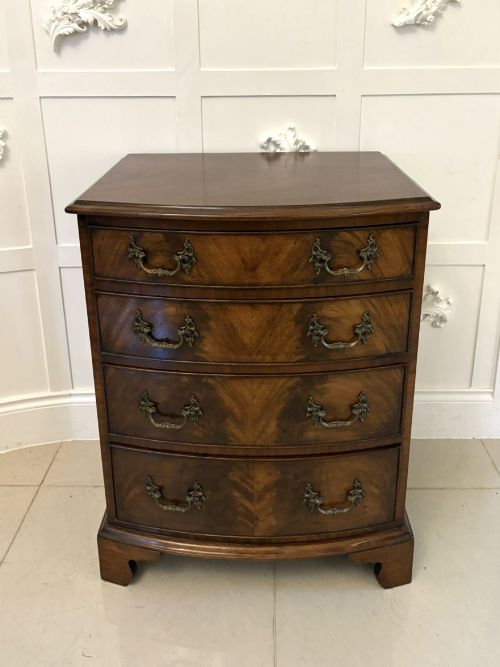
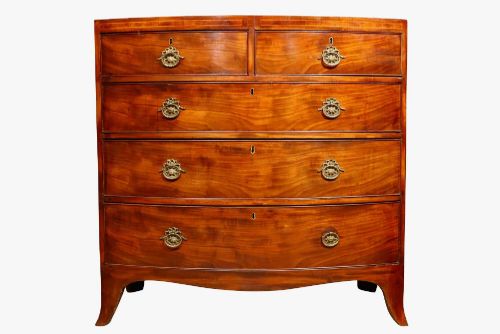
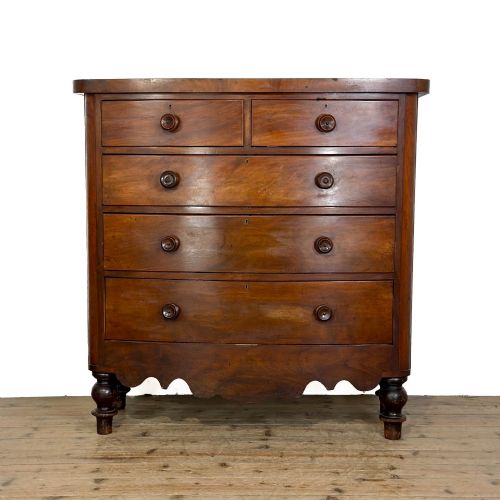
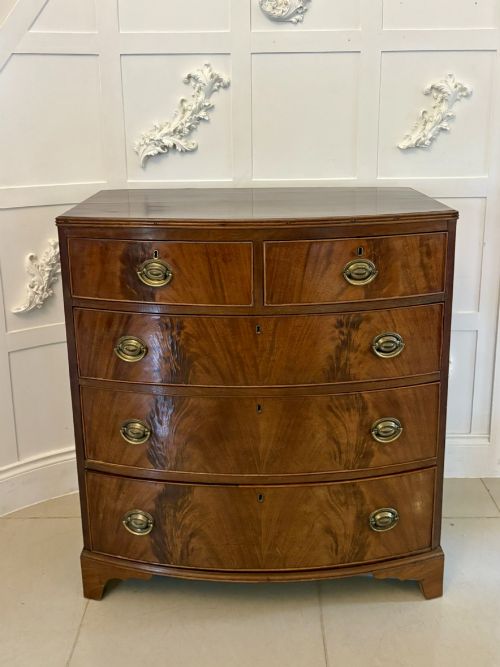
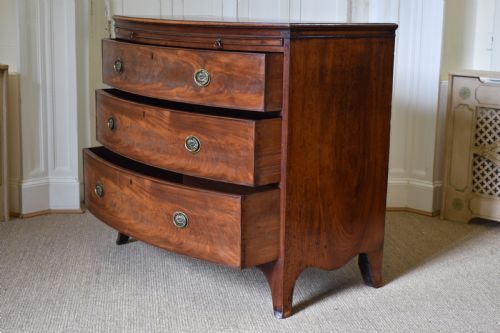
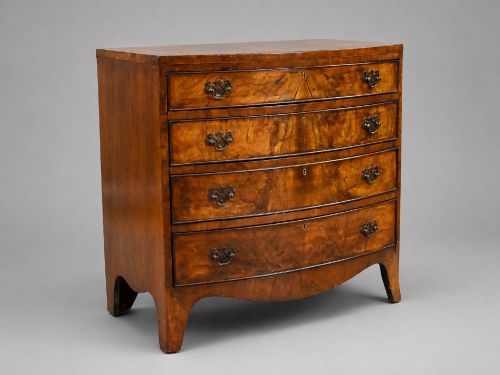
A vintage bow fronted chest is a set of drawers featuring a convex, curved front that softens the linear feel of traditional case furniture. These pieces appear in forms ranging from compact bedside cabinets and tallboys to large Georgian and Regency floor chests.
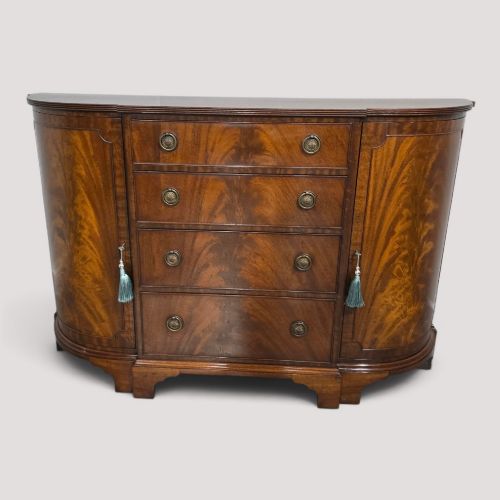
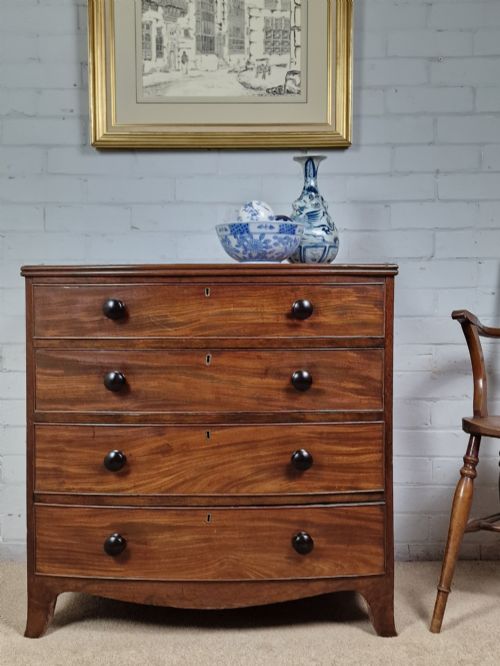
The version most commonly met on this page is the mahogany chest of drawers, often dating from the nineteenth century or the Georgian period. Pieces also surface in walnut, painted wood, and oak, reflecting changing domestic tastes across successive decades.
Makers and cabinetmakers built these storage items to combine decorative presence with deep drawer capacity for bedrooms and reception rooms. The curved outline demands precise woodworking to ensure the drawers open smoothly within the projecting frame.
Materials and construction
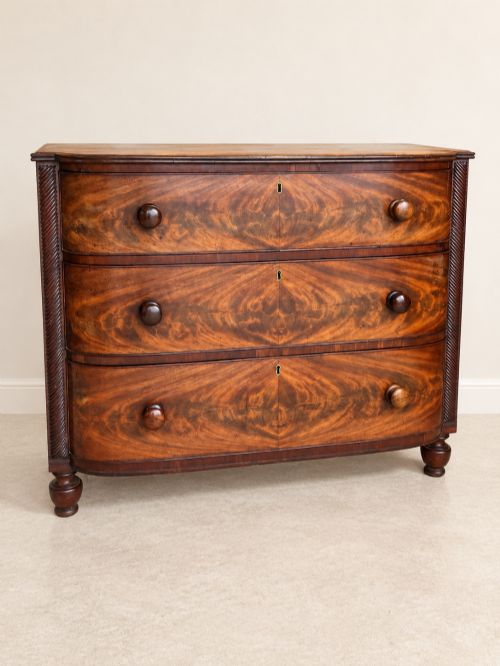
Makers utilised solid timbers such as mahogany, walnut, and oak for the primary carcases, often applying figured mahogany veneer or flame mahogany veneer to the drawer fronts for visual depth. Satinwood banding frequently frames the drawer edges on finer Regency examples.
Brass handles and turned wooden knobs serve as the standard pulls, varying from Georgian drop handles on backplates to later nineteenth-century round pulls. Pine and secondary softwoods appear on drawer linings and internal framing.
Some chests arrive with secret top drawers hidden beneath the overhang, designed to keep household currency out of sight.
Distinctions in quality
Quality rests upon the choice of timber figure, such as well-matched flame mahogany or burr walnut veneers across the curved drawer fronts. The grain alignment demonstrates the care taken by the cabinetmaker during construction.
Proportion and the crispness of edge moulding separate standard utility pieces from finer formal examples. Smooth drawer operation within the curved aperture indicates disciplined workshop assembly.
The Vintage Bow Fronted Chest Glossary
- Bow front
- A convex, curved front elevation projecting outward from the corners of a case piece. This design softens the profile of standard rectangular furniture.
- Flame mahogany
- Timber cut from the fork of the mahogany tree to reveal a rippled, flame-like grain pattern. Cabinetmakers reserved this decorative wood for principal visible surfaces.
- Tallboy
- A tall chest of drawers built in two sections, often combining a chest on chest or a cabinet configuration. These pieces maximise vertical storage space.
- Graduated drawers
- A series of drawers decreasing in depth from bottom to top. This arrangement creates a balanced visual hierarchy on the front of the chest.
Vintage Bow Fronted Chest: Frequently Asked Questions
Where should I place a bow front chest?
These chests suit bedrooms, hallways, or living rooms where the curved projection softens tight corners and narrow passages. Their generous drawer depth provides practical storage for clothing or linens.
Ensure adequate clearance in front of the piece so the protruding drawers open fully without obstruction from nearby furniture.
How do I date a mahogany chest?
Examine the timber selection, handle styles, and construction methods used on the drawer linings and internal carcase. Georgian and Regency pieces typically show hand-cut dovetails and native secondary woods.
Later Victorian and Edwardian examples often incorporate machine-sawn elements and standardised brass hardware fittings.
What is flame mahogany?
Flame mahogany is a highly figured veneer harvested from the branch junctions of the tree. It exhibits a distinctive undulating pattern that resembles flickering flames.
Cabinetmakers applied this veneer specifically to drawer fronts to catch the light and create a decorative focal point.
Are walnut and mahogany chests different?
Walnut and mahogany represent distinct aesthetic traditions across different eras of cabinetmaking. Walnut appears prominently in earlier Georgian works and later twentieth-century revivals, showing rich brown tones and dark grain figuring.
Mahogany dominates the nineteenth-century listings, offering a denser reddish-brown hue that takes a high polished finish.