
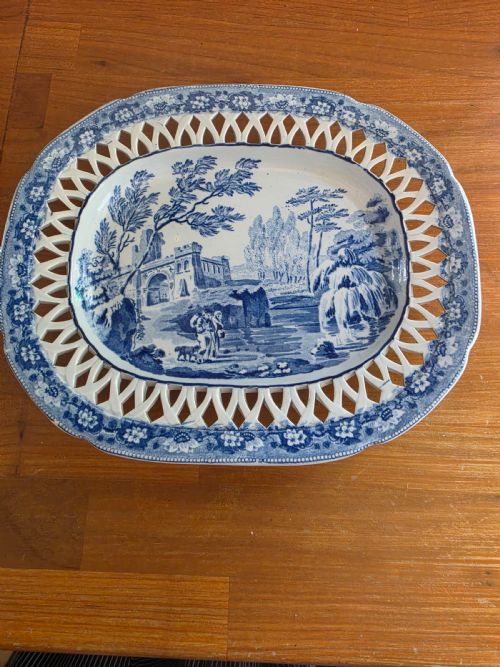

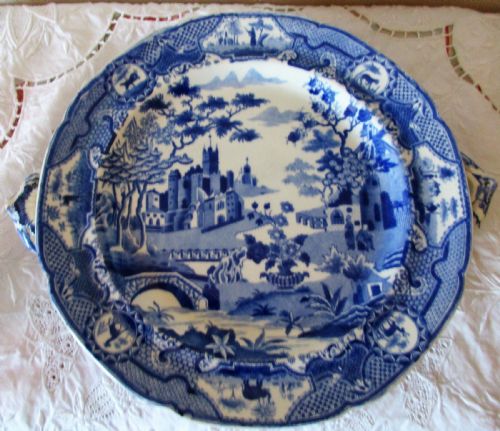
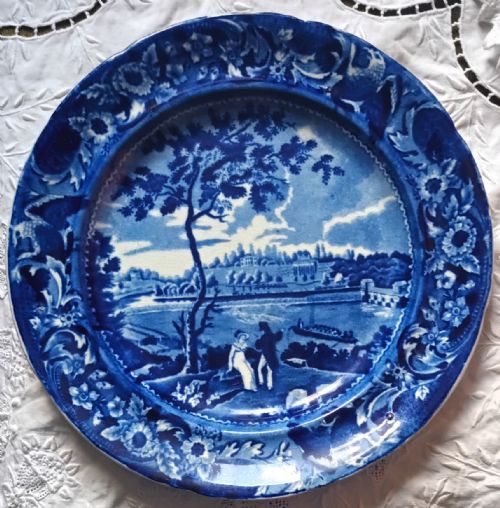


Blue White Pearlware Plate
A blue white pearlware plate brings together crisp earthenware bodies and cobalt transfer-printing to form enduring table wares.
Blue White Pearlware Plate
When you examine a blue white pearlware plate, you encounter ceramics produced predominantly during the Georgian and Regency periods. The selection encompasses standard plates, soup plates, serving dishes, platters, and hot-water plates designed for daily dining or display.
Most examples originate from English potteries working around eighteen-hundred and the early nineteenth century. Chinoiserie scenes, British landscape views, and classical ruin patterns dominate the decorative repertoire across these items.
Materials and construction
Potters formed these items from refined earthenware bodies, applying a subtle blue-tinted glaze to counteract the natural cream colour of the ceramic base. Artisans then hand-painted designs or transferred intricate copperplate prints using cobalt blue pigment onto the glazed or unglazed surfaces.
Kiln firing fused the cobalt oxides into the liquid glaze layer, producing deep blue imagery that ranges from soft feather-edged borders to dense pictorial transfers.
The listings feature earthenware ceramics from the Georgian, Regency, and Victorian periods, with a strong concentration of nineteen-hundred productions.
Factors of quality
The clarity of the transfer-print separates standard domestic wares from superior specimens. Finer items display sharp, deep cobalt impressions without blurring, smudging, or dry patches in the glaze.
The sophistication of the ceramic body and the precision of the rim moulding also determine the rank of a piece. Well-balanced forms with uniform glazing represent the height of early nineteenth-century Staffordshire and Yorkshire production.
Davenport·Spode·Stubbs·Thomas Lakin·William Adams·John Rogers & Son·Brameld & Co
The Blue White Pearlware Plate Glossary
- Pearlware
- A refined earthenware developed in the late eighteenth century featuring a thin glaze tinted with cobalt to appear whiter than creamware. This body served as the primary canvas for early transfer-printed tableware.
- Transfer-printing
- A decoration technique where an engraved copper plate applied ink to tissue paper, which was then pressed onto the ceramic surface before firing. This method allowed for complex pictorial scenes to be reproduced consistently.
- Chinoiserie
- European decorative motifs imitating Chinese artistic styles, frequently featuring pagodas, bridges, and figures. This style appears extensively on early pearlware dishes and plates.
- Hot-water plate
- A specialised vessel featuring a plugged compartment beneath the well designed to hold boiling water and keep food warm. These functional items appear in several Georgian ceramic inventories.
Blue White Pearlware Plate: Frequently Asked Questions
How do I date a pearlware plate?
Dating relies on stylistic clues, potter marks, and the characteristic blue tint of the pearlware glaze. Pieces produced around eighteen-hundred typically exhibit a lighter glaze pool in the footring compared to later Victorian items.
Makers' marks stamped into the ceramic base provide the most precise chronological indicators. When marks are absent, pattern names and border styles help narrow the decade of manufacture.
Were these plates used for daily dining?
Many of these ceramics functioned as everyday tableware for Georgian and Regency households. Their durable earthenware bodies accommodated regular meals before surviving as decorative display pieces.
Specialist forms like hot-water plates and large serving platters indicate use during formal dining occasions. Their survival in good condition suggests many were also kept aside for special events.
How should I display a plate?
Displaying these items safely involves using sturdy wall hangers designed for earthenware or stable plate stands for cabinet placement. Protecting them from direct sunlight preserves the clarity of the white glaze and blue transfer.
Grouping plates by pattern series or combining a platter with smaller matching dishes creates an effective historic display. Keeping them away from high-traffic areas prevents accidental knocks.