
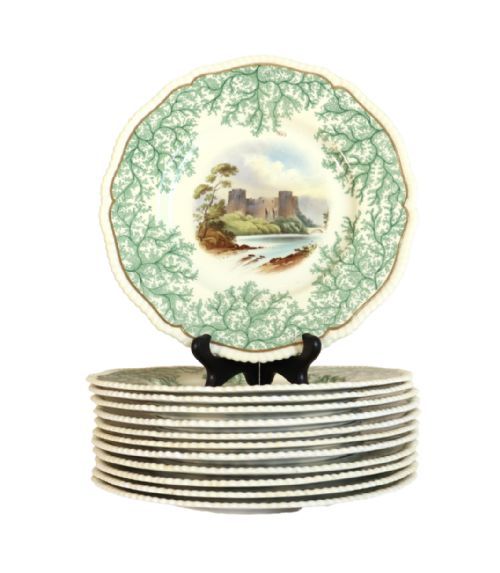
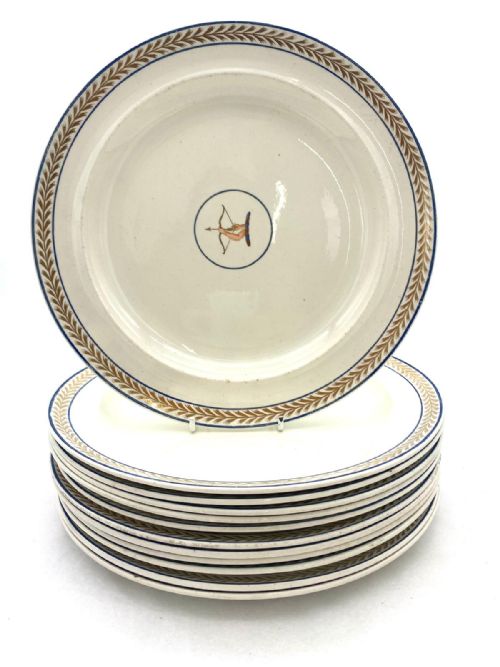
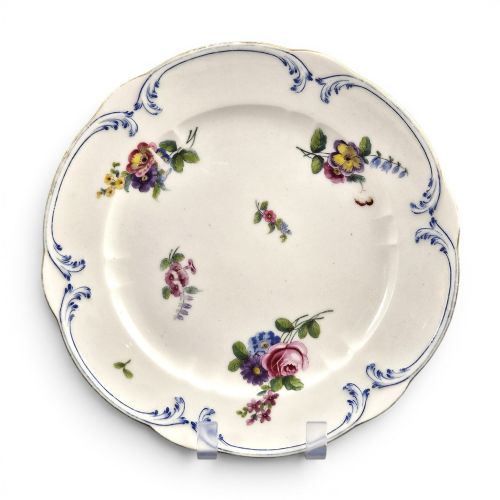
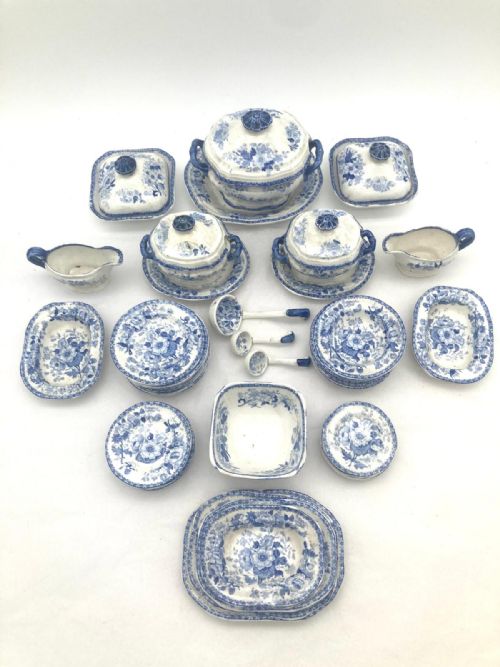
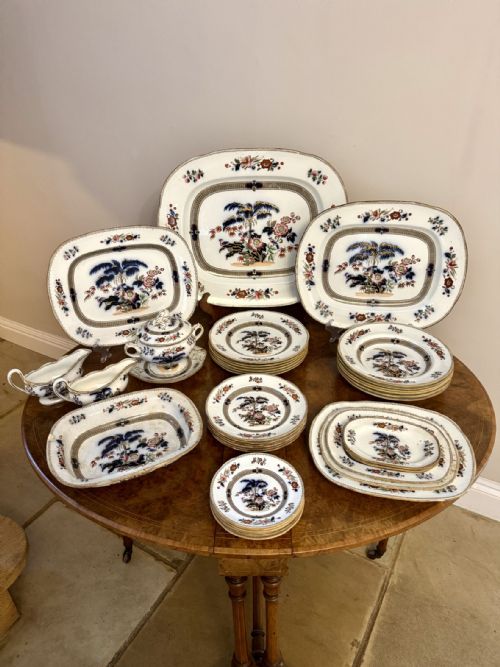
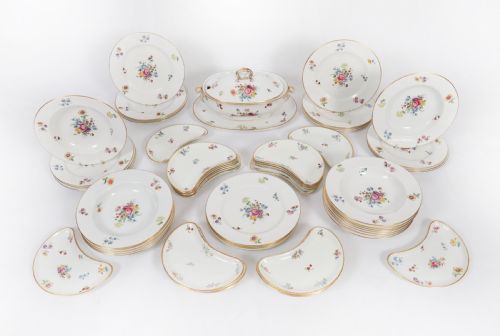
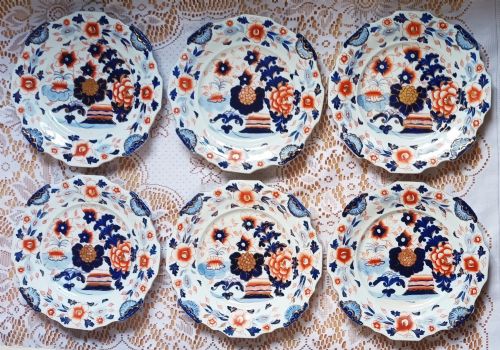


Antique Ceramic Dinner Plate
These antique ceramic dinner plate examples span the eighteenth and nineteenth centuries, offering hand-painted armorials, transfer prints and creamware bodies for the table.
Antique Ceramic Dinner Plate
An antique ceramic dinner plate serves as a tangible link to formal dining traditions of the eighteenth and nineteenth centuries. These pieces appear as single examples, pairs, part services or larger sets bearing patterns ranging from transfer-printed blue and white landscapes to hand-painted botanical studies.
The selections on this page draw from Georgian, Victorian and Edwardian periods alongside earlier Chinese export pieces. Buyers frequently encounter transfer-printed ironstone, creamware and porcelain formats intended originally for daily dining or display.
Forms extend from standard dinner plates to child-sized toy services and armorial plates bearing specific family crests. Each specimen records the stylistic preferences of its decade, from Rococo curves to orderly Georgian Neoclassical borders.
Materials and construction
Potters utilised earthenware, creamware, ironstone and both soft-paste and hard-paste porcelain to shape these dinner plates. Glazes sealed the porous bodies, while gold leaf or gilt accents were applied to elevated wares.
Decoration relied on hand-painting or copperplate transfer printing in blue, polychrome enamels and black. Firing took place in kilns where temperatures determined whether the ceramic fused into dense ironstone or delicate translucent porcelain.
The listings span earthenware, creamware, ironstone, soft-paste porcelain and hard-paste porcelain across Georgian, Victorian and Edwardian periods.
Distinctions in execution
Quality rests in the crispness of the transfer print and the precision of the hand-applied enamel work. Superior pieces display steady brush control, vibrant pigment retention and minimal kiln distortion across the plate rim.
Provenance and documented maker marks elevate certain armorial and botanical services above standard domestic tableware. The complexity of the border moulding, such as ozier or seaweed patterns, separates ambitious studio output from basic utilitarian production.
Wedgwood·Spode·Sevres·Minton·Copeland·Doulton·Chantilly·Limoges·Masons·Leeds·Coalport
The Antique Ceramic Dinner Plate Glossary
- Creamware
- A refined earthenware with a pale yellowish lead glaze developed in Yorkshire during the eighteenth century. Josiah Wedgwood perfected this pale body, naming it Queen's ware after royal patronage.
- Ironstone
- A heavy, durable type of earthenware patented in the nineteenth century to imitate Chinese porcelain. Mason's popularised this dense ceramic body for robust dining services.
- Armorial
- Ceramic decoration featuring a family coat of arms or crest. These bespoke commissions were frequently painted in Chinese export workshops for European nobility.
- Transfer printing
- A method of applying engraved designs to ceramics using paper pulled from a copper plate. This technique allowed intricate blue and white patterns to be replicated rapidly across large dinner services.
- Soft-paste porcelain
- An artificial porcelain compound fired at lower temperatures than hard-paste porcelain. Eighteenth-century European factories like Sèvres and Chantilly utilised this vitreous body before discovering true kaolin deposits.
Antique Ceramic Dinner Plate: Frequently Asked Questions
Can I use antique dinner plates for meals?
Most eighteenth and nineteenth-century plates tolerate gentle hand washing, but historic glazes may contain lead or show age-related softening. Collectors generally reserve these pieces for display or light occasional use rather than daily dining.
Older soft-paste porcelain and creamware are particularly sensitive to thermal shock and modern dishwasher detergents. Storing them in plate racks or padded stands protects the painted surfaces from scratching.
How do I date a ceramic plate?
Dating relies on maker marks, paste composition and stylistic clues such as border motifs and printing techniques. Eighteenth-century pieces often feature unglazed foot rims and hand-painted floral or armorial schemes.
Nineteenth-century examples frequently incorporate registry marks or impressed factory stamps on the reverse. Comparing the pattern name against historical manufacturing periods provides a narrower window of origin.
What is transfer printing?
Transfer printing involves etching a design onto a copper plate, inking it, and transferring the impression onto paper. The paper is then pressed against the bisqued ceramic to apply the pattern before glazing and firing.
This technique revolutionised pottery production by making detailed blue and white scenes accessible outside of hand-painted porcelain. Close inspection under magnification reveals the tiny stippled lines characteristic of the engraved copper plates.
How should I display antique plates?
Plates may be shown on traditional wire wall hangers, in dedicated display cabinets or upright on plate stands. Ensure any wall mount uses coated grips to prevent chipping the historic rim.
Keep display locations away from direct sunlight and heat sources to protect enamel colours and prevent glaze crazing. Rotating pieces periodically prevents uneven exposure to light.