




Blue Painted Pottery Charger
A blue painted pottery charger brings a bold wall or table presence, offering centuries of hand-painted cobalt design.
Blue Painted Pottery Charger
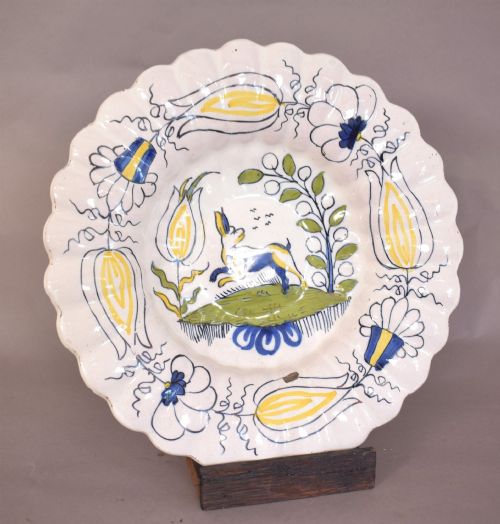
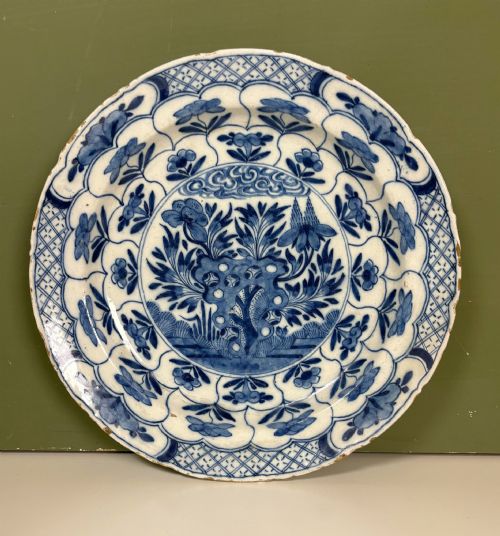
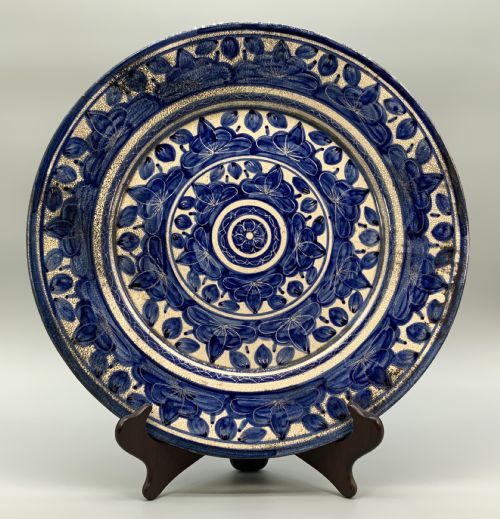
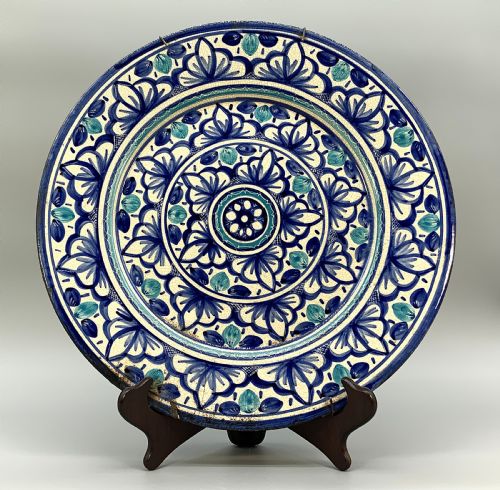
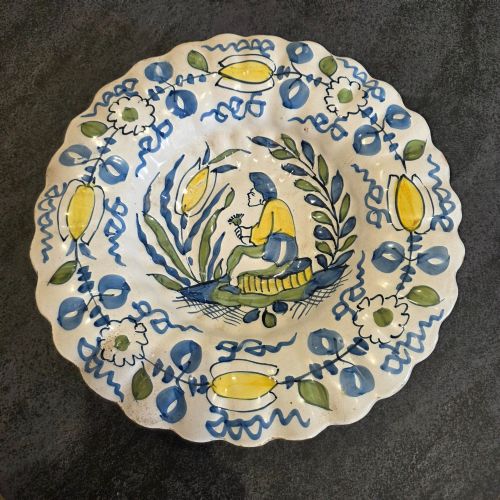
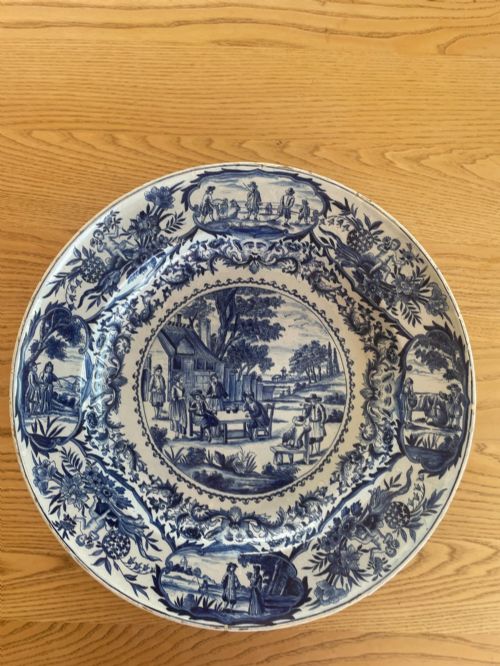
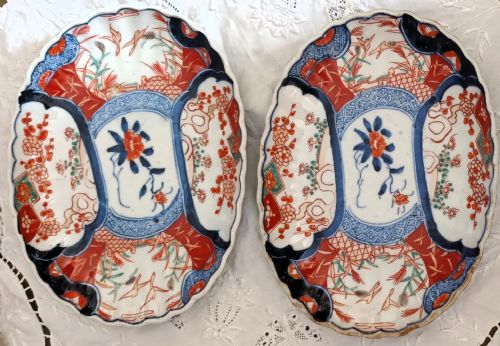
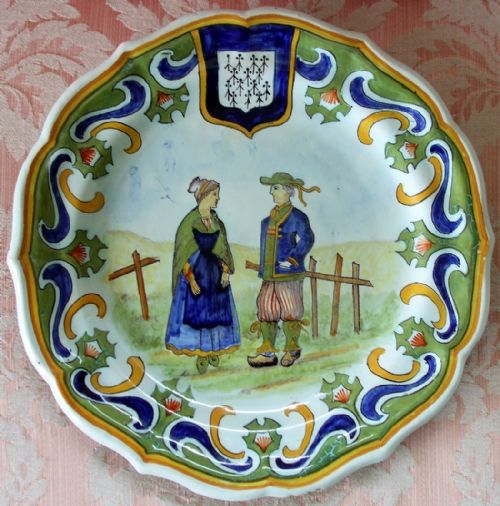
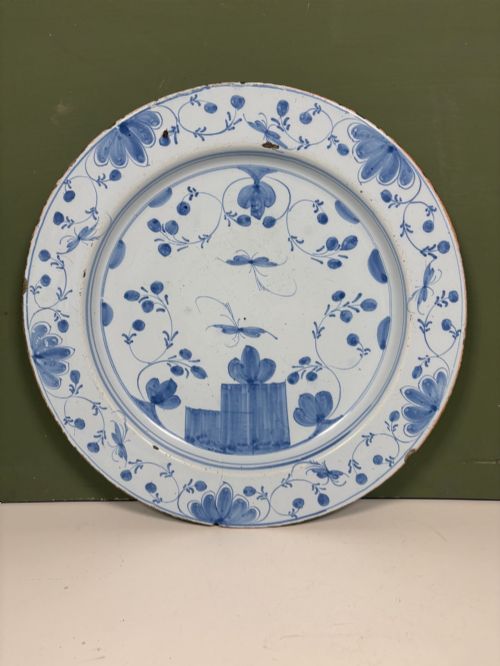
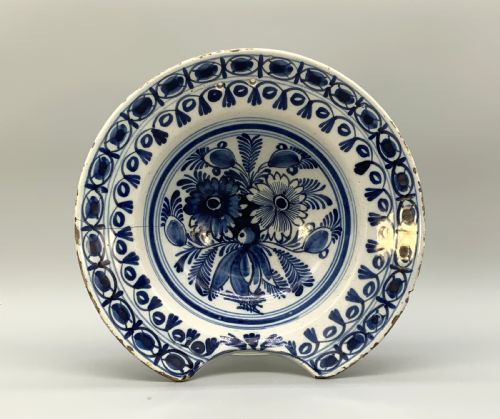
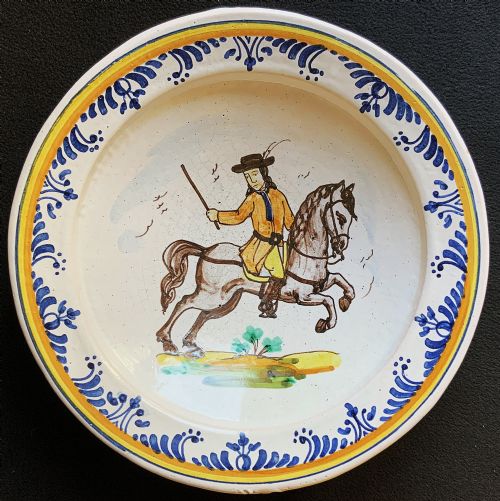
When you search for a blue painted pottery charger, you encounter large decorative plates and shallow bowls designed primarily for display rather than dining. The pieces on this page span several centuries, drawing heavily from Dutch Delftware traditions as well as Japanese Meiji porcelain and Moorish styles.
The most common examples you meet are tin-glazed earthenware dishes from the seventeenth and eighteenth centuries, originating from English, Dutch, Spanish, and French workshops. These display generous diameters and striking blue and white or polychrome hand-painted motifs across the surface.
How they were made
Potters shaped these earthenware or porcelain bodies on the wheel or pressed them into moulds before applying a tin glaze or smooth white coating. Artisans then painted directly onto the porous surface using cobalt pigment or cobalt oxide.
A final high-temperature firing fixed the pigment into the glaze, yielding the characteristic deep blue tones and glossy finish seen on these traditional wall chargers and decorative plates.
Listings span periods from the seventeenth century through the twentieth century, utilising tin-glazed earthenware, ceramic, and porcelain materials.
What varies in quality
The sophistication of the hand-painted brushwork distinguishes standard utility wares from superior examples, with finer pieces showing confident lines, detailed botanical or avian scenes, and well-balanced compositions. The richness and depth of the cobalt pigment against the opaque white glaze also dictate visual strength.
Preservation of the original glaze surface and the structural integrity of the heavy earthenware or porcelain body further separate standard decorative dishes from collector-grade chargers.
The Blue Painted Pottery Charger Glossary
- Charger
- A large decorative plate or dish intended for wall hanging or display on a sideboard rather than everyday dining use.
- Tin-Glazed Earthenware
- Pottery covered with a lead glaze made opaque by the addition of tin oxide, providing a smooth white ground for painted decoration.
- Polychrome
- Decoration employing several colours rather than just the traditional blue pigment on a white background.
- Imari
- Japanese export porcelain decorated in underglaze blue and iron red, often highlighted with gold.
- Faience
- European tin-glazed earthenware, particularly that produced in France, Spain, or Italy.
Blue Painted Pottery Charger: Frequently Asked Questions
Were these large plates used for dining?
Most large chargers served ornamental purposes on sideboards or walls rather than practical dining use, owing to their considerable size and precious tin glaze.
Smaller plates within the same traditions often saw service at the table, while substantial chargers acted as status symbols in domestic interiors.
How do I hang a heavy charger safely?
Displaying these pieces securely requires a specialised spring-loaded wall hanger designed to distribute the weight evenly around the rim without placing pressure on the centre.
Wall brackets must anchor firmly into solid masonry or studwork to support the substantial mass of seventeenth and eighteenth-century earthenware.
What is the difference between Delft and Imari?
Dutch and European Delft utilises tin-glazed earthenware painted primarily in blue pigments inspired by Chinese porcelain imports, whereas Japanese Imari employs true porcelain decorated with distinct iron red and underglaze blue palettes.
Delft pieces generally display a softer earthenware body, while Imari wares feature hard white porcelain created in Japan.
How do I clean antique pottery chargers?
Dusting these decorative surfaces gently with a dry, soft cloth remains the safest method for routine maintenance, avoiding moisture that could penetrate old earthenware bodies.
Harsh chemical cleaners and immersion in water must be avoided to protect fragile historical glazes and exposed clay.